
Schools in Poland for British and English-Speaking Children: Your Main Options
Choosing a school in Poland can shape your entire relocation plan. This guide explains the main education routes for British families, when each option works best and how city choice affects availability.
By Move2Poland··Updated 17 September 2026
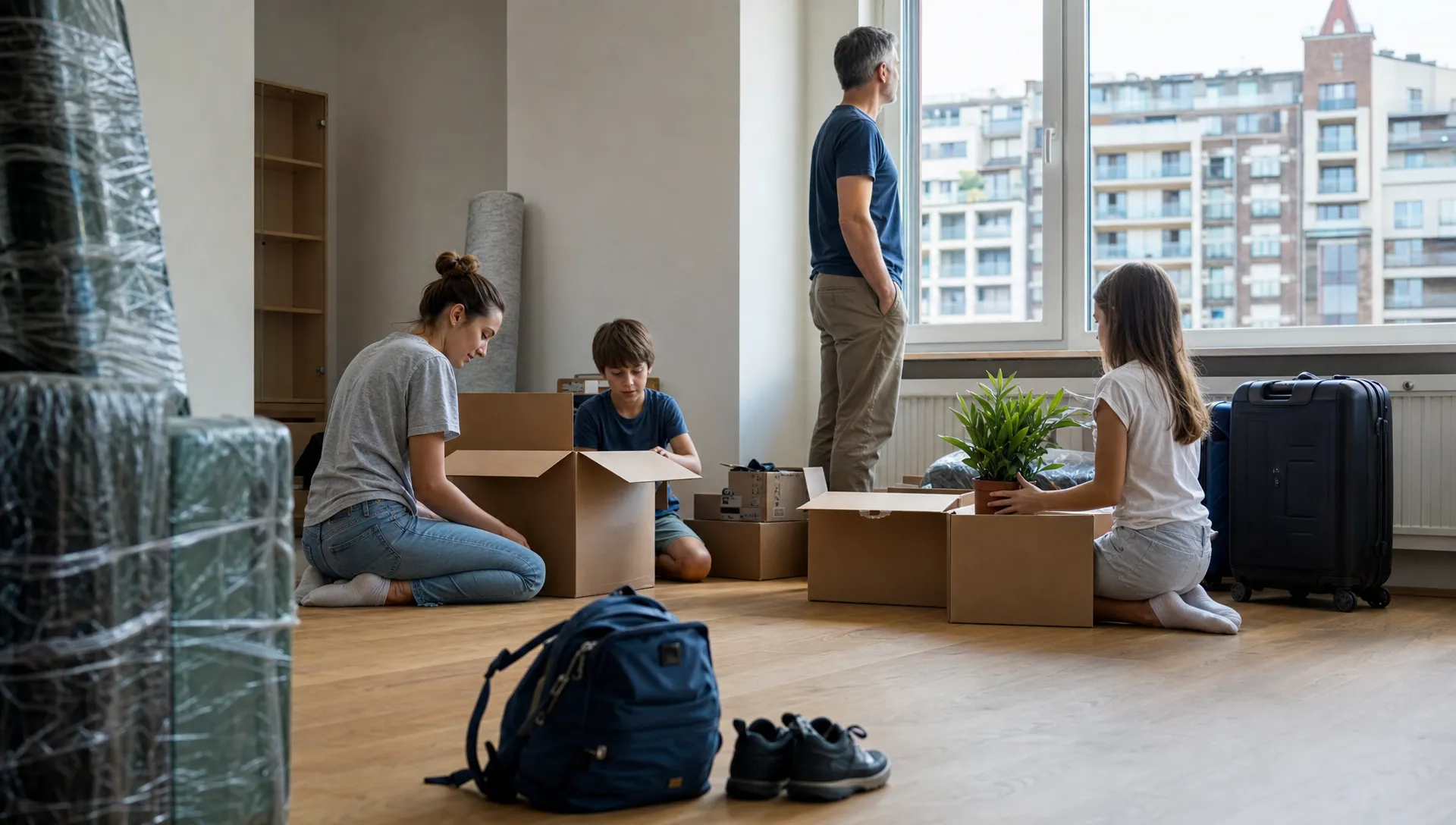
For many British families, the school question is not a detail to sort out after the move. It is the decision that shapes the move itself. A flat in the wrong district, a commute that looks fine on Google Maps but is miserable in winter or a school that does not match your child’s language level can turn an otherwise sensible relocation into a stressful one.
The good news is that schools in Poland for expats fall into a few clear routes. The hard part is deciding which route fits your child, your timeline and your family’s long-term plans. A six-year-old starting primary school has very different options from a 15-year-old halfway through GCSE preparation. A family planning to stay permanently will think differently from one expecting a two-year assignment.
This guide is designed to help British and English-speaking parents understand the main options, not to replace direct conversations with schools. It will not give you a full admissions workflow, document checklist or school-by-school directory. Instead, it focuses on the decision parents need to make first: which type of school route should you investigate?
The Polish school system in simple terms
Poland has a structured education system with public, private, bilingual and international options. According to the European Commission’s Eurydice overview of Poland, compulsory education includes primary school and a continuing education obligation until age 18. In practice, children usually start primary school at age 7, with a compulsory pre-school preparation year at age 6.
Primary school lasts eight years. After that, pupils move into post-primary education, such as general secondary school, technical school or vocational education. For families arriving from the UK, the biggest practical difference is that Poland’s mainstream public system runs in Polish and leads towards Polish exams, including the eighth-grade exam at the end of primary school and, for academic secondary routes, the Polish matura.
The Polish Ministry of Education’s information on education for foreign children explains that children arriving from abroad can attend Polish schools and may be eligible for additional language support. The detail can depend on current rules, the municipality and the school, so parents should verify support locally before relying on it.
For British families, one more point matters before education planning goes too far: schooling and residence are separate issues. A school may be happy to talk to you, but your family still needs a lawful basis to live in Poland for more than a short stay. If that part is not clear yet, it is worth reviewing your Poland visa and residence route before you build a school plan around a specific city.
The four main school routes for English-speaking families
Most British parents considering Poland will encounter four broad routes: Polish public schools, private Polish schools, bilingual schools and international schools. The right choice depends less on which route sounds best in theory and more on your child’s age, Polish-language ability, educational history and likely length of stay.
| School route | Usually suits | Main advantages | Main trade-offs | |-------------|---------------|-----------------|-----------------| | Polish public school | Younger children, long-term movers, families prioritising integration | Local friendships, Polish immersion, no tuition fees in public education | Polish-language barrier, variable support, less curriculum continuity with the UK | | Private Polish school | Families wanting Polish integration with smaller classes or a different school culture | More choice than local catchment alone, often more parent communication | Tuition costs, still usually Polish-led, quality varies by school | | Bilingual school | Children who can manage some Polish or families wanting a bridge between local and international education | More English exposure than mainstream Polish schools, better integration than a purely international bubble | Definitions of “bilingual” vary, not always a full English curriculum | | International school | Teenagers, short-to-medium-term movers, families needing curriculum continuity | English-language instruction, familiar curricula such as British, IB or American options | Higher fees, limited places, less local integration if not balanced intentionally |
A useful way to approach the choice is to start with constraints, not preferences. If your child is 16 and preparing for A-levels, a Polish public route may be academically risky unless your family has a strong reason and support plan. If your child is 5, curious and likely to stay in Poland for years, a Polish or bilingual setting may be a positive route into language and local life.
Polish public schools: best for integration, hardest on language
Polish public schools are the most local option. For families planning a permanent or long-term move, they can be the strongest path to genuine integration. Children learn Polish through daily use, make friends in the neighbourhood and become part of ordinary Polish life rather than staying mainly inside an expat network.
This route can work especially well for younger children. A child entering early primary school may struggle at first, but language acquisition is often quicker at that age, particularly when parents support Polish learning outside school. Socially, younger children may also be less self-conscious about making mistakes.
The challenges become more serious as children get older. A child entering Years 6, 7 or 8 equivalent may be facing subject content, exam preparation and social groups that are already well established. A teenager who does not speak Polish may find it difficult to access lessons even if teachers are supportive.
Parents should ask schools direct questions about language support, experience with foreign pupils, class size, integration help and how the school handles children who are behind in Polish but strong academically. The question is not only whether your child is allowed to enrol. It is whether they can realistically learn, settle and feel safe there.
Private Polish schools: more choice, but not automatically international
Private Polish schools can be a middle route for some families. They may offer smaller classes, a different teaching style, more extracurricular activities or more responsive communication with parents. Some are religious, some are alternative and some follow mainstream Polish education with extra languages or enrichment.
However, a private Polish school is not the same thing as an English school. Many private schools still teach primarily in Polish and prepare pupils for Polish educational pathways. For a British child with little or no Polish, the language challenge may remain significant.
The value of this route depends on the specific school’s attitude to international families. Some private Polish schools are experienced with returnee Polish families, mixed-nationality families and children arriving from abroad. Others may be excellent schools but not well suited to a child who cannot yet follow Polish instruction.
Before assuming private means easier, parents should check the language of instruction, the level of English used outside English lessons and whether the school has a realistic plan for non-Polish-speaking pupils. A warm admissions conversation is helpful, but it is not the same as a tested support structure.
Bilingual schools: the attractive middle, with one big caveat
Bilingual options are often appealing to British parents because they seem to offer the best of both worlds: English exposure, Polish integration and a less abrupt transition than a fully Polish school. In some cases, that is exactly what they provide.
The caveat is that “bilingual” can mean different things. In one school it may mean a serious dual-language model with several subjects taught in English. In another, it may mean a Polish school with enhanced English lessons or selected activities in English. Both can be valid, but they suit different children.
For a child who already speaks some Polish, a bilingual school may be ideal. For a child who speaks only English, parents need to understand how much of the school day will still require Polish from the start. The younger the child, the easier that may be. For older children, the gap between marketing language and classroom reality matters more.
Bilingual schools can also be a good route for families who want their children to build a future in Poland but still keep English academically strong. That can matter if you expect your child to apply to universities abroad later or if English remains the family’s academic language.
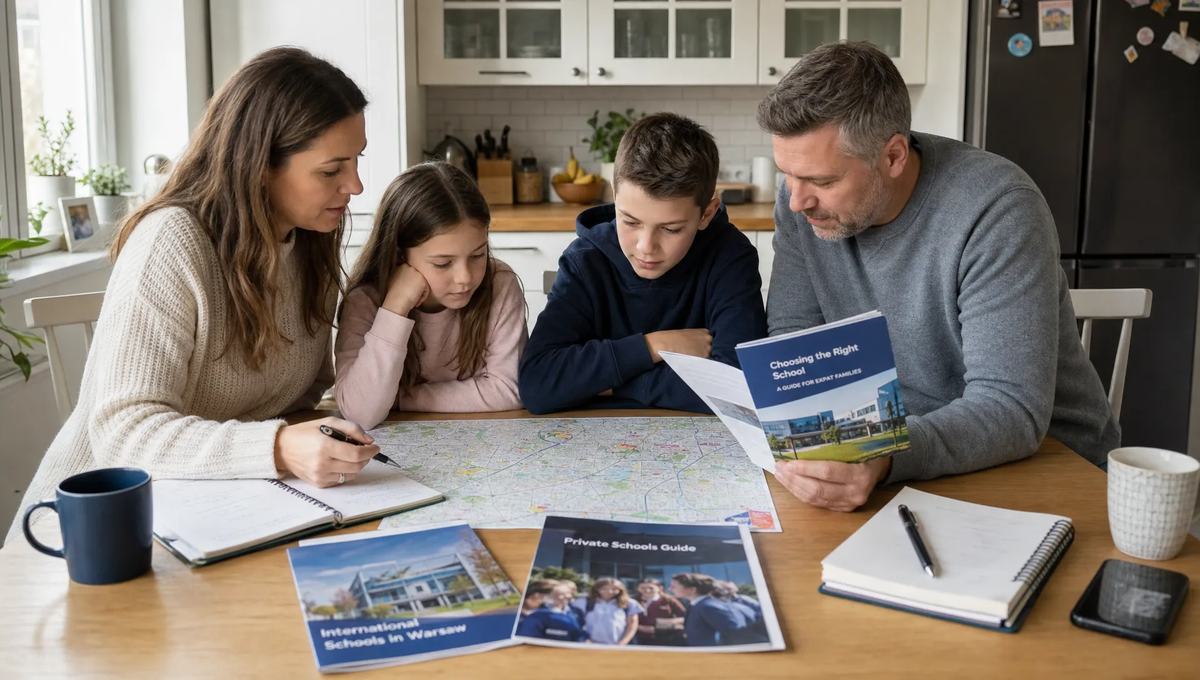
International schools: continuity, comfort and cost
International schools Poland options are usually the first thing British families search for, especially when children are older or when parents expect a temporary move. These schools may offer British, International Baccalaureate, American or other international curricula, often with English as the main language of instruction.
For teenagers, international schools can protect academic continuity. A pupil who has started GCSEs, A-level preparation or an IB pathway may need a curriculum that allows them to continue without losing a year. If the family may later return to the UK, a British-style or internationally recognised curriculum can reduce disruption.
International schools also tend to be more familiar with mobile families. They may have English-speaking administration, established pastoral systems for new arrivals and experience handling children who have lived in more than one country.
The trade-offs are real. Fees can be substantial, places are not guaranteed and the school commute can shape where you live. Some children thrive in international environments, while others find the turnover of pupils unsettling. Parents also need to be intentional about Polish integration outside school, through sport, neighbourhood life, clubs or language learning.
This is where relocation planning becomes practical rather than abstract. If you are also moving belongings from the UK, winding down a house or keeping a UK-based product business running during the transition, it can help to separate school decisions from logistics early. Some families use UK storage, transport or order fulfilment and warehousing support so that school visits, housing decisions and child settling-in are not squeezed by avoidable operational stress.
Why age changes everything
A school choice that is sensible for one child can be completely wrong for their sibling. Age is one of the strongest factors in deciding between Polish, bilingual and international routes.
For younger children, language immersion is often a benefit rather than a barrier. A child in early primary school can acquire Polish through play, repetition and daily routines. They may need emotional reassurance and patience, but they are less likely to be facing high-stakes exams straight away.
For children in late primary school, the decision becomes more delicate. They are old enough to feel the social pressure of not understanding lessons but may still have time to adapt before major secondary decisions. A bilingual or carefully chosen Polish school can work, but parents should be realistic about tutoring, emotional strain and the child’s temperament.
For teenagers, curriculum continuity often becomes the priority. A 14-year-old or 15-year-old who has been educated in the UK may not be well served by a sudden switch into Polish-language subject teaching, especially if important exams are approaching. International schools, or another English-language route, may be more appropriate even if the family hopes to integrate deeply over time.
| Child’s stage | What matters most | Routes often worth investigating | |--------------|-------------------|----------------------------------| | Pre-school and early primary | Language immersion, emotional safety, local friendships | Polish public, private Polish, bilingual | | Late primary | Polish support, social fit, exam distance, confidence | Bilingual, supportive Polish school, international | | Early secondary | Curriculum continuity, language load, future exam pathway | International, strong bilingual, carefully assessed Polish route | | Exam years | Recognised qualifications, stability, university plans | International or curriculum-matched route |
This is also why families should avoid choosing a city purely because they like it on a weekend visit. If your child needs a narrow curriculum option, the city’s school market may matter more than its cafés, architecture or house prices.
Warsaw, Wrocław, Kraków and Tricity: how city choice affects schooling
International and bilingual availability is not spread evenly across Poland. In the largest cities, you will generally find more choice, but also more competition, higher housing pressure in desirable districts and longer commutes.
Warsaw
Warsaw has the broadest range of international schools in Poland. For families looking at British schools Poland options, IB programmes or other English-language curricula, Warsaw is usually the first city to investigate. It has a large diplomatic, corporate and international community, which supports a wider school market.
The downside is that Warsaw can feel more complex logistically. School places, housing, work location and commuting patterns need to be considered together. A good school on the wrong side of the city can make daily life harder than expected.
Wrocław
Wrocław is often attractive to British families because it combines a strong international business presence with a more manageable feel than Warsaw. International schools Wroclaw options exist, and there are bilingual and private routes to explore, but the market is smaller than in the capital.
That can be positive if you want a city that feels easier to settle into. It can be limiting if you need a very specific curriculum or year group. Families comparing Wrocław with other major cities should look at school availability before committing to a district.
Kraków
Kraków has an international population, strong universities and a well-known cultural profile. International schools Krakow options and bilingual schools can make it viable for English-speaking families, especially those connected to the city’s tech, business or academic sectors.
The pressure point is location. Kraków traffic and tourism-heavy areas can affect quality of life. A school that looks close on paper may still create a frustrating routine if housing and transport are not planned carefully.
Tricity
Tricity, meaning Gdańsk, Gdynia and Sopot, can be appealing for families who want coastal life, access to nature and a less centralised feel. It does have international and bilingual options, but availability varies more by exact location and commute. Parents should think of Tricity as a connected region, not one single school market.
For families with younger children and more flexibility, Tricity may be very attractive. For teenagers needing a specific English-language curriculum, the choice may be narrower than in Warsaw.
Smaller cities and towns
Outside major cities, English schools Poland options become much more limited. That does not make smaller cities impossible, especially for younger children or families with Polish-language connections, but it changes the education plan. In many cases, a Polish public or private route will be the realistic option.
Budget: look beyond tuition
Public schooling can significantly reduce education costs, but it may require spending elsewhere, such as Polish tutoring, after-school care, transport or private language support. Private and international routes involve tuition fees, but the full cost can also include registration charges, meals, trips, uniforms, exam fees and school transport.
The right comparison is not simply “free versus paid”. It is total cost, academic risk and family stress. If an international school protects a teenager’s exam pathway, it may be worth prioritising in the relocation budget. If a younger child can thrive locally, a Polish public or bilingual route may free up money for housing, language lessons or travel back to the UK.
Families should also consider whether one parent may need a slower return to work while children settle. The cheapest school route on paper can become costly if it creates a daily burden that affects work, mental health or the family’s ability to integrate.
Integration: local life or expat continuity?
School is one of the strongest forces shaping your family’s social world in Poland. A Polish public school can bring local friendships and faster language acquisition, but it may also make the first year emotionally demanding. An international school can offer comfort and continuity, but it may keep your family’s life more English-speaking unless you actively build Polish connections.
Neither outcome is automatically better. The question is what kind of move you are making.
If you are relocating permanently and want your children to feel Polish society from the inside, a local or bilingual route deserves serious attention. If you are coming for a fixed contract or want to keep open a return to the UK system, international education may be the safer choice. If your family is mixed British-Polish, the best answer may depend on which language your child uses confidently and which culture you want school to reinforce.
Questions to ask before you shortlist schools
You do not need a full admissions plan at the early decision stage. You do need clear questions that reveal whether a route is realistic.
- What language will my child need to understand on an ordinary school day?
- Has the school supported children arriving from abroad before?
- How would this route affect GCSEs, A-levels, IB, Polish exams or university plans?
- Is the school commute realistic in winter, not just on a sunny viewing day?
- What support exists for Polish as an additional language or English as an additional language?
- How stable is the pupil community, especially in international schools?
- Will this route help my child build local friendships or mainly expat friendships?
- What is the total cost once transport, meals, tutoring and extras are included?
These questions help you avoid choosing based on reputation alone. A famous international school may be wrong for your child if the commute is brutal. A local Polish school may be excellent but unsuitable for a teenager who needs an English-language exam route. A bilingual school may be perfect, or it may not be bilingual in the way you assumed.
A practical decision framework for British parents
Start with your expected length of stay. If you are testing Poland for one or two years, curriculum continuity matters more. If you are moving indefinitely, integration and Polish-language development deserve more weight.
Next, assess your child’s age and language confidence honestly. Do not confuse being good at languages in a UK classroom with being ready to study maths, history and science in Polish. Also consider personality. Some children enjoy the challenge of immersion. Others may shut down if they cannot understand what is happening around them.
Then connect schooling with housing. In Poland’s bigger cities, the wrong school and flat combination can create a punishing daily routine. School choice should sit alongside neighbourhood choice, commute, work location and your budget.
Finally, think about the exit route. Even if you hope to stay, life can change. Ask how easy it would be for your child to move back into the UK system, apply to university abroad or switch route within Poland if needed.
Frequently Asked Questions
Are public schools in Poland free for British children? Public education is generally available to children living in Poland, including foreign children, under Polish rules. The practical question is not only cost, but whether your child can access learning in Polish and what support is available locally.
Are there British schools in Poland? Yes, British-style and English-language international options exist, especially in major cities such as Warsaw. Availability varies by city, year group and curriculum, so parents should treat this as a route to investigate rather than assume a place will be available.
Can my child go to a Polish school without speaking Polish? It may be possible, and additional language support can exist for foreign pupils, but the experience depends heavily on age, school capacity and local practice. It is usually more realistic for younger children than for teenagers approaching important exams.
Is an international school always the best option for expat children? Not always. International schools are often best for continuity, especially for older children, but they can be expensive and may limit local integration. Younger children staying long term may benefit from Polish or bilingual education.
Which Polish city is best for English-speaking schools? Warsaw usually offers the widest choice. Wrocław, Kraków and Tricity can also work well, but the right answer depends on your child’s age, curriculum needs, budget and commute tolerance.
Next step for your family move
If schooling is one of your biggest relocation questions, treat it as part of the whole family decision rather than a separate admin task. Start by reading Move2Poland’s guide to Moving to Poland With Children, then compare locations through Best Places for British Families.
When you are ready to turn school preferences, city choice, budget and residence planning into a realistic move plan, the Poland Decision Guide is the next step. It helps you move from “Could this work?” to “What would this actually look like for our family?”