
Cost of Living in Poland in 2026 for Expats
Poland can still be cheaper than the UK, but rent, taxes, healthcare, and school choices change the picture. Use these 2026 planning ranges to build a realistic expat budget before you move.
By Move2Poland··Updated 17 September 2026
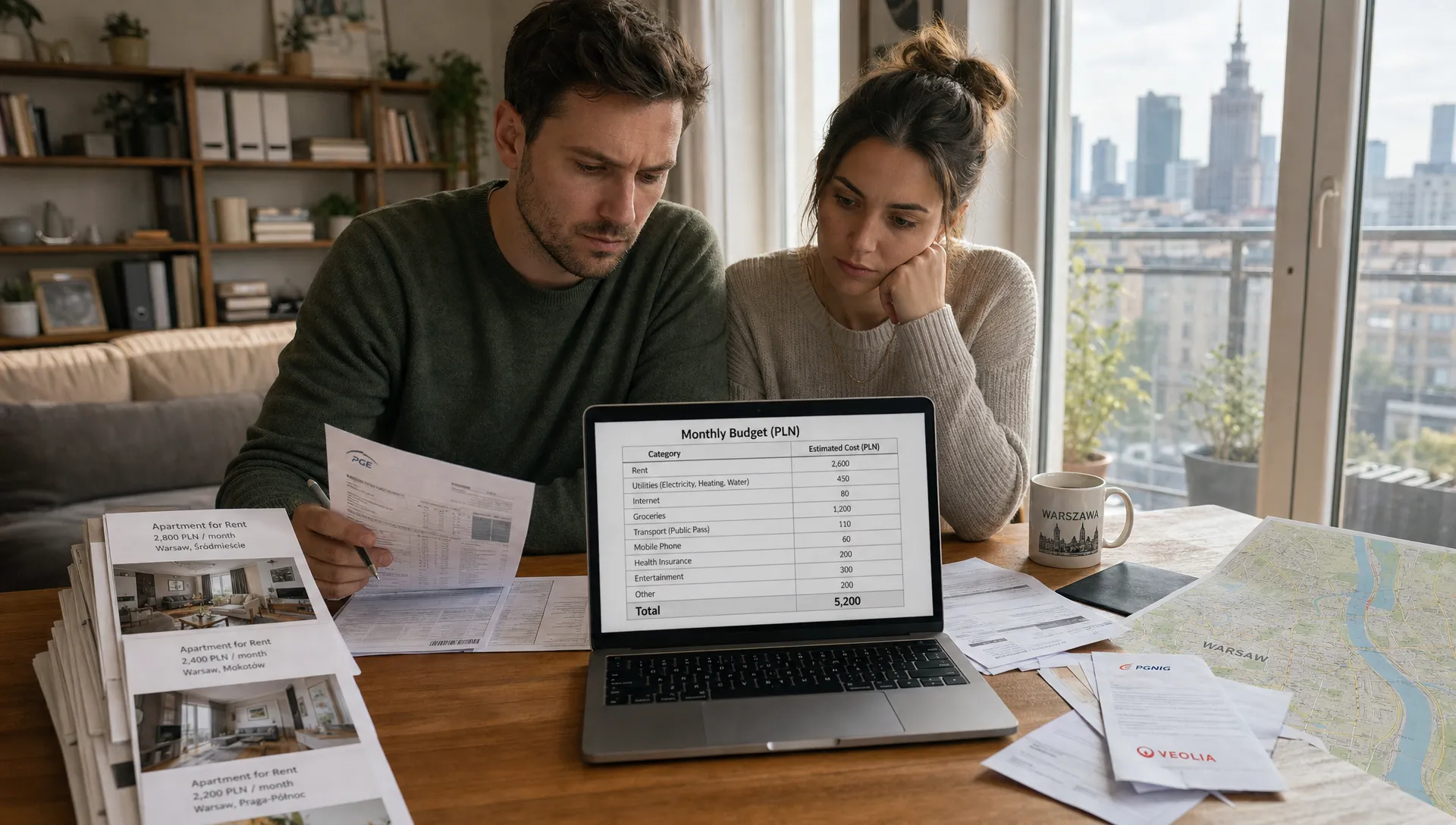
Poland can still be a financially attractive move for expats in 2026, especially if you are comparing it with London, the South East of England, Dublin, Amsterdam, or Berlin. But the old idea that Poland is simply “cheap” is outdated. Rent in major cities has risen sharply, imported goods can cost almost the same as in Western Europe, and your real budget depends heavily on your visa status, tax position, family needs, and city choice.
The useful question is not “Is Poland cheap?” It is “What does a comfortable, realistic life in Poland cost for my household?”
This guide gives planning ranges in Polish złoty (PLN) for expats in 2026. Treat them as practical estimates, not fixed prices. Before signing a lease or committing to a move, verify current rents, check the latest exchange rate through the National Bank of Poland, and build your budget in PLN first.
Quick answer: monthly cost of living in Poland in 2026
For most expats, the monthly cost of living in Poland in 2026 falls into these ranges, excluding savings, debt payments, private school fees, major relocation costs, and frequent international travel.
| Household type | Lean but workable | Comfortable | High-cost lifestyle | |---|---:|---:|---:| | Single expat renting alone | 5,500 to 8,000 PLN | 8,000 to 12,000 PLN | 12,000 PLN+ | | Couple with no children | 9,000 to 14,000 PLN | 14,000 to 20,000 PLN | 20,000 PLN+ | | Family of four, local lifestyle | 14,000 to 22,000 PLN | 22,000 to 32,000 PLN | 32,000 PLN+ | | Family using international schools | 22,000 to 40,000 PLN+ | 35,000 PLN+ | Highly variable |
A single person sharing a flat in Łódź, Poznań, or a smaller city can spend much less than a single person renting a modern one-bedroom apartment in central Warsaw. A family relying on public schools will have a very different budget from a family paying for international education.
If you are moving from the UK, avoid converting every number into pounds too early. A rough mental shortcut of 5 PLN to £1 can help with quick comparisons, but exchange rates move. Your rent, groceries, phone bill, and local transport will be paid in złoty, so your decision should work in złoty.
What is cheaper in Poland, and what is not?
Poland is usually cheaper than the UK for local public transport, many restaurant meals, basic services, childcare in some settings, and rent outside the most expensive neighborhoods. It is not automatically cheaper for electronics, cars, imported food, specialist medical care, international schools, or branded goods.
There is also a lifestyle trap. Many expats arrive expecting to save money, then choose the most international district, eat out often, use private healthcare, take frequent trips home, and rent a newly renovated apartment. None of those choices are wrong, but they push the budget closer to Western European levels.
Inflation matters too. Poland experienced a major price shock in the early 2020s, and while inflation later cooled, many prices did not return to pre-2022 levels. For the latest official price trend data, check Statistics Poland’s price indices.
Housing: the biggest variable in your Poland budget
Rent is the main reason two expats in Poland can report completely different monthly costs. City, neighborhood, building age, heating type, furniture quality, lease timing, and whether you need English-speaking support all influence the final number.
In Poland, advertised rent is often not the full monthly cost. You may see a base rent paid to the landlord, then an administrative fee called czynsz administracyjny, plus utilities such as electricity, gas, water, heating, internet, and sometimes waste collection. Always ask what is included before comparing apartments.
Planning ranges for 2026 look roughly like this:
| City | 1-bedroom central or desirable area | 1-bedroom outer area | 2 to 3-bedroom family apartment | |---|---:|---:|---:| | Warsaw | 3,800 to 5,800 PLN | 2,800 to 4,200 PLN | 6,500 to 11,000 PLN | | Kraków | 3,200 to 4,800 PLN | 2,500 to 3,600 PLN | 5,500 to 8,500 PLN | | Wrocław | 3,000 to 4,600 PLN | 2,400 to 3,500 PLN | 5,200 to 8,000 PLN | | Gdańsk | 3,200 to 5,000 PLN | 2,500 to 3,700 PLN | 5,800 to 9,000 PLN | | Poznań | 2,700 to 4,000 PLN | 2,100 to 3,100 PLN | 4,800 to 7,200 PLN | | Łódź | 2,200 to 3,400 PLN | 1,800 to 2,700 PLN | 3,800 to 6,000 PLN |
Short-term rentals, serviced apartments, and leases starting in late summer can cost more, especially in cities with large student populations. Gdańsk and coastal areas can also be affected by seasonal demand.
Expect upfront costs. A deposit of one month’s rent is common, and some landlords or agents may expect more paperwork from foreigners. If you use an agency, ask clearly whether there is a tenant fee. Also budget for bedding, kitchen items, small furniture, winter clothing, and temporary accommodation while you search.
Groceries, restaurants, and everyday food costs
Food costs in Poland can be very reasonable if you shop like locals. Discount supermarkets such as Biedronka, Lidl, Aldi, and Kaufland are common. Local markets can be good for seasonal produce, while premium supermarkets, imported goods, organic products, and specialty diets can raise your spending quickly.
A single expat cooking regularly might spend 900 to 1,500 PLN per month on groceries. A couple may spend 1,800 to 2,800 PLN. A family of four will often land between 3,000 and 5,000 PLN, depending on children’s ages, dietary preferences, and how often they eat out.
Eating out is still more affordable than in many UK cities, but the gap has narrowed. A simple lunch can be 35 to 55 PLN. A casual dinner with a drink might be 60 to 110 PLN per person. Coffee in a city-center café is often 12 to 20 PLN. Delivery apps are convenient but can quietly add hundreds of złoty per month.
If your goal is to keep the cost of living in Poland under control, food is one of the easiest categories to manage. Cook at home during the week, use lunch menus, avoid relying on imported British products, and learn a few Polish supermarket habits early.
Transport: public transport is one of Poland’s best-value categories
For city living, Poland’s public transport is usually good value. Warsaw, Wrocław, Kraków, Poznań, Gdańsk, and Łódź all have extensive tram, bus, or metro networks, though quality varies by neighborhood.
A monthly public transport pass commonly falls somewhere around 100 to 180 PLN, depending on the city, zones, and eligibility for discounts. Taxis and ride-hailing are cheaper than in many UK cities, but using them daily changes the equation quickly.
Owning a car is a different story. Fuel, insurance, maintenance, parking, winter tires, paid motorway sections, and city-center parking zones can make car ownership much less “cheap” than expected. Families living outside the city center may still find a car useful, but many single expats and couples can avoid one entirely.
Healthcare, insurance, and medical costs
Healthcare costs depend on your status in Poland. If you are employed in Poland, you will generally contribute to the public system through social and health insurance. Self-employed people also have contribution obligations. Eligibility and registration details matter, especially if you are arriving as a non-EU citizen or moving from the UK.
Public healthcare through NFZ can be very affordable at the point of use, but waiting times can be frustrating for some specialists. Many expats use private healthcare for faster appointments, English-speaking doctors, or convenience. A private medical subscription can cost roughly 100 to 400 PLN per month for a single person, with family packages costing more. Individual private specialist visits are often in the 200 to 400 PLN range, though prices vary by city and specialty.
Do not assume a UK GHIC or travel insurance policy is enough for living in Poland. Those are not substitutes for long-term healthcare planning, residency compliance, or proper insurance.
Taxes, visas, and income: the hidden cost category
Your monthly spending is only half the story. What matters is your net income after tax, social security, health contributions, pension contributions, currency conversion, and professional advice.
Poland’s tax system can be manageable, but it is not something to guess your way through. Tax residency can be triggered by time spent in Poland or by having your center of personal or economic interests there. Remote workers, contractors, company owners, landlords, pensioners, and people with UK income need to be especially careful.
Poland’s personal income tax rules are published by the Ministry of Finance, including current personal income tax rates. Still, official pages do not replace tailored advice if you have cross-border income.
For UK citizens, immigration status also affects cost planning. Since Brexit, moving to Poland is not the same as moving within the EU as an EU citizen. Before you calculate rent and groceries, understand whether you can legally stay, work, run a business, or join a family member. If that applies to you, start with this practical guide to post-Brexit visas for UK citizens moving to Poland.
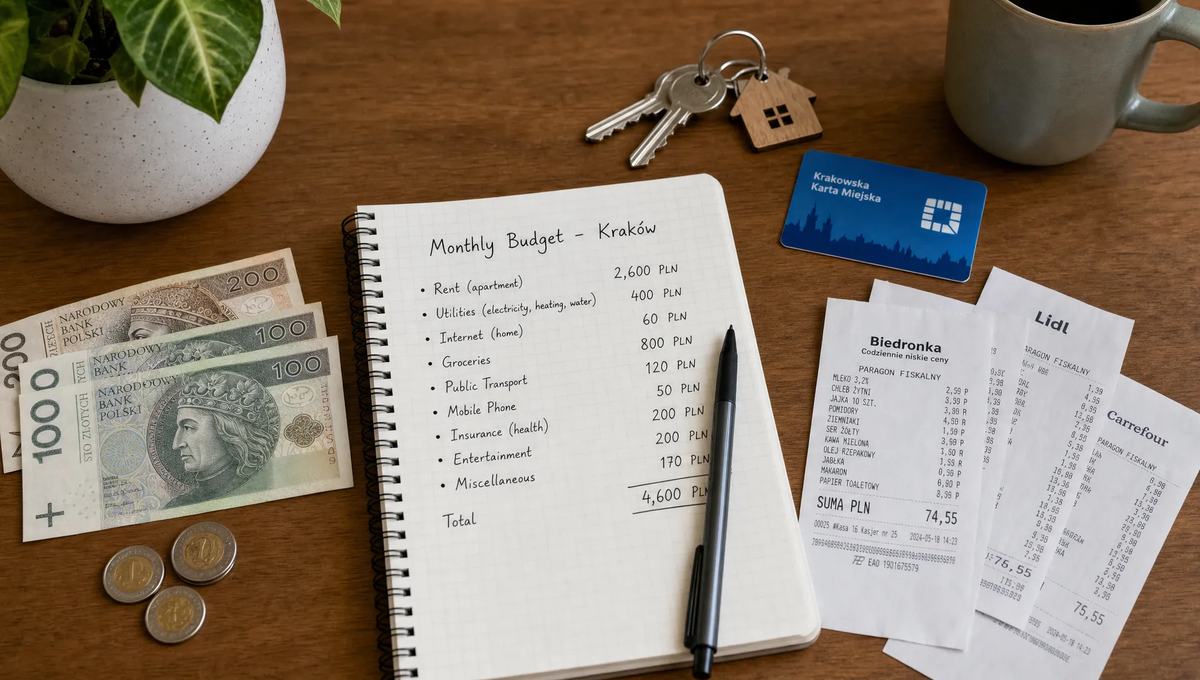
Cost differences by city
Warsaw is the most expensive major city, but it also has the highest concentration of international jobs, embassies, corporate roles, English-speaking services, and premium rentals. If you need a large professional network or frequent flights, Warsaw may justify the cost.
Kraków is popular with expats, students, and tech workers. It has culture, international restaurants, and strong English-language services, but rents in attractive areas have become much less of a bargain.
Wrocław often sits in the middle: international enough to be comfortable, smaller than Warsaw, and still strong for jobs, universities, and lifestyle. It is not “cheap” anymore, but it can offer a good balance for people who want a city with energy without Warsaw prices.
Gdańsk and the Tricity area offer sea access, business opportunities, and a high quality of life, but housing can be seasonal and expensive in desirable areas. Poznań can be a sensible option for people who want a well-connected city with lower pressure than Warsaw or Kraków. Łódź is often cheaper for rent and has improved significantly, though it may feel less polished to some newcomers.
| City | Cost pressure | Best for | Watch out for | |---|---|---|---| | Warsaw | Highest | Careers, networking, flights, international services | Rent, traffic, premium lifestyle creep | | Kraków | High | Culture, tech, students, tourism, expat community | Tourist pricing, crowded central areas | | Wrocław | Medium-high | Balanced lifestyle, tech, students, families | Rising rents in popular neighborhoods | | Gdańsk / Tricity | Medium-high | Coast, quality of life, business, families | Seasonal housing and tourist demand | | Poznań | Medium | Practical city life, business, lower rent | Smaller expat ecosystem than Warsaw or Kraków | | Łódź | Lower-medium | Budget-conscious renters, creative scene | Uneven neighborhood quality |
Cost is not the only factor. Bureaucracy, language, weather, cultural expectations, and pace of life all shape whether Poland feels right. For a more honest look at the adjustment side, read why Poland will test you and why it can still be worth it.
Sample monthly budgets for 2026
These sample budgets are not recommendations. They are examples to help you sense what “normal life” can cost when you add everything together.
| Category | Single expat in Wrocław or Kraków | Couple in Warsaw | Family of four in Poznań or Wrocław | |---|---:|---:|---:| | Rent | 3,300 PLN | 5,500 PLN | 6,500 PLN | | Admin fees and utilities | 700 PLN | 1,000 PLN | 1,400 PLN | | Groceries | 1,200 PLN | 2,400 PLN | 4,000 PLN | | Eating out and cafés | 800 PLN | 1,800 PLN | 1,800 PLN | | Transport | 180 PLN | 500 PLN | 1,200 PLN | | Phone and internet | 150 PLN | 250 PLN | 350 PLN | | Healthcare or insurance | 250 PLN | 600 PLN | 900 PLN | | Gym, hobbies, clothes, personal spending | 900 PLN | 2,000 PLN | 3,000 PLN | | Approximate total | 7,480 PLN | 14,050 PLN | 19,150 PLN |
The family example assumes local schooling or modest childcare costs. Add international school fees and the budget changes dramatically. International education can add several thousand złoty per child per month, sometimes much more.
One-time relocation costs expats forget
Your first three months in Poland will usually cost more than your steady-state monthly budget. This is where many otherwise careful plans break.
Common one-time or early costs include:
- Temporary accommodation while searching for a flat
- Rental deposit and first month’s rent
- Agency fees, if applicable
- Furniture, bedding, cookware, and small appliances
- Flights, luggage, shipping, or storage in the UK
- Sworn translations, document copies, photos, and application-related costs
- Private medical checks, insurance gaps, or initial specialist appointments
- Winter clothing, especially if arriving from a milder part of the UK
- School or nursery enrollment costs for families
A sensible relocation buffer is at least two to three months of living expenses, separate from your emergency fund. Families, pet owners, and people moving without a job offer should consider more.
How to lower your cost of living without lowering your quality of life
The biggest savings usually come from the first decisions you make, not from small daily sacrifices. Choose the right city, avoid overpaying for your first apartment, understand the tax position before arrival, and decide whether you truly need a car.
A few habits make a real difference:
- Rent slightly outside the most international neighborhoods, but stay near reliable tram, bus, or metro lines.
- Ask landlords for the full monthly cost, including administrative fees, heating, electricity, water, and internet.
- Shop mainly at discount supermarkets and local markets, then use premium stores only for specific items.
- Use public transport first, then decide whether a car is genuinely necessary.
- Build a “home country” budget line for flights, gifts, UK subscriptions, and family visits.
- Get tax and residency clarity before you commit to a remote-work arrangement.
The goal is not to live cheaply at all costs. It is to avoid accidental overspending caused by unfamiliar systems.
Frequently Asked Questions
Is Poland still cheap for expats in 2026? Poland is still cheaper than many Western European countries for rent outside prime areas, public transport, basic services, and casual dining. It is no longer cheap in every category, especially in Warsaw, Kraków, and premium expat neighborhoods.
How much should a single expat budget per month in Poland? A single expat renting alone should usually plan for 5,500 to 8,000 PLN for a lean lifestyle and 8,000 to 12,000 PLN for a more comfortable lifestyle in a major city. Sharing a flat or choosing a lower-cost city can reduce this.
Is Warsaw much more expensive than other Polish cities? Yes, Warsaw is usually the most expensive city, mainly because of rent. However, it can also offer better job opportunities and higher salaries, so the right comparison is net income after tax versus total monthly spending.
Can I live in Poland on a UK remote salary? Possibly, but you need to check tax residency, employment structure, social security, immigration status, and currency risk. A UK salary can go far in Poland, but only if the legal and tax setup is correct.
Are utilities included in Polish rent? Sometimes, but often not fully. Many listings separate landlord rent, administrative fees, and utilities. Always ask for the expected total monthly cost based on previous bills, especially for winter heating.
What is the most affordable large city in Poland for expats? Among larger cities, Łódź and Poznań are often more affordable than Warsaw, Kraków, Wrocław, or Gdańsk. The best choice depends on work, schools, language support, transport, and your tolerance for a smaller expat ecosystem.
Do families need a much higher budget than couples? Usually yes. Larger apartments, childcare, school choices, healthcare, food, clothing, activities, and travel all add up. International schools are the biggest potential budget shock for expat families.
Plan your Poland move with real numbers
A good Poland budget is not just a spreadsheet. It is a decision tool. It should show you which city fits, what lifestyle is realistic, whether your income works after tax, and what risks you need to solve before moving.
If you want help stress-testing your budget, comparing cities, and understanding the practical steps before you commit, Move2Poland offers clear relocation guidance for individuals and families considering Poland. Start with the free quiz or book a discovery call to turn rough numbers into a realistic move plan.