
Moving to Poland With Children: What British Families Should Consider
Relocating as a family is about more than paperwork. This guide helps British parents think through schools, language, healthcare, friendships, housing, grandparents and how different ages can change the move.
By Move2Poland·
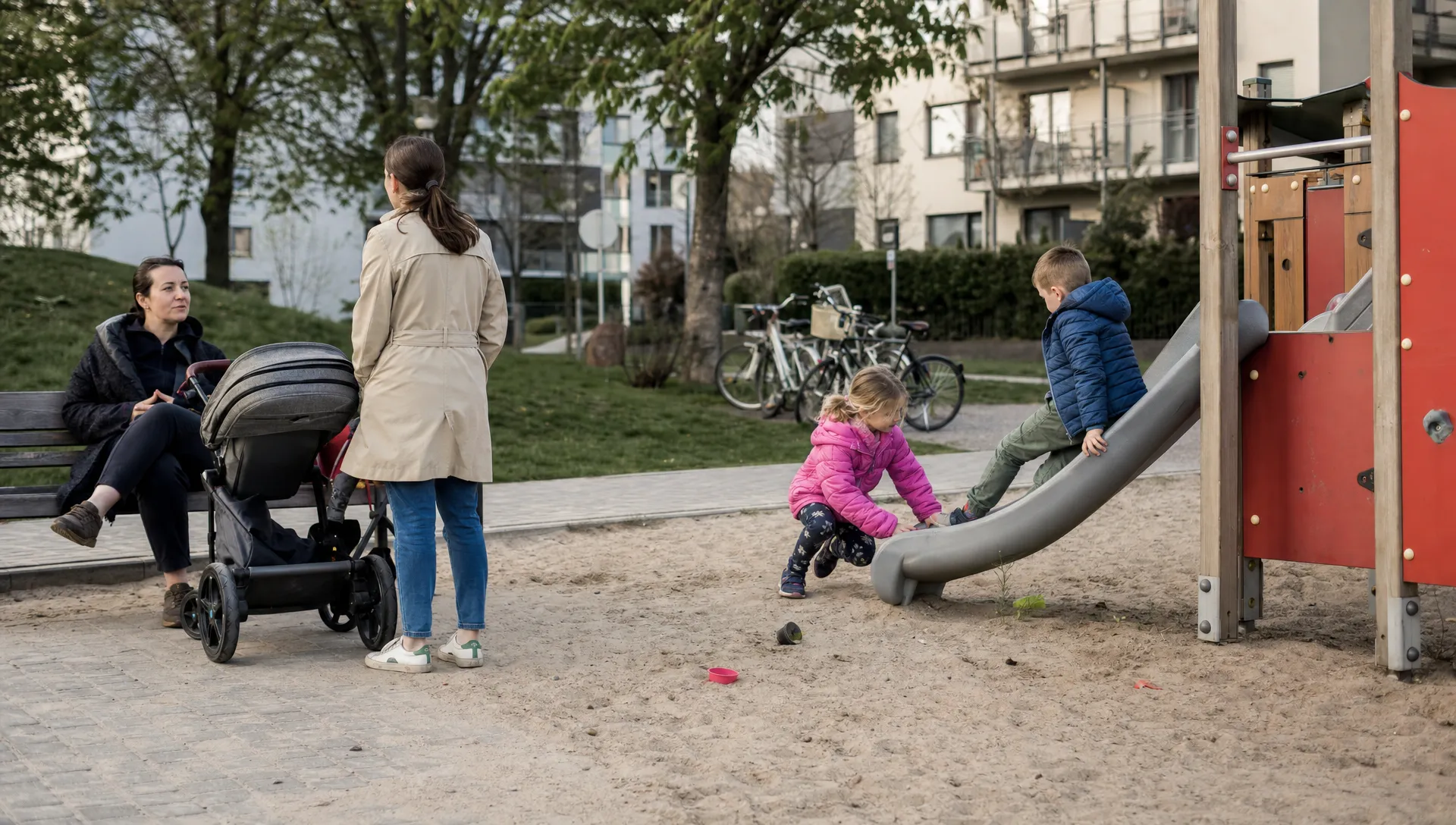
For British parents, moving to Poland with children is not simply a question of whether Poland is cheaper, safer or more convenient than the UK. It is a family decision that affects schooling, friendships, language, healthcare, grandparents, daily routines and your child’s sense of belonging. A move that feels exciting for one child can feel destabilising for another, especially if age, temperament or educational stage make the transition more complicated.
The most useful question is not “Is Poland good for families?” It is “Would Poland work for our family, with our children, at this point in their lives?” This article looks at the human side of that decision. It does not replace legal, school or residence advice, and it is not a step-by-step relocation checklist. Instead, it explains what British parents should investigate before they commit.
Moving to Poland with children: the decision is really about family fit
Poland can offer British families a lot: walkable cities, good public transport, access to parks and forests, a strong culture of family life and in many cases lower day-to-day costs than the UK. In bigger cities, you can also find English-speaking doctors, international communities and schooling options that make the transition easier.
But moving to Poland with children also means accepting real trade-offs. Polish can be a major barrier. School culture may feel more formal than some British parents expect. Grandparents are suddenly a flight away. Bureaucracy can be tiring, especially when parents are still finding their feet and children need stability.
Your children may adapt brilliantly, but they will not all adapt in the same way. A confident five-year-old may pick up Polish through play, while a 14-year-old may worry about exams, identity, friendship groups and losing their place in a UK-based social world. That does not mean teenagers cannot move successfully. It means the move needs more thought.
Before you ask whether Poland is “better” or “worse” than the UK, look at your family’s practical reality: your income source, working hours, language ability, support network, educational priorities and appetite for uncertainty.
How your child’s age changes the relocation experience
The same move can be relatively straightforward for one age group and considerably harder for another. This is one of the most important parts of moving to Poland with children, because age affects language learning, friendships, schooling and emotional resilience.
Toddlers and pre-school children
Toddlers often adapt faster than parents expect because their social world is still small. They need routine, warmth, sleep, food they recognise and trusted adults more than a detailed explanation of the move. Polish-language nursery or pre-school can work well at this age because children learn through repetition, songs and play.
The challenge is usually harder on the parents. You may be trying to work, deal with unfamiliar systems and find childcare without extended family nearby. If one parent becomes isolated at home, the whole family can feel the strain. For families with very young children, childcare availability and neighbourhood choice may matter more than school rankings.
Primary-school children
Primary-school children are often old enough to understand the move, but young enough to adapt linguistically and socially if the environment is supportive. They may still experience sadness, frustration and tiredness, especially during the first months when they cannot fully express themselves in Polish.
For this age group, school choice matters because it shapes daily belonging. A Polish state school may offer strong immersion, local friendships and a more authentic route into Polish life. A bilingual or private school may soften the transition. An international school may protect English-language learning but limit everyday Polish integration.
Teenagers
Teenagers usually need the most careful planning. They may be preparing for GCSEs, A levels or equivalent pathways, and a badly timed move can disrupt exams, subject choices and university plans. Socially, they may also feel they are losing a hard-earned identity in the UK.
This does not make moving to Poland with children impossible when you have teenagers, but it does change the risk profile. International schooling, online learning, boarding options in the UK or delaying the move may all be worth discussing. Teenagers should be involved in the decision more directly than younger children, even if the final responsibility remains with the parents.
Schools: state, private, bilingual and international options
Schooling is usually the biggest concern for British parents. Poland has several broad options, each with different implications for language, cost, integration and long-term plans.
Polish state schools can be attractive because they are local, mainstream and often the best route into Polish society. They may suit younger children or families planning to stay long term. The main challenge is the Polish language. Even bright, adaptable children can feel exhausted when every lesson, playground conversation and homework task happens in a new language.
Private Polish schools and bilingual schools may offer smaller classes, more English support or a gentler transition, depending on the school. International schools are often the easiest fit for English-speaking children, especially older pupils, but they can be expensive and places may be limited. They may also reduce daily exposure to Polish, which can slow wider integration.
For a deeper look at education choices, Move2Poland has a separate guide to schools in Poland for British and English-speaking children, which is worth reading once you know which cities you are considering.
Polish language: children may adapt, but it still matters
Parents often hear that “children pick up languages quickly”. Sometimes they do. But this phrase can understate the emotional effort involved. A child may learn playground Polish before academic Polish. They may seem fine socially but struggle to follow maths problems, history lessons or written instructions.
When moving to Poland with children, language planning should include the whole family, not just the child entering school. Parents who cannot communicate with teachers, doctors, landlords or other parents may find themselves dependent on apps, friends or their partner. That can create stress during ordinary family moments, such as arranging a playdate or explaining a medical concern.
English-speaking circles can help children feel safe at first, but total reliance on English can delay local belonging. A balanced approach often works best: protect your child’s English, support their Polish gradually and avoid treating language struggles as a sign that the move has failed.
Friends, belonging and integration
Children do not experience relocation only through houses and schools. They experience it through lunch tables, birthday parties, football practice, playgrounds and whether anyone waits for them after class.
In Poland, many friendships are built through school, family networks, sports clubs, church communities, music lessons and neighbourhood routines. In large cities, expat groups and English-speaking activities can make the early months easier. In smaller places, integration may depend more heavily on learning Polish and showing up consistently in local life.
Parents can help by choosing routines that repeat. The same playground, swimming class, football club or weekend activity gives children familiar faces. It also gives parents a chance to build their own social circle, which matters more than many families realise.
Healthcare, safety and everyday reassurance
Healthcare is another area where city choice matters. In Warsaw, Wrocław, Kraków and Tricity, families are more likely to find private clinics with English-speaking paediatricians, dentists and specialists. Public healthcare exists, but access, waiting times and language support can vary.
For British families used to the NHS, the Polish mix of public and private care can feel unfamiliar. Many families use private appointments for speed and convenience, particularly for children, while still wanting to understand emergency care, prescriptions, vaccinations and specialist access.
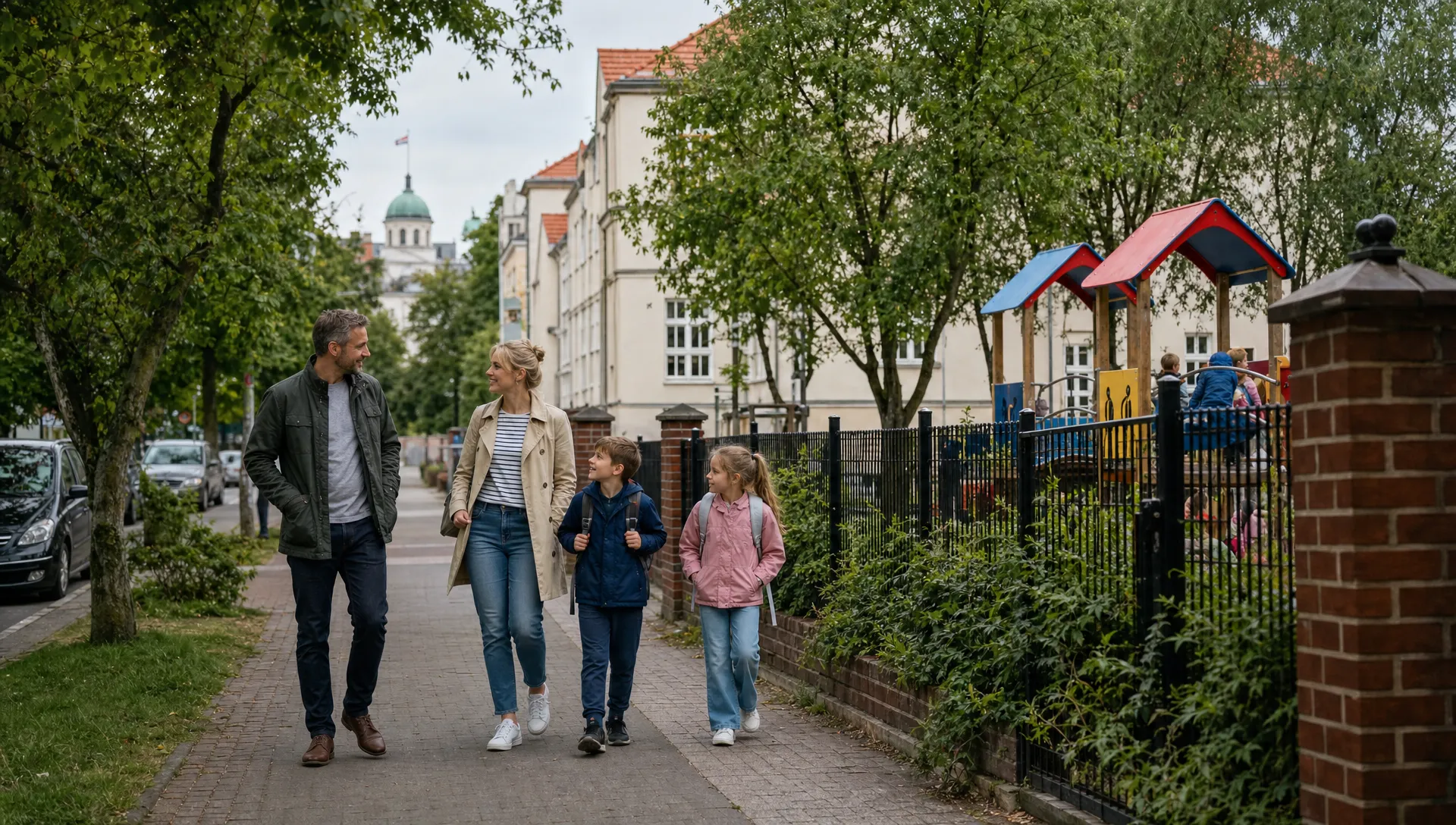
Safety is one of Poland’s genuine family advantages, especially in many residential districts where children walk to school, use public transport and spend time outdoors. That said, safety is not uniform or absolute. Traffic, winter ice, air quality in some areas and normal urban risks still matter. GOV.UK’s foreign travel advice for Poland is a sensible source for broad travel and safety context, especially if you are still comparing countries.
For many parents, moving to Poland with children feels appealing because daily life can feel calmer and more manageable than in parts of the UK. The point is to test that feeling against the actual city, district and lifestyle you would have.
Childcare and the early years
Childcare can be a major advantage or a major headache depending on location, budget and timing. Nurseries and pre-schools exist in both public and private forms, but availability varies. Popular districts in major cities can have pressure on places, while private childcare may be easier to access but more expensive than parents expect once full-day care, meals and extras are included.
For younger children, ask practical questions. Is the setting Polish-speaking, bilingual or international? How long is the day? Are meals provided? How do staff handle children who do not yet speak Polish? What happens during illness, holidays or staff absences?
You do not need every answer before deciding whether Poland is worth exploring, but you do need a realistic sense of whether childcare would support your work and family rhythm.
Housing, space and neighbourhood life
Housing affects children more than adults sometimes admit. A beautiful flat in the city centre may be convenient for parents but stressful if there is no lift, limited storage, no nearby park or a long journey to school. A larger house outside the city may give children space but make parents dependent on cars and longer commutes.
When considering neighbourhoods, look beyond rent. Think about school routes, playgrounds, public transport, winter walking distances, noise, air quality, access to doctors and whether other families live nearby. In Poland, many families live in flats, including with children, so outdoor space and nearby amenities often matter as much as square metres.
Rental expectations can also differ from the UK, including contract norms, deposits, agency fees and what is included in the monthly cost. If housing is one of your biggest concerns, it is worth reading Move2Poland’s guide to renting in Poland as a foreigner before you start comparing listings.
How city choice changes family life
City choice can completely change the experience of moving to Poland with children. Warsaw offers the largest job market, the widest international school scene and extensive services, but it can also feel busy, expensive and spread out. Wrocław is popular with international families and has a more compact feel in many districts, though demand for good housing and school places can still be high.
Kraków has strong cultural life, universities and international communities, but parents should think carefully about air quality, commuting patterns and where schools are located. Tricity, meaning Gdańsk, Gdynia and Sopot, offers access to the coast, a distinct lifestyle and growing international appeal, though school and work options depend heavily on your exact needs.
Smaller towns may offer lower costs, slower pace and stronger immersion, but fewer English-speaking doctors, fewer international schools and less support for non-Polish-speaking parents. There is no universally best family city. There is only the best fit for your work, budget, language level and children’s needs.
Activities, seasons and family time
Poland can be excellent for children who enjoy organised activities. Football, swimming, dance, martial arts, music and language classes are widely available in cities. Many families also value access to forests, lakes, mountains and the Baltic coast. Weekend trips can become a normal part of family life rather than a major expense.
The seasonal rhythm is different from much of the UK. Winters can be colder and darker, which can make indoor activities and commute planning more important. Summers can be very family-friendly, with outdoor eating, parks, city beaches, lakes and long school holidays.
Activities also help integration. A child who struggles in class may find confidence in sport or music. A parent who feels isolated may meet other families through regular classes. This is one reason family life in Poland often improves after routines are established, not immediately on arrival.
Grandparents, UK family and travel back to Britain
One of the hardest parts of moving abroad with children is the effect on grandparents and wider family. Video calls help, but they do not replace school pickups, Sunday lunches, emergency childcare or cousins growing up nearby.
Before moving to Poland with children, be honest about your family’s attachment to the UK. How often would you realistically visit? Can grandparents travel to Poland? Would school holidays overlap with work commitments? Are flights direct from your chosen city to the UK airports your family uses?
Warsaw, Kraków, Wrocław and Gdańsk all have international airports, but routes, prices and timings change. A city that looks ideal on paper may feel less convenient if every family visit requires awkward transfers. For children, maintaining UK relationships is easier when visits are predictable rather than occasional afterthoughts.
Advantages and disadvantages for British families
Poland can be a very good place to raise children, but it is not automatically easier than the UK. The honest picture includes both benefits and friction.
| Area | Possible advantage | Possible disadvantage | |------|--------------------|-----------------------| | Daily life | Walkable districts, public transport and family-friendly routines | Winter weather, language barriers and unfamiliar systems | | Education | Several school models, including state, private, bilingual and international | Language pressure, limited international places and curriculum disruption | | Costs | Some family expenses may be lower than in the UK | Salaries can be lower, and private schooling or healthcare changes the calculation | | Safety | Many areas feel calm and child-friendly | Safety varies by neighbourhood, traffic and air quality | | Family ties | Children can gain bilingual and bicultural experience | Grandparents and UK relatives become less available day to day |
This balance is why a family move should be tested through real-life scenarios, not just impressions from holidays or online forums.
What parents should investigate before deciding
Rather than building a full relocation checklist too early, start by investigating the issues that would make or break the move for your family.
Focus especially on:
- Whether each child’s age and personality fit the timing of the move
- Which school model matches your child’s language level and future plans
- How much Polish the family is willing to learn
- Whether your preferred city has suitable healthcare, childcare and housing
- How you would maintain UK family relationships
- Whether your income works under Polish costs, taxes and lifestyle expectations
- How your children feel about the move when given age-appropriate information
These are not small details. They decide whether moving to Poland with children becomes a stable family chapter or a constant source of stress.
Frequently Asked Questions
Is Poland a good place to raise British children? It can be, especially for families who value safety, city living, outdoor access and a slower pace than parts of the UK. It works best when parents have thought carefully about language, school choice, income and support networks.
Do children need to speak Polish before moving? Not always, especially if they are young or entering an English-speaking school. However, some Polish language preparation helps confidence and integration. Older children usually need more structured support.
Are international schools necessary for British children in Poland? Not always. Younger children may adapt well to Polish or bilingual schools. International schools are often more important for teenagers, children with exam commitments or families planning to stay connected to a British or international curriculum.
Which Polish city is best for families? There is no single best city. Warsaw, Wrocław, Kraków and Tricity can all work well for different families. The right choice depends on work, schools, budget, transport, healthcare, air quality and the kind of childhood you want your children to have.
Is moving to Poland with children easier than moving as a couple? Usually not. Children add school, healthcare, childcare, housing and emotional considerations. The move can still be worthwhile, but it needs more careful testing than an adult-only relocation.
Ready to move from considering Poland to planning properly?
If Poland is no longer just an idea and you are starting to weigh schools, cities, housing and timing for your family, the next step is structured decision-making. The Move2Poland Decision Guide is designed for people who need practical clarity before committing, including families who want to understand what life in Poland would really involve.
Use it before you make promises to your children, give notice on a home or choose a school from a distance. A calmer family move starts with knowing what you are really deciding.