
What Living in Poland as a Nigerian Is Really Like
Poland can offer opportunity, but your experience will depend on more than rent and a visa. Explore the realities of race, work, community and everyday life, with practical checks to make before you move.
By Move2Poland·

If you are considering living in Poland as a Nigerian, the honest answer is that it can offer a workable place to study, build a career or raise a family, but the experience depends heavily on your circumstances. Your legal status, income, city and support network matter more than a broad claim that Poland is either welcoming or unwelcoming.
You also need answers that generic relocation guides often miss: how race affects everyday interactions, whether an employer understands your work rights and where you can find familiar food, suitable hair care and people who understand your background.
The everyday picture: opportunity and adjustment
Poland can offer useful everyday conveniences: public transport in larger cities, access to universities and international workplaces, and neighborhoods where you can manage daily errands without a car. However, English-speaking social circles do not necessarily translate into English-speaking landlords, clinics or public offices.
There is no single Nigerian experience. A student in a university residence, a professional joining an international company and a parent moving to a smaller town will face different challenges. Someone arriving from Lagos may also experience the move differently from someone who has already spent years in Britain.
The strongest starting point is a specific plan: a genuine study or employment route, a realistic housing budget and a way to build connections outside work. Moving first and hoping those pieces fall into place creates avoidable pressure.
Race and belonging when living in Poland as a Nigerian
Being visibly different can affect daily life. Depending on your surroundings, you may encounter curiosity, staring, intrusive questions or assumptions about your nationality. These interactions are not all the same, but unfamiliarity does not excuse racist comments or discriminatory treatment.
Racism is a real concern, not something a relocation guide should dismiss. The Council of Europe’s country monitoring for Poland provides an institutional reference on racism and intolerance. It does not predict how a particular neighbor, employer or landlord will treat you.
A larger city can give you more choice of communities, employers and services, but it cannot guarantee acceptance. Before committing, speak with several Nigerians or other Black residents in your intended city. Ask concrete questions about housing searches, workplace treatment, nightlife and school experiences rather than simply asking whether Poland is racist.
If you experience harassment, prioritize getting somewhere safe. Keep relevant messages and documents, and record incident details when it is safe to do so. For immediate danger, call 112. When reporting an incident, ask about interpretation if you cannot communicate comfortably in Polish.
Supportive colleagues and friendships can make a substantial difference. Still, you should not have to minimize discrimination to prove that you are integrating.
Your right to stay and work comes first
The practical foundation of living in Poland as a Nigerian is a lawful residence route that matches what you intend to do. Admission to a university, a job offer and permission to enter Poland are related, but they are not interchangeable.
For Nigerian passport holders, check the Polish embassy’s official guidance for Nigeria for the visa category, appointment process and supporting documents relevant to your application. Do not rely on an agent’s assurance that a tourist visa can simply become an unrestricted work route.
If you already live in the UK, a British residence permit does not itself grant permission to live or work in Poland. Your nationality and Polish immigration route still matter. The position is different if you also hold citizenship that gives you EU free-movement rights.
Once in Poland, consult the official residence-procedure portal for your circumstances. A correctly submitted, timely residence application may allow your stay to remain lawful while a decision is pending, but it does not automatically create unrestricted work rights or permission to leave and reenter Poland.
Some full-time students can work without a separate work permit when the relevant conditions are met. Do not assume this applies to every course or residence document. Changing employer, leaving a course or losing a job may also affect your position, so establish the consequences before making the change.
Finding work without becoming dependent on an agent
For many people, living in Poland as a Nigerian becomes sustainable only when the job is both financially viable and legally secure. English-language vacancies exist, particularly in international businesses, but availability depends on your skills, sector and location. English alone is not a job guarantee.
Before accepting an offer, establish who actually employs you, what permission you need to work and whether the employer will complete any required procedures. Ask for the contract and deductions in writing, in language you understand.
An umowa o pracę is an employment contract. An umowa zlecenie is a civil-law contract with a different legal framework. Do not treat them as equivalent simply because an advertisement describes both as full-time work.
Compare take-home pay after housing, transport and any agency charges, not just the advertised gross salary. If accommodation comes with the job, ask what happens to your housing if the assignment ends.
Warning signs include requests to surrender your passport, unexplained recruitment fees, pressure to travel before receiving documents and promises that paperwork can be ignored. Verify the employer independently rather than relying exclusively on a recruiter’s messaging account.
If you earn remotely from a Nigerian or British business, check both your immigration position and Polish tax obligations. Foreign income does not automatically place you outside Polish rules.
Choose a city around your actual needs
Your city choice can shape living in Poland as a Nigerian as much as your national-level expectations. Start with your job or university, then compare housing, community access and the services you will use every week.
| City | Reasons to investigate it | What to check before choosing | |---|---|---| | Warsaw | Broad range of international employers and metropolitan services | Housing costs, commuting distance and access to your preferred community | | Wrocław | University life and international business activity | Whether your specific sector offers suitable jobs and affordable nearby housing | | Kraków | Universities and international company offices | Competition for rentals and the location of work or study | | Poznań | Business activity and university options | Availability of English-language roles and relevant support networks | | Łódź | Another option for study or employment | The particular opportunity, neighborhood and transport connections |
This is a shortlist for investigation, not a ranking of where Nigerians will feel most welcome. A supportive department or employer in one city can matter more than another city’s international reputation.
When comparing rentals, distinguish the landlord’s rent from building administration charges, utilities and the deposit. Ask for the expected total monthly payment and what can change during the tenancy. Never transfer a deposit solely because someone has sent attractive photographs.
Use Move2Poland’s 2026 cost-of-living breakdown as a starting framework, then check current listings and add expenses specific to you, including residence paperwork, trips to Nigeria and money sent home.
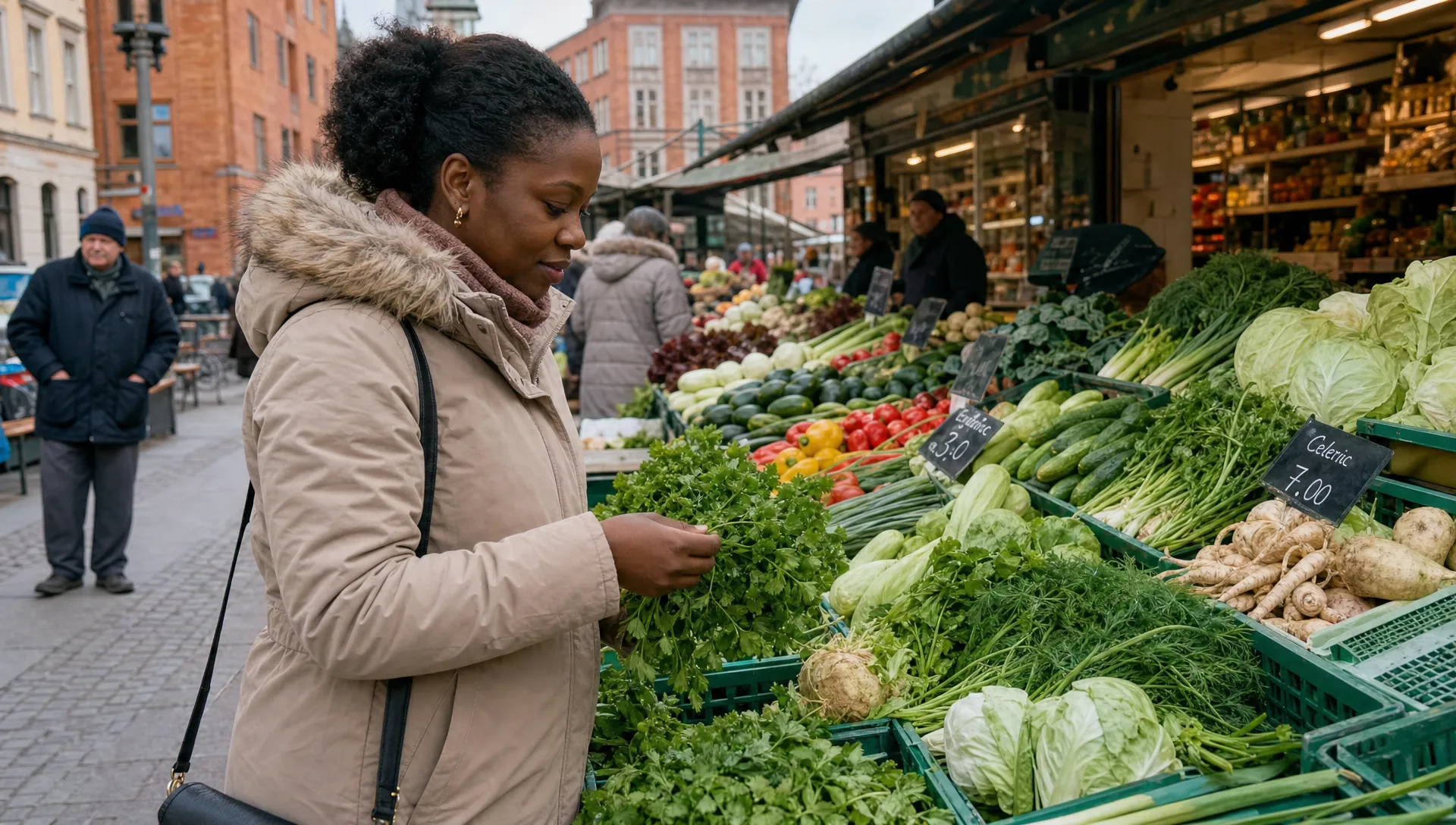
Familiar food, hair care and community matter
These are not minor comforts. Being able to cook familiar meals, find a barber or stylist who understands your hair, and spend time with people who recognize your cultural references can make a new country feel manageable.
In larger cities, investigate specialist African grocery shops and online suppliers before moving. Availability of yam, plantain, garri or egusi can vary, and imported ingredients may cost more than local staples. A mixed shopping routine is often more practical than expecting every ingredient to be available nearby.
For textured hair care, ask for recent recommendations and examples of the stylist’s work. A salon advertising services in English is not necessarily experienced with your hair type.
Nigerian associations, African student groups, churches, mosques and professional networks can provide useful introductions. Verify that a group is active and relevant to your city, and do not treat community membership as proof that a financial or immigration offer is trustworthy.
Build connections beyond one circle, too. Move2Poland’s guide to building a social life after moving explains why regular activities and repeat contact are more useful than waiting for friendships to happen.
Language, winter and healthcare require preparation
Much of the adjustment to living in Poland as a Nigerian comes from ordinary routines rather than dramatic culture shock. Three areas deserve attention before arrival.
Learn Polish for practical independence
You do not need fluent Polish before moving, but learning numbers, addresses, appointment vocabulary and basic questions reduces dependence on others. English may work well within your company or university while being much less useful at a clinic or housing appointment.
Use translation tools for simple exchanges. For contracts, medical consent or immigration decisions, seek reliable interpretation or translation rather than guessing from an automated summary.
Plan for cold weather and shorter days
If you have not lived through a European winter, prepare for more than low temperatures. Short daylight hours, slippery pavements and spending more time indoors can change your mood and social habits.
Budget for suitable footwear and warm layers, and establish activities that continue through winter. If isolation or low mood persists, seek professional support rather than assuming you simply need to adapt faster.
Confirm healthcare coverage
Access to Poland’s public healthcare system, NFZ, depends on your insurance entitlement, not merely having a residence card. Employment, student arrangements and other routes can create different situations.
Ask your employer or university how coverage is established and confirm whether dependents are included. If you use private insurance, check exclusions and actual benefits. A policy accepted for immigration purposes may not provide all the everyday care you expect.
Moving with children changes the decision
For a family, living in Poland as a Nigerian requires a school-level assessment, not just a city-level one. Ask prospective schools how they support children learning Polish, communicate with parents and respond to racist bullying. Request specific procedures rather than accepting a general statement that everyone is welcome.
Children may learn the language faster than their parents, but that does not mean the emotional adjustment is effortless. Make room for familiar food, friendships and cultural connections alongside school integration.
Check school placement, childcare availability, family healthcare and suitable housing before committing. Also verify each family member’s residence route. One adult’s admission or employment offer does not automatically settle the paperwork for everyone else.
Questions to settle before you commit
A move becomes easier to evaluate when you can answer these questions with documents and current information rather than promises:
- What permits you to enter, stay and carry out your intended work or studies?
- What remains from your monthly income after all housing costs and essential expenses?
- Who can help locally if a job, tenancy or residence application becomes difficult?
- Have you spoken with Nigerian or other Black residents whose circumstances resemble yours?
- Could you fund a delayed start, an unexpected move or a return journey without depending on a recruiter?
If several answers remain unclear, postponing the move may be more sensible than accepting unnecessary risk. An exploratory visit can help you assess neighborhoods and daily routines, but a short visit cannot establish how a workplace or school will treat you over time.
Frequently asked questions
Is living in Poland as a Nigerian safe? Safety depends on your location, circumstances and the situation. Assess ordinary neighborhood risks alongside the possibility of racist harassment. Speak with current residents, investigate your workplace or school and keep emergency contacts available. No guide can guarantee that you will avoid discrimination.
Can Nigerians work in Poland? Yes, provided they have the appropriate right to stay and work. Depending on the circumstances, an employer may need to obtain permission, or an exemption may apply. A job offer alone is not sufficient proof that you can start working legally.
Can I manage with English? You may manage work or study in English, especially in international settings. Daily administration, healthcare and housing can be harder. Basic Polish improves independence even if your main professional environment uses English.
Which Polish city is best for Nigerians? There is no universal best city. Compare your actual employment or study opportunity, total housing costs, community connections and family needs. Ask residents about the specific neighborhood and institution you are considering.
Is Poland cheaper than the UK? Some expenses may be lower, but your income matters just as much. Compare net earnings with your complete budget rather than converting prices alone. Imported food, travel to Nigeria and relocation paperwork can materially affect your spending.
Make the decision around your circumstances
The useful question is not whether Poland is good or bad in general. It is whether your proposed move gives you a lawful route, sustainable income and a realistic chance of building a life you want.
If you want help assessing living in Poland as a Nigerian, Move2Poland’s relocation guidance includes discovery calls, personalized planning and an in-person orientation experience in Wrocław. Bring your nationality, current country of residence, work or study plans and family circumstances so the discussion starts with your actual situation, not a generic expat checklist.