
When You Need a Visa for Poland Before Moving
Not everyone needs a visa before landing in Poland, but most movers need more than a passport. This guide explains visa-free entry, national visas, residence permits and the checks to make before you book.
By Move2Poland·

If you searched for “poland need visa,” you are probably not asking one simple question. You may be asking whether you can board a flight, whether you can stay longer than 90 days, whether you can work legally or whether your family can settle with you. Those are related, but Polish immigration rules treat them differently.
The safest way to think about it is this: a visa gets you into Poland, or lets you stay for a defined purpose for a limited time. A residence permit is what usually matters if you are truly moving, renting long term, working locally, enrolling children in school or making Poland your base.
“Poland need visa”: the short answer before you relocate
Some people need a visa before they travel to Poland. Others can enter visa-free for short stays, then deal with residence paperwork after arrival if they plan carefully. EU, EEA and Swiss citizens do not need a visa, but they may need to register their stay after three months.
For non-EU citizens, the answer depends mainly on your passport, your length of stay and your purpose. The Polish Ministry of Foreign Affairs visa guidance separates short-stay Schengen visas from long-stay national visas, and this distinction matters when you are moving rather than visiting.
If you are coming for a scouting trip, a visa-free passport may be enough. If you are coming to start a job, study, join family or stay beyond the normal short-stay allowance, you need to look beyond tourist entry rules.
Start with your passport, not your plan
The first immigration filter is nationality. Poland is in the Schengen Area, so short-stay entry is shaped by Schengen rules as well as Polish national rules. Many passports, including British, American, Canadian and Australian passports, allow visa-free short stays in the Schengen Area for up to 90 days in any 180-day period.
That is why the common “poland need visa” question often has a frustrating answer: maybe not for entry, but possibly yes for your actual move. Visa-free entry is usually for short stays such as tourism, business meetings or family visits. It is not the same as long-term residence.
Citizens of countries that are not visa-exempt for Schengen must normally apply for a visa before traveling. This can be a Schengen C visa for a short stay or a national D visa if the purpose and length of stay justify it.
The main visa and residence categories
Before you book movers or sign a lease, separate the paperwork into three broad categories. This table is simplified, but it helps you identify the route you are likely dealing with.
| Situation | Usually needed before arrival | Usually handled in Poland | Typical issue to check | |---|---|---|---| | EU, EEA or Swiss citizen moving to Poland | No visa | Registration of stay after 3 months | Proof of work, study, funds or family basis | | Visa-exempt non-EU citizen visiting first | Usually no visa for short stay | Temporary residence if staying longer | 90/180-day limit and work rights | | Visa-required non-EU citizen | Visa before travel | Residence permit if staying longer | Correct visa type for purpose | | Person coming for employment | Sometimes national visa, depending on passport and timing | Work authorization and residence | Employer documents and start date | | Student accepted by a Polish institution | Often national visa if long stay | Student residence permit | Enrollment, funds and insurance | | Family member joining someone in Poland | Depends on nationality and sponsor status | Family-based residence | Relationship documents and legal stay of sponsor |
This is where “poland need visa” becomes a planning question rather than a yes-or-no search. The correct answer depends on whether your move is temporary, open-ended or tied to a specific legal basis such as employment, study or family reunification.
When you need a visa before arriving in Poland
You normally need a visa before arriving if your passport requires a Schengen visa for any entry into Poland. In that case, you should not assume you can arrive first and fix things later. Airlines and border guards can refuse travel or entry if the visa is missing, invalid or inconsistent with your purpose.
You may also need a visa before arriving if you are planning a long stay and need legal entry tied to that purpose. A national D visa can be used for stays longer than 90 days, often for work, study or family reasons. It is issued by a Polish consulate and is not the same thing as a residence card.
If your job or university has a fixed start date, applying for the correct document in advance can reduce pressure. Residence permit processing inside Poland can take time, and a pending application may limit travel flexibility.
When you may not need a visa before moving
If you have a visa-exempt passport, you may be able to enter Poland without a visa for a short stay. For example, British citizens can generally enter the Schengen Area visa-free for short visits, but since Brexit they are treated as non-EU citizens for residence and work purposes.
For UK readers, Move2Poland has a more specific guide to post-Brexit visas for UK citizens moving to Poland, including visa-free entry, temporary residence and practical timing issues.
The key is not to confuse entry with settlement. A visa-exempt stay can give you time to look for housing, visit schools or attend meetings. It does not automatically let you live in Poland indefinitely or work for a Polish employer.
If your “poland need visa” search is really about moving from a visa-exempt country, your next step is to check whether you need a temporary residence permit, a work permit or both.
Visa, residence permit and Karta Pobytu are not the same
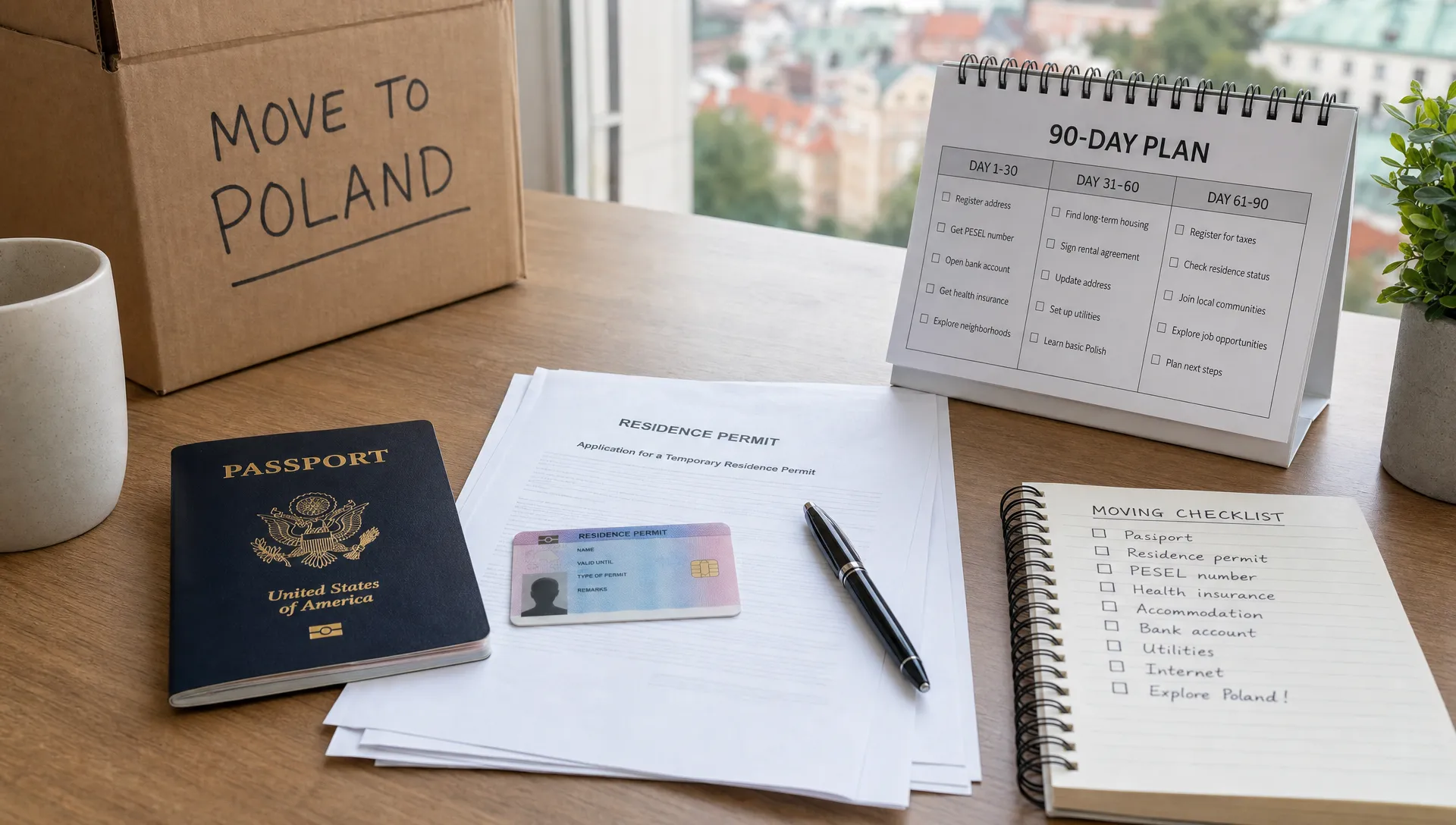
A visa is usually placed in your passport before travel. A temporary residence permit is applied for in Poland, usually at the voivodeship office, when you have a legal basis to stay longer. If approved, you receive a residence card, commonly called a Karta Pobytu.
The Polish Office for Foreigners is the main official source for residence procedures and categories. Local voivodeship offices handle many applications, so exact appointment systems and document expectations can vary by region.
A common relocation mistake is arriving on a short-stay basis, then assuming a residence card will be quick. Processing times can vary, and during the waiting period you need to understand what you can and cannot do. For example, a stamp confirming a submitted application may legalize your stay in Poland while the case is pending, but it is not a Schengen travel document.
Work is where many movers get caught out
Employment adds another layer. Being allowed to enter Poland is not the same as being allowed to work there. Many non-EU citizens need a legal work basis, such as a work permit, a declaration of entrusted work for eligible nationalities or a residence permit that includes work authorization.
The employer often plays a major role, because work permits are usually connected to a specific employer and position. If you plan to arrive first and job hunt later, be realistic about timing, savings and your right to remain while the process unfolds.
For a deeper explanation of the employment route, see Move2Poland’s guide on how to get a work permit in Poland as a foreigner. It is especially relevant if your move depends on a Polish employment contract rather than remote work, savings or family ties.
The “poland need visa” question is therefore incomplete for workers. You need to check entry permission, work permission and residence permission as three connected but separate pieces.
Families, partners and children need extra lead time
Family moves often require more documentation than solo moves. Marriage certificates, birth certificates, custody documents and proof of relationship may need legalization, apostille or certified translation into Polish. Requirements depend on the issuing country and the office reviewing the case.
If one partner is an EU citizen and the other is not, the non-EU partner may have a different route from a non-EU family moving together. If one parent is moving ahead first, the family’s timing can affect school enrollment, housing and health insurance.
Children also make the 90/180-day clock more important. A parent may be comfortable waiting for paperwork, but schools, landlords and insurers often need clearer documentation. If you are planning a family move, build in time before the school year starts and avoid treating visa-free entry as a full relocation plan.
How to check your answer before you commit
Use official sources first, then plan around your real move. Embassy websites and consulates are the right place for visa applications. The Office for Foreigners and voivodeship offices are the right place for residence rules. Your employer, university or family sponsor may also need to provide documents before you can apply.
A practical pre-move check should answer these questions:
- What passport will you enter Poland with?
- Are you visa-exempt for Schengen short stays?
- Will your stay exceed 90 days in any 180-day period?
- Will you work for a Polish employer, run a business or work remotely?
- What legal basis will you use for residence?
- Can you gather apostilled and translated documents before departure?
- What happens if processing takes longer than expected?
This is also where professional guidance can save time. If your circumstances cross categories, such as remote work plus a Polish spouse, study plus part-time work or a UK company salary while living in Poland, your answer may not fit a simple checklist.
A simple decision tree for your situation
If you are an EU, EEA or Swiss citizen, you do not need a visa to move to Poland. Your focus is registration, housing, healthcare, tax status and local bureaucracy.
If you are a visa-exempt non-EU citizen coming for a short scouting visit, you may not need a visa before arrival. Keep strict track of the 90/180-day Schengen rule and do not assume this gives you the right to work or settle.
If you are a visa-exempt non-EU citizen planning to stay, identify your residence basis before you land. You may be able to apply in Poland, but timing matters.
If you are from a visa-required country, contact the Polish consulate responsible for your place of legal residence before making travel plans. You will likely need the correct visa before you arrive.
If the sentence “poland need visa” brought you here because you are planning a permanent move, treat the visa question as step one. The bigger decision is whether your full legal, tax, work and family situation supports the move.
Common mistakes to avoid
The first mistake is counting 90 days from one trip only. The Schengen limit is usually 90 days in any rolling 180-day period, across the Schengen Area, not just Poland.
The second mistake is assuming that a landlord, school or employer will understand your status. Many will ask for documents and may not accept vague explanations about pending paperwork.
The third mistake is applying too late. If your legal stay is close to expiring, you have fewer options and more stress. Apply early enough to handle missing documents, appointment delays and translation issues.
The fourth mistake is relying only on social media anecdotes. Immigration outcomes depend on nationality, timing, documents, office practice and purpose of stay. Someone else’s successful shortcut may not apply to you.
Frequently Asked Questions
Do UK citizens need a visa for Poland before moving? UK citizens usually do not need a visa for short Schengen visits, but moving to Poland after Brexit normally requires residence planning and, if working, the right work authorization.
Does a Schengen visa let me live in Poland? No. A Schengen C visa is for short stays, generally up to 90 days in a 180-day period. Long-term residence requires a different basis, often a national visa first or a temporary residence permit.
Can I apply for a Polish residence permit after arriving visa-free? Some visa-exempt non-EU citizens can apply in Poland while legally present, but you should confirm your eligibility, timing and documents before relying on this route.
Do I need a visa if I work remotely from Poland? Entry may be visa-free for some passports, but living in Poland while working remotely can raise residence, tax and social security questions. Visa-free tourism rules are not a complete remote-work plan.
Why does the “poland need visa” answer differ between people from the same country? Two people with the same passport may have different answers if one is visiting for three weeks and the other is moving for work, study or family reunification.
Get clarity before you build your move around assumptions
Polish immigration planning is manageable when you separate entry, residence and work rights early. The trouble starts when people treat a visa-free visit as permission to relocate without checking the next steps.
If you want a practical read on whether Poland fits your situation, Move2Poland offers clear relocation guidance, including discovery calls, decision support and planning around visas, taxes, bureaucracy and city choice. Start with the broader Move2Poland relocation guidance before you commit to flights, leases or school applications.