
How to Get a Work Permit in Poland as a Foreigner
A Polish work permit is usually employer-led, tied to a specific job and separate from your right to stay. This guide explains the main routes, documents, timelines and mistakes foreigners should understand before accepting work in Poland.
By Move2Poland··Updated 17 September 2026
A Polish work permit is usually not a document you get on your own. In most standard cases, the employer in Poland applies for it because the permit is tied to a specific company, job title, workplace, salary and period of employment.
That one detail prevents a lot of confusion. A work permit in Poland is not a general right to work anywhere in the country. It is not the same as a visa. It is not the same as a residence card. And if you are moving from the UK after Brexit, it is not replaced by the 90-day visa-free travel rule.
This guide explains how the process works in 2026, who needs a permit, which route may apply, what documents are usually involved and what to check before you accept a job offer in Poland.
Who needs a work permit in Poland?
If you are a citizen of an EU country, the EEA or Switzerland, you do not need a Polish work permit. You can work in Poland under EU free movement rules, although you may still need to register your stay if you remain in Poland for more than 3 months.
If you are a non-EU citizen, including a UK citizen after Brexit, you will usually need a legal basis to work. That may be a work permit, a temporary residence and work permit, another residence status that gives access to the labor market or an exemption under Polish law.
For British movers, this is a major post-Brexit shift. UK citizens can still visit the Schengen Area for short stays, but moving to Poland for employment is a different matter. If you are planning from Britain, it is worth reviewing the broader post-Brexit visa rules for UK citizens moving to Poland before you focus only on the employment paperwork.
| Your situation | Do you usually need a work permit? | What to check | |---|---:|---| | EU, EEA or Swiss citizen | No | Stay registration if living in Poland longer than 3 months | | UK citizen hired by a Polish employer | Usually yes | Work permit plus visa or residence basis, unless exempt | | Non-EU citizen hired by a Polish employer | Usually yes | Employer-led work permit or temporary residence and work permit | | Full-time student or graduate in Poland | Often exempt | Specific conditions and your residence basis | | Permanent resident or long-term EU resident in Poland | Often exempt | The exact wording on your residence decision or card | | Ukrainian citizen under special rules | May follow a simplified route | Current temporary protection and notification rules |
Poland has several exemptions, so do not assume the answer based only on nationality. Your residence status, education history in Poland, family situation and type of job can change the analysis.
What a Polish work permit does, and what it does not do
A work permit gives a specific Polish entity permission to employ or engage you under the conditions listed in the permit. It normally states the employer, position, work location, contract type, working time, salary and validity period.
It does not automatically give you the right to enter Poland or stay in Poland long term. If you are outside Poland, you may need the work permit so you can apply for the correct visa at a Polish consulate. If you are already in Poland legally, you may instead apply for a temporary residence and work permit, often called a single permit, if you meet the conditions.
Think of the work permit and your immigration status as two separate questions:
| Question | Document or status involved | |---|---| | Can this Polish employer legally hire me for this role? | Work permit, exemption or labor market access through residence status | | Can I legally enter and stay in Poland? | Visa, temporary residence permit, permanent residence or another legal stay basis |
You generally need both answers to be yes before you start work. Starting too early can create problems for you and the employer, including fines, future residence issues and refusal risks in later applications.
Main work routes for foreigners in Poland
Most foreign employees come through one of the routes below. The names matter because each route has different paperwork and responsibility.
| Route | Who it is for | Who applies? | Key point | |---|---|---|---| | Type A work permit | Foreigner employed by an employer based in Poland | Employer | The most common route for a Polish job offer | | Type B work permit | Certain management board members and company representatives | Company or entity | Relevant for company directors and board roles | | Type C, D or E work permit | Foreigners posted to Poland by a foreign employer | Employer or posting entity | Used for assignments, services and intra-company situations | | Seasonal work permit | Seasonal jobs in sectors such as agriculture, horticulture and tourism | Employer | Usually handled through the local labor office | | Declaration route | Citizens of selected countries, often for simplified employment | Employer | Availability depends on nationality and current rules | | Temporary residence and work permit | Foreigners already in Poland legally who want residence and work authorization together | Foreigner | Combines stay and work in one residence decision |
For a typical foreigner who has received a job offer from a Polish company, the Type A work permit or the temporary residence and work permit are the most relevant options.
Step-by-step: how to get a work permit in Poland
The exact procedure depends on the voivodeship, the type of permit and the facts of the case. Still, the standard employment process usually follows this pattern.
1. Get a concrete job offer from a Polish employer
A standard work permit starts with a real job offer. The employer must be willing to sponsor the process and provide specific employment terms.
At this stage, make sure the offer is precise. You should know the job title, workplace, contract type, gross salary, working hours, start date and whether the role is employment-based or a civil law contract. Vague promises are risky because the permit is issued for defined conditions.
2. Confirm the correct route before filing anything
The employer should confirm whether you need a Type A permit, a seasonal permit, a declaration, a posting-related permit or a different route. If you are already in Poland and want to remain long term, you may need to compare a separate work permit plus visa route with the single temporary residence and work permit route.
This is also the moment to check whether an exemption applies. For example, some graduates of Polish institutions and certain residence card holders can work without a separate permit. Do not rely on informal advice from friends because small differences in status can change the answer.
3. Employer prepares the work permit application
For a standard Type A work permit, the Polish employer applies to the voivode, meaning the regional governor, usually based on the employer's registered office or place of business. Under recent digitization reforms, many employment-of-foreigner procedures are handled through Poland's official praca.gov.pl portal.
The employer typically has to provide company details, information about the job, proposed employment conditions, your personal details and supporting documents. Older guides often mention a labor market test from the local labor office. Polish rules changed significantly in 2025, so employers should not rely on outdated checklists. Local restrictions, occupation rules and refusal grounds can still matter.
4. Submit documents and wait for the decision
Once filed, the application is reviewed by the relevant authority. Processing time depends heavily on the region, workload, completeness of the file and whether the authority asks for additional information.
A clean, well-prepared application can move faster, but delays are common in busy voivodeships. If the employer needs you urgently, they should start the process early rather than assume it will take a few weeks.
5. Receive the permit and check every detail
If approved, the work permit will list the conditions under which you can work. Check the employer name, job title, salary, working time, workplace and validity period. A small mismatch can create practical problems later, especially when applying for a visa or residence card.
The employer should give you a copy. Keep it with your immigration documents, employment contract and any later decisions or amendments.
6. Apply for the right visa or residence status if needed
If you are outside Poland, you may need to use the permit to apply for a national visa at the Polish consulate responsible for your place of residence. If you are already in Poland, you may need to maintain legal stay and, where appropriate, apply for temporary residence.
The work permit alone is not enough if your stay basis does not allow you to live and work in Poland for the period you need. For longer moves, the Office for Foreigners provides general information in English through the Polish government immigration portal.
7. Sign the correct contract before starting work
Before you begin, your contract should match the permit conditions. If the permit says one salary, working time or role, but the contract says something different, the employer should resolve that before your start date.
You should understand the contract you are signing. Ask for clarification on gross versus net salary, paid leave, probation periods, termination rules, overtime and social insurance registration. These details affect your real life in Poland, not just your immigration file.
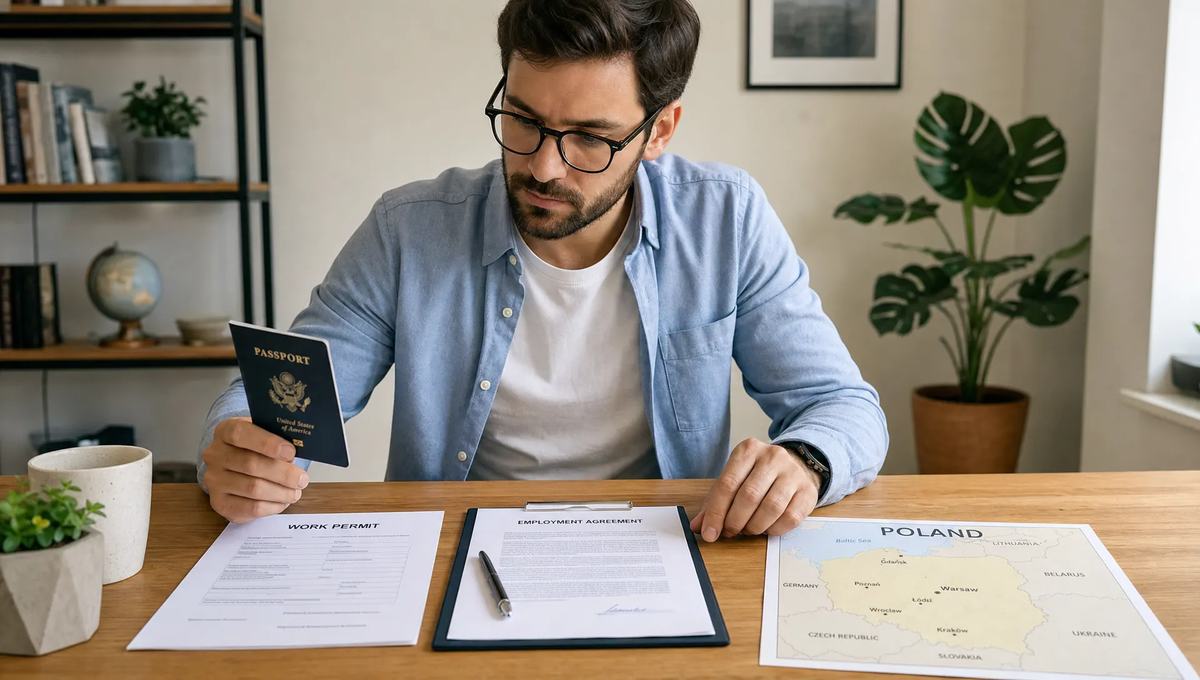
Documents usually needed for a Polish work permit
The employer carries most of the formal burden, but you will still need to provide accurate personal and professional information. Missing or inconsistent documents are one of the easiest ways to slow the process down.
Common documents and information include:
- A valid passport and copies of relevant pages
- Your personal details, citizenship and current address
- Job title, salary, working hours and workplace information
- Draft contract or employment terms
- Employer registration documents, such as KRS or CEIDG details
- Proof of qualifications or experience, especially for regulated roles
- Evidence of legal stay if you are already in Poland
For regulated professions, the work permit is only one layer. Doctors, dentists, nurses, architects, lawyers and some technical specialists may need separate recognition of qualifications, licensing, chamber registration or Polish language requirements. For example, a dentist or orthodontic professional coming from another country may have strong clinical experience from a practice focused on digital orthodontics in Bucharest, but Polish licensing and professional rules still need to be checked separately.
If your documents are not in Polish, the authority or employer may ask for translations. In formal immigration and administrative procedures, sworn translations are often required. Your employer should confirm the exact format before you spend money on translations.
How long does a work permit in Poland take?
There is no single reliable timeline for all of Poland. In practice, some applications may be processed in several weeks, while others can take a few months or longer. Large cities and high-volume regions often have heavier caseloads.
The timeline may be affected by:
- The voivodeship handling the file
- Whether the employer has submitted a complete application
- The type of permit requested
- Your nationality and personal circumstances
- Requests for missing documents or explanations
- Changes in law, staffing levels or local practice
If you need a visa after the work permit is issued, add consulate appointment time and visa processing time to your plan. A realistic relocation timeline should include both the Polish employer-side procedure and your own immigration steps.
How much does a Polish work permit cost?
Official government fees for work permits are usually modest compared with the wider cost of relocation, but amounts can change and depend on the type and duration of permit. Employers may also face internal costs, translation costs, administrative support costs or legal fees if they use an adviser.
For a standard employer-sponsored permit, the employer normally pays the official application fee. Be careful if a recruiter or company asks you to pay large unofficial fees for access to a job. That is a warning sign, especially if the offer is vague or the employer refuses to provide written terms.
Your personal costs may include visa fees, translations, document legalization, travel to a consulate, temporary accommodation and the cost of moving before your first salary arrives. If you are comparing cities and salary offers, do not look only at the gross salary. Rent, utilities, transport and childcare can change the picture quickly.
Can you change jobs after getting a work permit?
Usually, not freely. A Polish work permit is generally tied to the employer and conditions named in the decision. If you change employer, role, working time, salary or work location, the employer may need a new permit, an amendment or a notification, depending on the change.
This is especially important for foreigners who accept a job as a way into Poland and plan to switch soon after arrival. If your legal work basis depends on that specific employer, leaving the job can affect your right to work and sometimes your residence situation.
Before changing jobs, ask three questions:
| Question | Why it matters | |---|---| | Is my right to work tied to this employer? | If yes, a new employer may need a new authorization | | Is my residence card linked to this job? | A job change may trigger notification or a new application | | Can I legally work during the transition? | Waiting periods can create gaps if not handled carefully |
Do not resign based only on a verbal promise from a new employer. Get proper advice first, especially if your residence permit is close to expiry.
Work permits, remote work and B2B contracts
Not every foreigner moving to Poland is taking a Polish employment contract. Some people work remotely for a UK employer, contract with clients abroad or set up as self-employed in Poland. Those situations are different from a standard work permit case.
If you are working remotely for a company outside Poland, a Polish work permit may not be the main issue, but residence rights, tax residence, social security and employer compliance can become the real problems. UK remote workers should look closely at tax in Poland for UK remote workers before assuming they can simply bring a UK job with them.
If you plan to invoice clients through a Polish sole proprietorship or company, you are entering a different legal and tax setup. Poland's B2B market can be attractive for IT specialists and consultants, but it is not the same as employment and does not automatically solve immigration status. The Move2Poland guide to B2B contracts in Poland is a useful next step if you are considering self-employment rather than payroll employment.
Common mistakes foreigners make with Polish work permits
The most common mistake is treating the work permit as a general authorization. It is not. If the permit was issued for Company A, you cannot automatically use it for Company B.
Another mistake is confusing the right to work with the right to stay. A work permit can support a visa or residence application, but it does not replace one. This is especially risky for people who enter Poland visa-free, start arranging work and then realize too late that their stay clock is running.
Foreigners also get into trouble when job terms change but paperwork does not. If the salary, workplace or role changes, ask whether the permit or residence decision needs to be updated. Polish authorities care about the actual conditions, not just the original application.
Finally, many people underestimate bureaucracy. Poland can be a good place to build a life, but paperwork is part of the move. If you want a more realistic view of the adjustment beyond forms and permits, read Move2Poland's guide on why Poland will test you and why it can still be worth it.
Frequently Asked Questions
Can I apply for a work permit in Poland myself? For a standard Type A work permit, the Polish employer applies. If you are applying for a temporary residence and work permit from inside Poland, you as the foreigner submit that residence application, but the employer still provides key job documents.
Do UK citizens need a work permit in Poland after Brexit? Usually yes, unless they have another status or exemption that gives access to the Polish labor market. Visa-free travel for short stays does not equal a general right to live and work in Poland.
Is a work permit the same as a Karta Pobytu? No. A work permit authorizes a specific job. A Karta Pobytu, or residence card, confirms a residence status. Some residence decisions include the right to work, but you need to read the decision carefully.
Can I start work while waiting for the permit? Do not assume you can. In many cases, you must wait until the correct work authorization and legal stay basis are in place. Some continuation rules exist in specific situations, but they depend on your facts.
How long is a Polish work permit valid? A standard work permit is issued for a defined period. Many are valid for up to 3 years, but the actual period depends on the application, job and authority decision.
What happens if I lose my job in Poland? Your right to work and, in some cases, your residence status may be affected. You may need to notify the authority, find a new employer, apply for new authorization or adjust your residence plans.
Need help deciding your Poland route?
A work permit is only one part of the move. Before you commit, you need to understand whether Poland fits your work situation, family plans, tax position, city preferences and tolerance for bureaucracy.
Move2Poland helps individuals and families make that decision with practical relocation guidance, discovery calls, visa and residency guidance, tax and bureaucracy support, city selection advice and on-the-ground orientation in Wrocław.
If you are weighing a job offer or planning a move from the UK, start with Move2Poland and get clarity before you build your relocation plan around assumptions.