
Raising Children in Poland vs the UK: What Families Need to Know
From parental leave and childcare costs to schools, healthcare and everyday family life, here’s what parents should weigh before making the move.

For many British families considering relocation, Poland enters the conversation because of work, lower day-to-day costs or the chance to live closer to extended family. Once children are involved, the decision becomes about much more than salaries or rent.
How easy is it to find childcare? What will a change of school system mean? Is healthcare accessible? Most importantly, will your children feel settled rather than simply moved?
Poland can offer affordable family living, strong academic outcomes and a more intergenerational rhythm of life. The UK offers familiar English-language systems, diverse communities and, in many places, broader specialist provision. Neither answer is automatic: the child’s age, language, school needs, city and access to family support can change the calculation completely.
Poland vs the UK at a glance
These are useful starting points, not promises. Entitlement, local availability and the UK nation involved all matter.
Paid maternity leave
Poland20 weeks for one child
UKUp to 52 weeks; statutory pay may cover 39
Additional parental leave
PolandUp to 41 weeks for one child, with parent-specific rules
UKShared Parental Leave may be available
Nursery costs
PolandOften lower; subsidies and eligibility vary
UKOften high; funded provision differs by nation
Public healthcare
PolandNFZ for eligible families
UKNHS, free at point of use
Primary school starts
PolandUsually in the calendar year a child turns 7
UKUsually 4–5, depending on the UK nation
Primary education
PolandEight-year primary school
UKStructure differs across the four UK nations
Family lifestyle
PolandOften intergenerational and locally rooted
UKOften more linguistically diverse and flexible
Parental leave: compare the whole package
In Poland, an employed mother generally has 20 weeks of maternity leave after one birth. Parents may then have up to 41 weeks of parental leave for one child, subject to eligibility and non-transferable portions, while fathers can qualify for two weeks of paternity leave. Unpaid childcare leave may also be available in qualifying employment situations.
In the UK, maternity leave can run for up to 52 weeks, although Statutory Maternity Pay normally covers up to 39 weeks. Paternity and Shared Parental Leave have their own employment and earnings tests. The practical comparison is therefore not simply which country offers more weeks, but what your household qualifies for and how much of that time is paid.
Key takeaway
Poland’s combination of paid maternity and parental leave can give eligible families valuable time in a child’s earliest years—but employment status and parent-specific rules matter.
Childcare costs: often lower, never one-size-fits-all
Public nurseries in Poland are subsidised, while eligible families may receive national support towards nursery care. Private nursery fees are often lower than those in major UK cities, but places, local charges and English-language provision vary sharply by neighbourhood.
Public nursery
Subsidised, with local availability and waiting lists
Private care
Often less than London prices, but city-dependent
Preschool
A mix of public and private options from early years
UK support is not a single system. England offers funded hours for eligible working families, while Scotland has its own funded early-learning offer; Wales and Northern Ireland operate separate schemes. Compare your real entitlement in the UK nation you live in with confirmed fees in the Polish district you are considering.
Education: different structures, strong outcomes
Children in Poland generally begin compulsory primary school in the calendar year they turn seven, after compulsory preschool preparation at six. The system then runs through eight years of primary school before general, technical or vocational secondary routes.
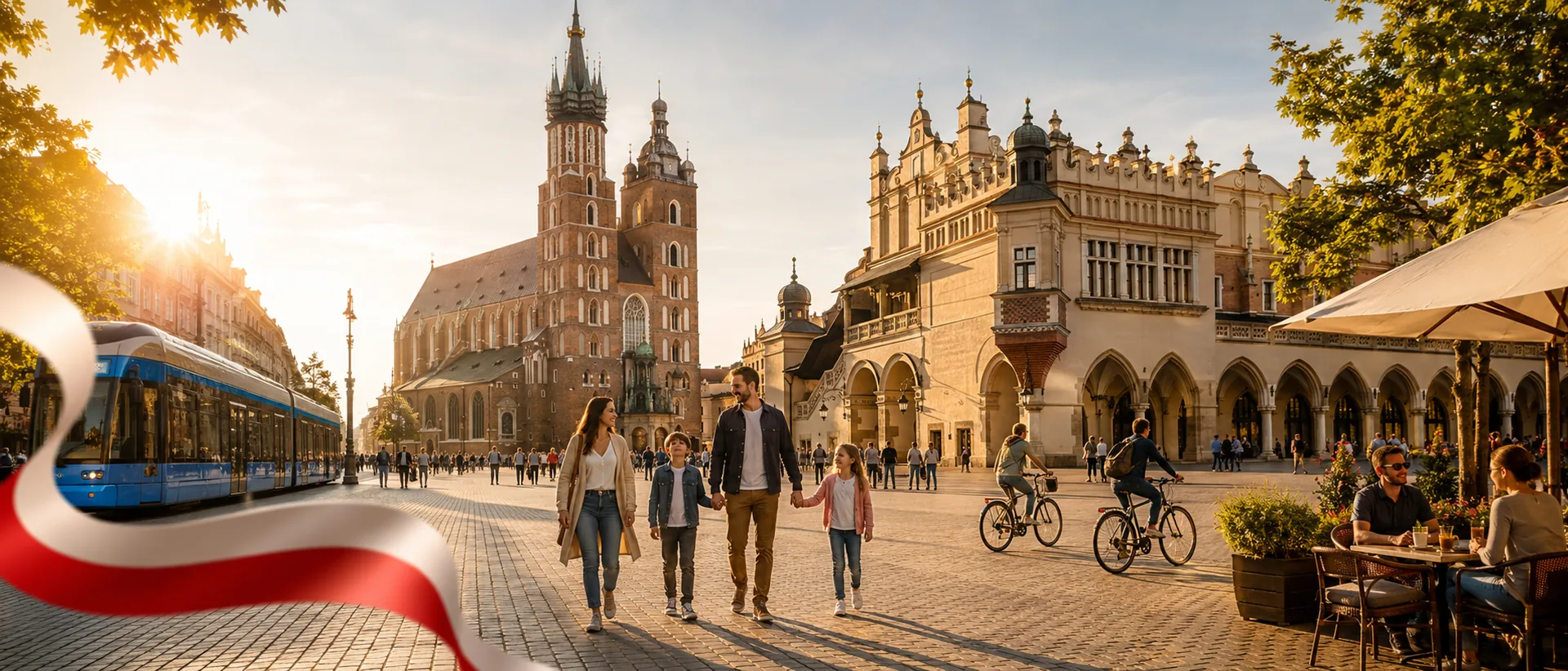
School choices
- Polish public schools with additional language support
- Private and international schools
- British-curriculum schools in selected cities
- International Baccalaureate programmes
OECD PISA 2022 results placed both Poland and the UK above the OECD average across core subjects, with a mixed picture rather than a clear winner. UK comparisons also carry an OECD sampling caution. A school’s culture, language support, class group and fit for your child are more useful than national league-table shorthand.
From September 2026, Poland’s homework rules change again: written homework is not assigned in classes I–III, while in classes IV–VIII it is voluntary, checked and may support the annual grade. That is a narrower policy than saying Poland has “banned homework”.
Healthcare: two public systems, different experiences
Both countries have public healthcare, but entitlement and how families navigate appointments differ. This is a decision-level comparison, not a registration guide.
Poland
- NFZ primary and hospital care for eligible families
- Paediatric care through public providers
- Affordable private appointments are widely used in cities
- English availability varies by provider and location
UK
- NHS care free at the point of use
- Familiar GP-led referral pathways
- Strong specialist networks in many areas
- Waiting times can affect non-urgent treatment
The cost of raising a child
Many households moving from London find that a larger home and regular family activities are more attainable in cities such as Wrocław, Kraków or Poznań. That advantage narrows if the household earns locally, pays international-school fees or chooses a central neighbourhood.
Explore the wider trade-offs in our cost of living guide and our comparison of Wrocław and Kraków.
Family life and culture

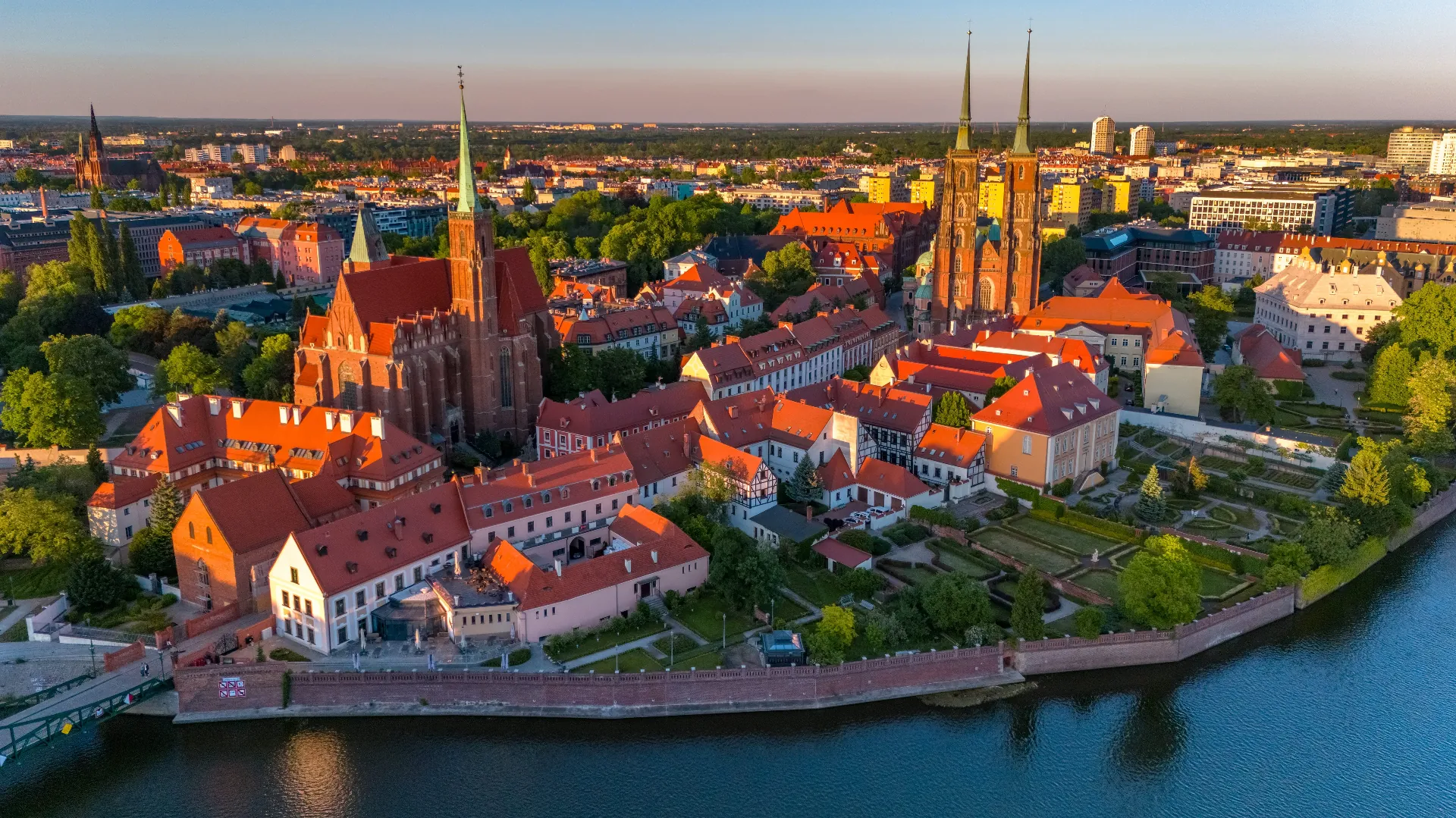
Polish family life often extends across generations. Weekend lunches, parks, playgrounds and outdoor cafés can make children part of ordinary social life rather than a separate programme. Where grandparents live nearby, the emotional and practical support can be significant—but it should never be assumed or treated as free childcare.
The UK’s strengths include diverse communities, deep extracurricular networks and a wider range of familiar English-language options. Poland’s compact city districts and public transport can support growing independence, but neighbourhood design and road safety vary. Poland should not be described as universally safer: recent European road-death figures remain less favourable than those for the UK.
Language: will children adapt?
Conversational confidence and academic fluency are not the same milestone.
Younger children may begin using Polish socially within months, but progress differs by child and setting. Reading, subject vocabulary and writing can take much longer. Schools can provide additional Polish lessons for pupils arriving from abroad, while families can protect English through reading, conversation and continued contact with relatives.
Teenagers need separate consideration. Moving during examination years can affect qualifications, friendships and identity at the same time. An international school may reduce the language shock, but fees and curriculum continuity need careful planning.
Challenges to consider
- Polish-language bureaucracy
- A different classroom culture
- Fewer English childcare options outside major cities
- Potential gaps in specialist or additional-needs support
These challenges can become easier with preparation, but they should not be minimised. If your child has additional educational or medical needs, verify actual local provision before choosing a home or school. Continuity of support may matter more than general rankings.
Is Poland better for raising children?
There is no universal winner. The stronger question is which system supports your family’s actual needs now and over the next five years.
Poland may fit families who value
- Potentially lower childcare and housing costs
- Time with Polish-speaking relatives
- Bilingual family life
- Compact, public-transport-friendly city living
The UK may fit families who prioritise
- English-language curriculum continuity
- Established specialist support
- Existing friendships and family routines
- Familiar systems during a sensitive school stage
Frequently asked questions
Plan with confidence
Moving your family to Poland?
Relocating with children involves much more than booking flights. We help families understand residency, local registration, healthcare, school choices and the practical steps of settling into Poland.