
Best Places to Live in Poland for British Expats
Choosing a Polish city is not about finding one winner. This guide compares Warsaw, Wrocław, Kraków, Tricity and Poznań by work, family life, cost, transport and pace so British movers can shortlist realistically.
By Move2Poland··Updated 17 September 2026
The best places to live in Poland for expats are not the same for everyone. A British family with school-age children, a finance professional chasing salary growth, a remote worker who wants lower overheads and a retiree looking for everyday comfort are making very different decisions.
Poland also changes shape once you stop thinking like a visitor. A city that feels exciting for a long weekend may be tiring when you need a GP appointment, a school place, a decent commute and a realistic rent. This guide compares the five places most British movers should look at first: Warsaw, Wrocław, Kraków, Gdańsk/Tricity and Poznań.
There is no universal winner. Warsaw has the strongest career market but the highest pressure. Wrocław offers a strong balance for many movers but is not cheap or friction-free. Kraków is international and well connected but can feel crowded. Tricity gives you the coast and a different rhythm but has seasonal housing pressure. Poznań is practical and good value but less global in feel.
What matters when choosing where to live in Poland
Before choosing a city, separate the things that impress you from the things that will support your life. For most British movers, the practical filters are career opportunities, remote-work suitability, housing cost, family life, schools, healthcare, airport access, transport, walkability, English accessibility, social life, pace of life, access to nature and suitability for retirement.
Cost also needs context. Looking only at rent can mislead you because transport, school fees, private healthcare, eating out and flight frequency all shape the real monthly picture. For a more detailed budget view, use Move2Poland’s guide to the cost of living in Poland in 2026 for expats alongside current rental listings for your target neighbourhood.
Here is the quick shortlist before we go city by city.
| City | Best fit | Main strengths | Main trade-offs | |------|----------|----------------|-----------------| | Warsaw | Career-focused professionals, high earners, international families | Largest job market, best international school depth, strongest flight choice, broad private healthcare | Highest housing costs, faster pace, less intimate feel | | Wrocław | Remote workers, tech and business-services professionals, families wanting a large but manageable city | Strong balance of work, lifestyle, transport and social life | Rents are no longer low, some suburbs are car-dependent, fewer school options than Warsaw | | Kraków | International movers, remote workers, education and tech professionals | Strong expat scene, airport links, compact centre, cultural depth | Tourism pressure, high central rents, winter air-quality concerns | | Gdańsk/Tricity | Coastal lifestyle seekers, remote workers, logistics and tech professionals | Sea access, polycentric job market, SKM rail corridor, good quality of life | Housing can be expensive, especially Gdańsk and Sopot, weather is windier and more seasonal | | Poznań | Value-focused movers, families, practical professionals, some retirees | Better cost profile, organised feel, good domestic connections | Smaller international scene, fewer direct flight and school options |
Warsaw: best for career growth and a truly international environment
Warsaw is the strongest choice if your move depends on professional opportunity. It has the deepest market for corporate roles, finance, consulting, technology, international organisations, startups and English-speaking office work. If you need to maximise income, build a senior career or keep options open after arrival, Warsaw belongs at the top of your shortlist.
It is also the easiest Polish city for English accessibility. You will still need Polish for bureaucracy, local administration and some healthcare situations, but day-to-day life in central and professional circles is more manageable for newcomers than in smaller cities. International families also benefit from the widest choice of private, bilingual and international schooling, although availability and fees need checking early.
The trade-off is cost. The cost of living in Warsaw is not just about rent, but housing is the obvious pressure point. People often search for the cost of life in Warsaw and expect a single answer, but the honest answer depends heavily on whether you want a central flat, a family home in a quieter district or a suburban compromise with a longer commute. Warsaw salaries can offset the higher cost, but only if your employment package matches the city.
Transport is a major advantage. Warsaw is the only city in this shortlist with a metro, alongside trams, buses and suburban rail. Walkability varies by district: some central areas work well without a car, while family housing farther out may make daily life more complex. Airport access is also the best in Poland, with Warsaw Chopin as the main hub and Modlin serving many low-cost routes. Direct UK connections are usually easier from Warsaw than from the other cities, but airlines change timetables seasonally, so always check your exact route.
For retirees, Warsaw is not the obvious value choice. It makes sense if you want specialist healthcare, cultural events, flight access and big-city services. It is less attractive if your priorities are quiet streets, lower rent and a slower rhythm.
Wrocław: best for balance, especially if you want to test Poland properly
Wrocław deserves more than a passing mention because it is one of the most realistic options for British movers who want a large city without the full intensity of Warsaw. It is big enough to offer international employers, universities, private healthcare, social life and airport links, yet still feels more manageable than the capital for many newcomers.
Career-wise, Wrocław is strong in IT, business services, engineering, finance operations and regional management roles. It also works well for remote workers who want urban infrastructure without Warsaw prices. The city has a visible international community, partly because of its universities and multinational employers, but it is not as saturated with short-term visitors as central Kraków.
The housing-cost profile sits in the middle-to-upper part of the Polish big-city market. Wrocław is usually cheaper than Warsaw and often better value than the most pressured parts of Kraków or coastal Tricity, but it is not a cheap hidden gem anymore. If your budget is tight, you will still feel the difference between central, well-connected districts and newer outskirts.
For families, Wrocław can be a sensible compromise. It has parks, riverside areas, family-friendly neighbourhoods, shopping infrastructure, activities for children and a tram network that supports car-light living in many districts. International and bilingual school options exist, although the choice is narrower than Warsaw. If children are central to your move, school availability should shape your shortlist as much as rent or commute.
Healthcare access is solid for a large Polish city, particularly if you plan to use a mix of public healthcare and private clinics. English-language access is more available than in smaller places, but not guaranteed in every appointment or administrative situation. As in the rest of Poland, having some Polish support can reduce friction.
Wrocław’s airport gives useful links to the UK and Europe, but it does not match Warsaw or Kraków for route depth. The train station is also a strong asset for domestic travel and trips towards Germany or Czechia. Within the city, trams and buses cover daily life well, although congestion can be frustrating and some newer residential areas are more car-dependent than they first appear.
The biggest strength of Wrocław is that it lets you experience a broad version of Polish life without forcing you into the highest-cost environment. The biggest risk is assuming that manageable means effortless. Polish bureaucracy, winter, language gaps and housing competition still apply. If you are deciding between Wrocław and Kraków specifically, this deeper comparison of Wrocław vs Cracow for British expats will help you look beyond surface impressions.
If Wrocław is already high on your shortlist, Move2Poland’s Poland Orientation Experience in Wrocław is designed to help you test the city on the ground before committing. That matters because Wrocław is not just a city to research online. You need to see whether its neighbourhoods, transport, services and pace fit your ordinary weekday life.
Kraków: best for international atmosphere, but not always the easiest daily-life choice
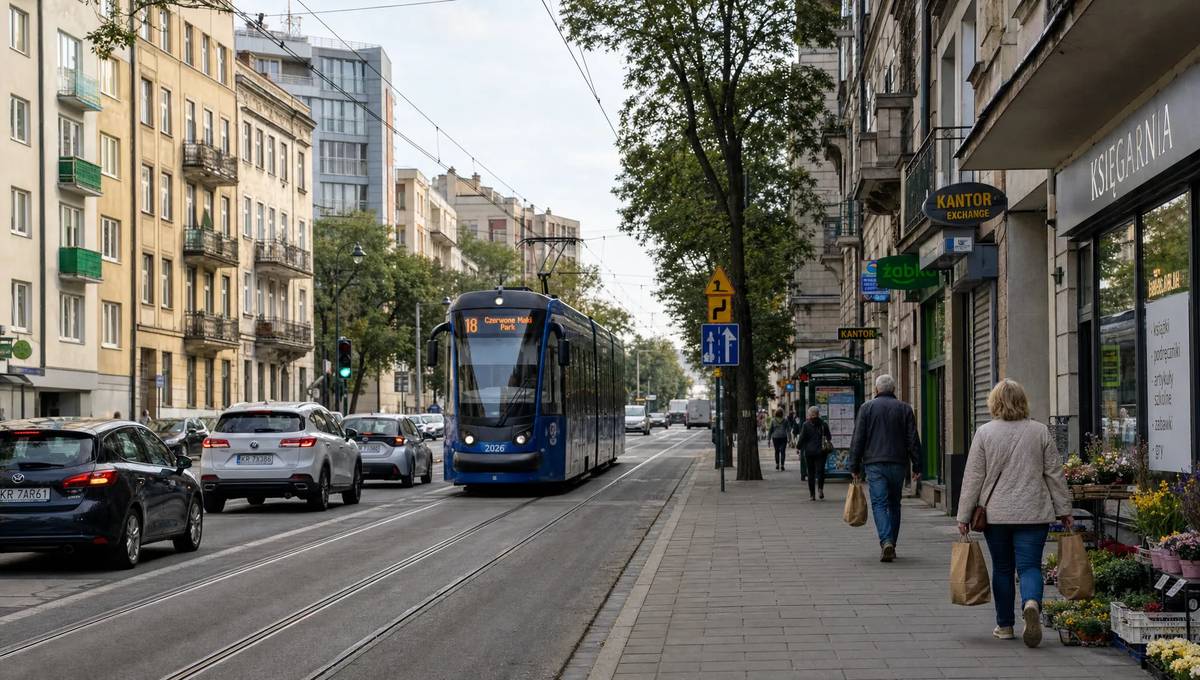
Kraków is one of the easiest Polish cities for British movers to imagine themselves in because it has a visible international community, strong airport connections, universities, technology employers and a compact central area. For remote workers, English-speaking professionals and people who value social and cultural life, it can be very attractive.
The city is particularly strong if you want international networks without moving to Warsaw. English is widely used in business, hospitality, education and expat circles. Kraków also has meaningful career options in technology, shared services, gaming, education and research-related sectors.
The trade-offs become clearer when you think like a resident. Central Kraków can feel crowded, tourist-facing and expensive relative to Polish salaries. Short-term visitors and student demand can distort the housing market in desirable areas. Winter air quality has improved compared with its worst years, but it remains a factor to check district by district if respiratory health, young children or retirement comfort matter to you.
For families, Kraków offers schooling options and strong healthcare access, but commuting patterns can be awkward depending on where you live and where the school is located. For retirees, it can work well if you want social life, medical services and a compact urban environment. It is less ideal if you want quiet, low costs and easy parking.
Kraków Airport is one of the city’s major practical advantages. It typically offers strong UK connectivity because of both business and leisure demand, and the airport rail link makes it simpler than many regional airports to use without a car. As always, check current schedules before building a relocation plan around a specific route.
Gdańsk and Tricity: best for coastal life and a different pace
Gdańsk should really be considered as part of Tricity, the connected urban area of Gdańsk, Gdynia and Sopot. This matters because the best place to live may not be the same as the best place to work. Gdańsk has the historic centre and much of the international attention, Gdynia often feels more residential and functional, and Sopot is attractive but can be expensive and seasonal.
Tricity suits movers who want access to the sea, a less landlocked lifestyle and a broader range of outdoor habits. It is also relevant for careers in logistics, maritime industries, IT, business services and international trade. Remote workers often like the lifestyle proposition, especially if they want nature and city infrastructure together.
The transport structure is different from the other cities. The SKM rail corridor connects the main parts of Tricity, which can make cross-city living possible if you choose your location carefully. Gdańsk Airport provides international links, including UK routes, but the exact route mix varies, so treat airport access as something to verify rather than assume.
Housing is the main caution. Coastal appeal, local demand, students and seasonal pressure can all affect availability and pricing. Gdańsk and Sopot are not automatically cheaper than inland cities, and some attractive neighbourhoods can surprise British movers expecting Poland to be uniformly low-cost.
For families, Tricity can be appealing because of beaches, forests, sports, schools and a less hectic feel than Warsaw. The international school market is smaller than the capital’s, so choice and location matter. For retirees, Tricity may be one of the most attractive options if you value sea air, walking, healthcare access and cultural life, but it is not the best choice for maximum value for money.
Poznań: best for value, practicality and a calmer urban life
Poznań is often underrated by British movers because it does not have Warsaw’s scale, Kraków’s international image or Gdańsk’s coast. That is exactly why it deserves attention. If you want a practical, well-connected, more affordable big city, Poznań can be a strong candidate.
The job market is smaller than Warsaw’s but still meaningful, with strengths in trade, logistics, manufacturing, business services, technology and companies connected to western Poland and Germany. It is also a sensible base for remote workers who want lower fixed costs without dropping into a small town.
The housing-cost profile is usually more forgiving than Warsaw, central Kraków or the most pressured parts of Tricity. This does not mean every flat is cheap or that every district is equally convenient. It means your money often goes further, particularly if you are not dependent on the most central addresses.
Poznań has good public transport, a compact city centre and a more orderly feel than some larger cities. English accessibility is decent in professional and younger circles, though not as deep as in Warsaw or Kraków. International schools and specialist services exist but with less breadth, which is the main limitation for families who need specific curricula or support.
For retirees, Poznań can be a good value choice if you want city services, parks, lakes, healthcare and domestic transport without the pace or rent pressure of Warsaw. The main trade-off is that the international community is smaller, so building a social circle may require more effort.
Best Polish city by type of British mover
A useful way to decide is to choose by persona rather than by city ranking. The best place to live in Poland for expats is the one that fits your constraints, not the one that wins a popularity contest.
| Type of mover | Strongest shortlist | Why it fits | Main caution | |---------------|--------------------|-------------|--------------| | Career-focused professional | Warsaw, then Kraków or Wrocław | Largest labour market in Warsaw, strong secondary markets in tech and business services | Higher salaries may be absorbed by rent and lifestyle costs | | Remote worker | Wrocław, Kraków, Tricity or Poznań | Good infrastructure, social options and different cost profiles | Tax residence, work structure and healthcare still need planning | | Family with children | Warsaw, Wrocław, Kraków, then Tricity or Poznań | Better school access, healthcare and activities in larger cities | School places and commute patterns can decide the city for you | | Retiree | Poznań, Wrocław or Tricity | More manageable pace with urban services | Healthcare access, winter comfort and local support network matter more than charm | | International environment seeker | Warsaw, Kraków or Wrocław | Stronger English accessibility and expat networks | More international often means more expensive and less quiet | | Value-for-money mover | Poznań, then selected parts of Wrocław or Tricity | Better chance of balancing rent, services and quality of life | Lower costs can come with fewer flights, jobs or school options |
Airport links to the UK: do not overrate them, but do check them
For British movers, flight access matters more than many people admit. It affects family visits, emergencies, work trips and the psychological comfort of knowing you can get back to the UK without a complicated journey.
Warsaw and Kraków usually offer the broadest practical UK access. Wrocław, Gdańsk and Poznań can also work well, but route choice may be more seasonal and airline-dependent. If regular flights to a specific UK airport matter, check the current timetable before you fall in love with a city.
Also remember that post-Brexit travel friction is not only about flights. Passport control, checked-bag costs and cabin baggage rules all affect frequent travel. Before a scouting trip or your final move, it is worth checking airport liquid rules with Liquid Limits, especially if your route involves different airports on the way out and back.
How to make the final decision without pretending there is one perfect city
Your final shortlist should come from constraints, not vibes. If your job search is the key risk, start with Warsaw, Kraków and Wrocław. If school choice is non-negotiable, Warsaw may become more compelling even if you prefer Wrocław’s pace. If value for money is the reason for leaving the UK, Poznań should be looked at seriously. If the sea and outdoor life will keep you happy through the adjustment period, Tricity may justify its higher housing pressure.
Think in terms of trade-offs:
- Choose Warsaw if opportunity, international infrastructure and flight access matter more than cost and calm.
- Choose Wrocław if you want a strong all-rounder and are willing to test the city properly before committing.
- Choose Kraków if international life, airport access and a compact city are more important than avoiding crowds.
- Choose Tricity if coastal living and nature access matter enough to accept seasonal housing pressure.
- Choose Poznań if value, order and everyday practicality matter more than a large expat bubble.
If you have children, do not judge cities only by adult preferences. School availability, commute times and healthcare access will shape your quality of life. If education is one of your deciding factors, Move2Poland’s guide to schools in Poland for British and English-speaking children is a useful next read before narrowing your city list.
Frequently Asked Questions
What is the best city in Poland for British expats? There is no single best city. Warsaw is strongest for careers, Wrocław for balance, Kraków for international atmosphere, Tricity for coastal lifestyle and Poznań for value. Your best choice depends on work, family needs, budget and pace of life.
Is Warsaw too expensive for British movers? Warsaw is usually the most expensive option in this shortlist, especially for housing. It can still make sense if your salary, career path or school needs justify the premium. For remote workers earning outside the Polish labour market, the calculation depends on rent expectations and lifestyle.
Is Wrocław a good place to live for expats? Yes, Wrocław is a strong option for many expats because it combines career opportunities, a manageable scale, good transport and a growing international community. It is not the cheapest city and it still requires realistic planning, particularly around housing, schools and language.
Which Polish city is best for families moving from the UK? Warsaw offers the widest school and healthcare choice, but Wrocław and Kraków can be more manageable day to day. Tricity and Poznań may work well for families who prioritise lifestyle or value, provided suitable schooling is available.
Which Polish city is best for retirement? Poznań, Wrocław and Tricity are often more realistic retirement candidates than Warsaw because they can offer urban services with a calmer pace. Healthcare access, winter comfort, walkability and local support should matter more than sightseeing appeal.
Still undecided? Test the decision before you commit
Choosing between Polish cities is not a spreadsheet exercise. You need to know how daily life will feel when the novelty wears off and ordinary responsibilities begin.
If you are still unsure whether Poland is right for you, start with the Move2Poland free assessment. It will help you clarify your priorities before you invest time and money in the wrong move. And if Wrocław is on your serious shortlist, consider testing it through the Poland Orientation Experience so you can judge the city as a future resident, not as a visitor.