
Can You Hold Dual Nationality in Poland?
Poland allows dual nationality, but Polish authorities treat Polish citizens as Polish while they are in Poland. This guide explains what that means for UK movers, families with Polish roots and people planning citizenship later.
By Move2Poland··Updated 17 September 2026
Yes. Poland allows dual nationality, and a Polish citizen does not normally lose Polish citizenship by acquiring British citizenship or another nationality.
The more practical answer is slightly different: Poland permits dual nationality, but Polish authorities treat a Polish citizen as Polish while dealing with them in Poland. If you are both British and Polish, you do not get to choose which nationality applies when you are speaking to a Polish office, court, border guard or other public authority.
For UK citizens moving to Poland, this distinction matters. Dual nationality can make life much easier if you are already Polish or can confirm Polish citizenship by descent, but it does not remove every formality. It also does not decide your tax residence, solve document mismatches or replace proper relocation planning.
The short answer: dual nationality is allowed in Poland
Polish law does not ban dual citizenship. The Polish Citizenship Act recognizes that a Polish citizen may also hold citizenship of another country. In that situation, the person has the same rights and obligations as any other Polish citizen.
The key rule is that a Polish citizen who also has another nationality cannot rely on that other nationality in dealings with Polish authorities. In plain English, if you are Polish and British, Poland sees you as Polish when you are in Poland or dealing with the Polish state.
| Question | General answer | |----------|----------------| | Can you be both British and Polish? | Yes, in most cases Poland and the UK both allow it. | | Does Poland usually require you to renounce British citizenship? | No. Poland does not generally require renunciation when you become Polish. | | Can you use your British nationality to avoid Polish obligations? | No. Polish authorities treat Polish citizens as Polish. | | Does dual nationality decide tax residence? | No. Tax residence depends on facts such as where you live, work and have your main personal or economic ties. | | Does dual nationality remove residence paperwork? | Only if you are actually a Polish citizen. British-only citizens still need to follow post-Brexit residence rules. |
This article is general guidance, not legal advice. Citizenship cases can turn on documents, family history and the law in force at the relevant time, so complex cases are worth checking with a qualified professional.
Dual nationality vs dual citizenship: is there a difference?
Most people use dual nationality and dual citizenship interchangeably. In everyday relocation planning, they mean the same thing: you are legally recognized as a citizen or national of two countries at the same time.
Polish law usually uses the language of citizenship. People searching for dual nationality Poland are normally asking whether Poland allows someone to hold Polish citizenship and another citizenship together. The answer is yes, but with the one-nationality rule in front of Polish authorities.
That rule does not make your British citizenship disappear. It simply means that, in Poland, your Polish citizenship is the one that matters to Polish institutions.
What this means if you are moving from the UK
Dual nationality affects different people in different ways. A British citizen with no Polish citizenship is in a different position from someone born in the UK to a Polish parent, or a Polish citizen who later naturalized as British.
If you are already a Polish citizen
If you are a Polish citizen, you have the right to live and work in Poland. You do not apply for a Polish residence permit as a foreigner because you are not a foreigner in Polish law.
In practice, you will still need Polish documents. A valid Polish passport or Polish national ID card will usually be much more useful than relying on a British passport when dealing with Polish authorities. You may also need a PESEL number, address registration in some situations and Polish civil status records that match your current name and family situation.
A common surprise for British-Polish movers is that Polish citizenship can simplify immigration but expose paperwork issues that have been ignored for years. For example, a UK marriage, divorce, name change or child birth may need to be reflected properly in Polish records before certain documents can be issued smoothly.
If you have Polish ancestry
Some UK citizens with Polish parents, grandparents or more distant family links may already be Polish citizens by descent, even if they have never held a Polish passport. This is not always an application for a new citizenship. In many cases, it is a process of confirming whether Polish citizenship already passed down the family line.
The details can be technical. Dates matter, as do military service, naturalization in another country, marriage rules under older laws and whether citizenship was lost before being passed to the next generation. If this is your situation, start with the document trail rather than assumptions.
For a wider look at eligibility, timelines and the difference between descent, recognition and other routes, see Move2Poland’s guide to the main routes to Polish citizenship.
If you are British only
If you are a British citizen and do not already have Polish citizenship, dual nationality is not your first practical issue. Your first issue is legal residence.
Since Brexit, UK citizens are treated as non-EU nationals for residence purposes in Poland. Short visits are different from moving, working, joining family or staying long term. Depending on your situation, you may need a visa, a temporary residence permit, proof of income, health insurance, work authorization or other documents.
If you are still at the planning stage, it is worth reading about post-Brexit visas for UK citizens moving to Poland before assuming that a future citizenship route will solve the immediate move.
If you are Polish and became British
Many Polish citizens living in the UK have acquired British citizenship without losing Polish citizenship. Poland generally does not strip Polish citizenship just because someone naturalizes elsewhere.
This can be useful if you later decide to return to Poland with a British spouse, British-born children or a UK career behind you. You may be able to move as a Polish citizen, but your family members may still need to follow their own residence rules unless they also have Polish or another EU citizenship.
The practical effects of dual nationality in Poland
Dual nationality is not just a legal label. It changes how you cross borders, apply for documents, deal with consulates and think about long-term obligations.
| Area | What to expect if you are Polish and British | |------|----------------------------------------------| | Entry to Poland | Polish authorities may expect you to identify as Polish, especially when using Polish documents. | | Residence rights | You can live and work in Poland as a Polish citizen, without a foreigner residence permit. | | British consular help in Poland | The UK may be limited in what it can do if Poland treats you as its own citizen. | | Polish bureaucracy | You may need Polish civil records, PESEL, tax registration or updated identity documents. | | Tax | Citizenship alone does not decide where you pay tax. Residence and income facts matter more. | | Children | A child may hold both Polish and British citizenship if the relevant rules of both countries are met. |
The main benefit is clear: Polish citizenship gives you a secure right to live in Poland. For many British movers, that is a major advantage compared with applying for residence as a third-country national.
The main limitation is just as important: citizenship is not the same as readiness. You may still need to sort out tax, employment, housing, healthcare, schools and language. Dual nationality can open the door, but it does not unpack your boxes.
Passports, borders and which document to use
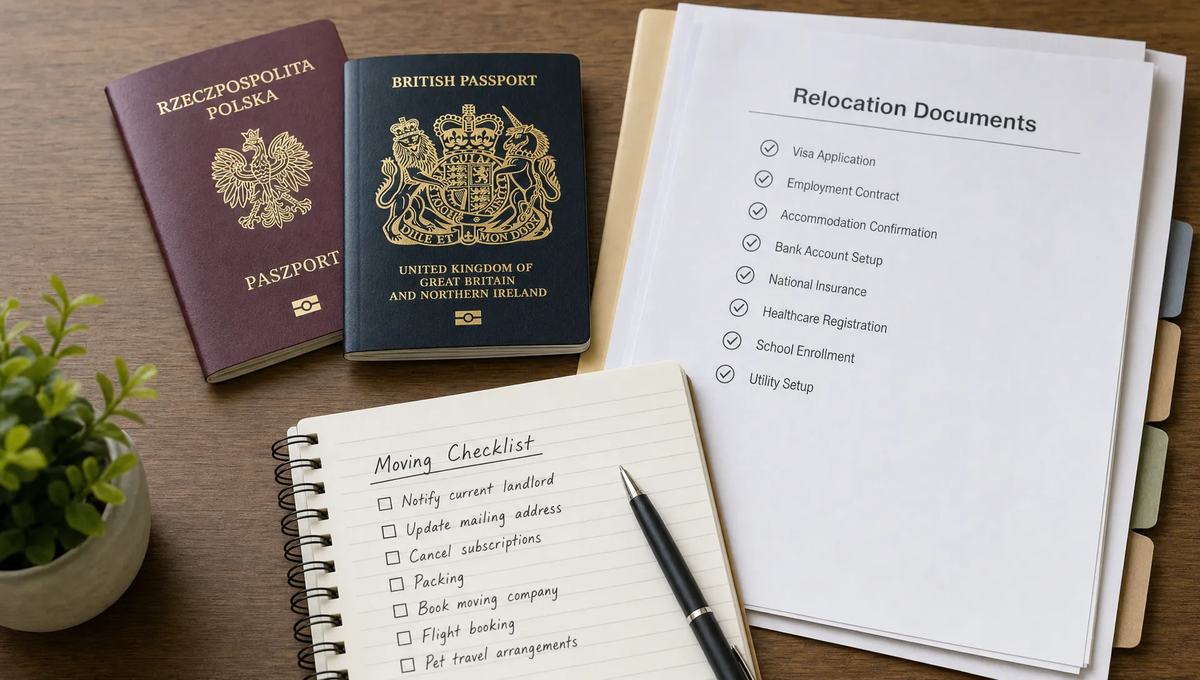
If you are a dual British-Polish citizen, you may hold both a British passport and a Polish passport. Each passport proves a different citizenship, and each country may expect you to use its own document when entering or dealing with that country.
For Poland, the safest approach is usually to keep your Polish passport or Polish national ID valid if you intend to live there, apply for services or prove your status. A British passport may still be useful for travel to and from the UK, but it does not replace Polish identity documents inside Poland.
Problems can arise when names differ between passports. This is common after marriage, divorce or anglicized spellings. If your British passport, Polish passport, birth certificate and marriage certificate do not line up, plan extra time before you travel or apply for Polish documents.
Can Poland make you give up British citizenship?
In normal circumstances, no. Poland does not generally require a British citizen to give up British citizenship to become Polish, and the UK generally allows British citizens to hold another citizenship.
The same is usually true the other way around. A Polish citizen who becomes British does not normally lose Polish citizenship just because they acquired British citizenship.
There are two cautions.
First, this answer is about Poland and the UK. If you hold a third nationality, that country may have stricter rules. Some countries restrict dual citizenship or treat naturalization elsewhere as a reason for loss of citizenship.
Second, Polish citizenship is not something you casually drop. Under the Polish Constitution, a Polish citizen cannot lose Polish citizenship except by renunciation. Renunciation requires consent from the President of Poland. In practice, that means Polish citizenship is designed to be stable, not something that disappears automatically because you moved abroad or got another passport.
Dual nationality does not decide your tax position
One of the biggest misunderstandings is that citizenship decides tax. It usually does not.
A British-Polish dual citizen living in Poland may become Polish tax resident depending on their circumstances. A British-only citizen can also become Polish tax resident. The key factors are usually where you live, where your center of personal or economic interests is and how many days you spend in the country.
If you are planning to work remotely from Poland for a UK employer or clients, do not treat citizenship as the main question. Employment structure, payroll, social security, double tax treaty rules and permanent establishment risk may matter more. Move2Poland covers these issues separately in its guide to tax in Poland for UK remote workers.
The practical takeaway is simple: dual nationality may solve immigration status, but tax planning still needs its own attention.
Children and dual nationality
Children are often where dual nationality questions become most personal. A child born in the UK to a Polish parent may be Polish by descent and British by birth or another route, depending on the facts. A child born in Poland to British parents will not automatically be Polish just because they were born there, unless a separate citizenship route applies.
For Polish citizenship, descent is usually more important than place of birth. If at least one parent is Polish, the child may be Polish from birth. For British citizenship, the rules depend on the parents’ status and the place and date of birth.
Parents should think beyond the passport. Dual nationality can affect documents, school registration, future study rights and how a child identifies with each country. It can be a gift, but it also creates admin that parents need to manage carefully.
The personal side of holding two nationalities
Dual nationality can feel like a neat solution: one passport for security, one for family history, both for flexibility. For many people, that is exactly what it is. It can restore a connection to Poland, make a family move easier or remove uncertainty after Brexit.
It can also bring up bigger questions. Are you moving because Poland genuinely fits your life, or because the paperwork has become easier? Is the move about family, cost of living, career freedom or a desire to reset after a difficult period?
Those questions matter because relocation is stressful even when it is positive. If a move overlaps with burnout, trauma, addiction, depression or severe stress, it may be better to stabilize your health before making irreversible decisions. Some people need structured professional care, and private services such as confidential support for burnout, trauma, addiction and severe stress can be part of that wider recovery plan.
Citizenship can give you options. It should not be used to avoid the deeper work of deciding whether a new country, new city and new routine are right for you.
A simple checklist before relying on dual nationality
Before you make plans around dual nationality in Poland, check the practical details. The legal right is only useful if you can prove it and use it.
- Confirm whether you are already a Polish citizen or need to apply through a specific route.
- Gather birth, marriage, divorce, name change and naturalization records from each relevant country.
- Check whether your Polish and British documents show consistent names and dates.
- Renew passports early, especially if you plan to move with children.
- Separate citizenship questions from tax, employment, healthcare and schooling questions.
- If family members have different nationalities, map each person’s residence position separately.
This last point is often missed. One Polish citizen in the family does not automatically make every family member Polish. A British spouse, stepchild or partner may still need their own residence path.
Frequently Asked Questions
Can I be both British and Polish? Yes. Poland allows dual nationality, and the UK generally allows British citizens to hold another citizenship. If you are both, Polish authorities will treat you as Polish when dealing with you as a Polish citizen.
Do I need to give up my British passport to become Polish? In most UK-Poland cases, no. Poland does not usually require you to renounce British citizenship, and the UK generally permits dual citizenship. Check carefully if you also hold another nationality.
Can I enter Poland on a British passport if I am also Polish? You may physically hold and use a British passport, but if you are a Polish citizen, Polish authorities can treat you as Polish. For living in Poland or dealing with Polish offices, keeping Polish documents valid is usually the safer route.
Does dual nationality mean I do not pay tax in Poland? No. Tax is usually based on residence, income and treaty rules rather than nationality alone. A dual citizen living and working in Poland may still become Polish tax resident.
Can my child have both Polish and British nationality? Often, yes, but it depends on the parents’ citizenship, immigration status, place of birth and dates. Polish citizenship often passes by descent, while British citizenship has its own rules.
Can I lose Polish citizenship automatically by becoming British? Normally, no. Polish citizenship is not usually lost automatically because you acquire another citizenship. Renouncing Polish citizenship requires a formal process and consent from the President of Poland.
Need help deciding what dual nationality means for your move?
Dual nationality in Poland can be a major advantage, but it is only one part of a successful move. You still need to understand residence rules for each family member, tax exposure, city choice, housing, schools, healthcare and the reality of daily life.
Move2Poland helps individuals and families think through those decisions before they commit. If you are not sure whether Poland is right for you, or whether your citizenship situation changes the plan, a discovery call or structured relocation planning session can help you turn the legal possibilities into a practical next step.