
How Permanent Residence in Poland Works for EU Citizens
Five years in Poland can bring a permanent right to stay, but not every stay counts toward it. Learn which residence periods qualify, how travel affects eligibility and what evidence to prepare before applying.
By Move2Poland·
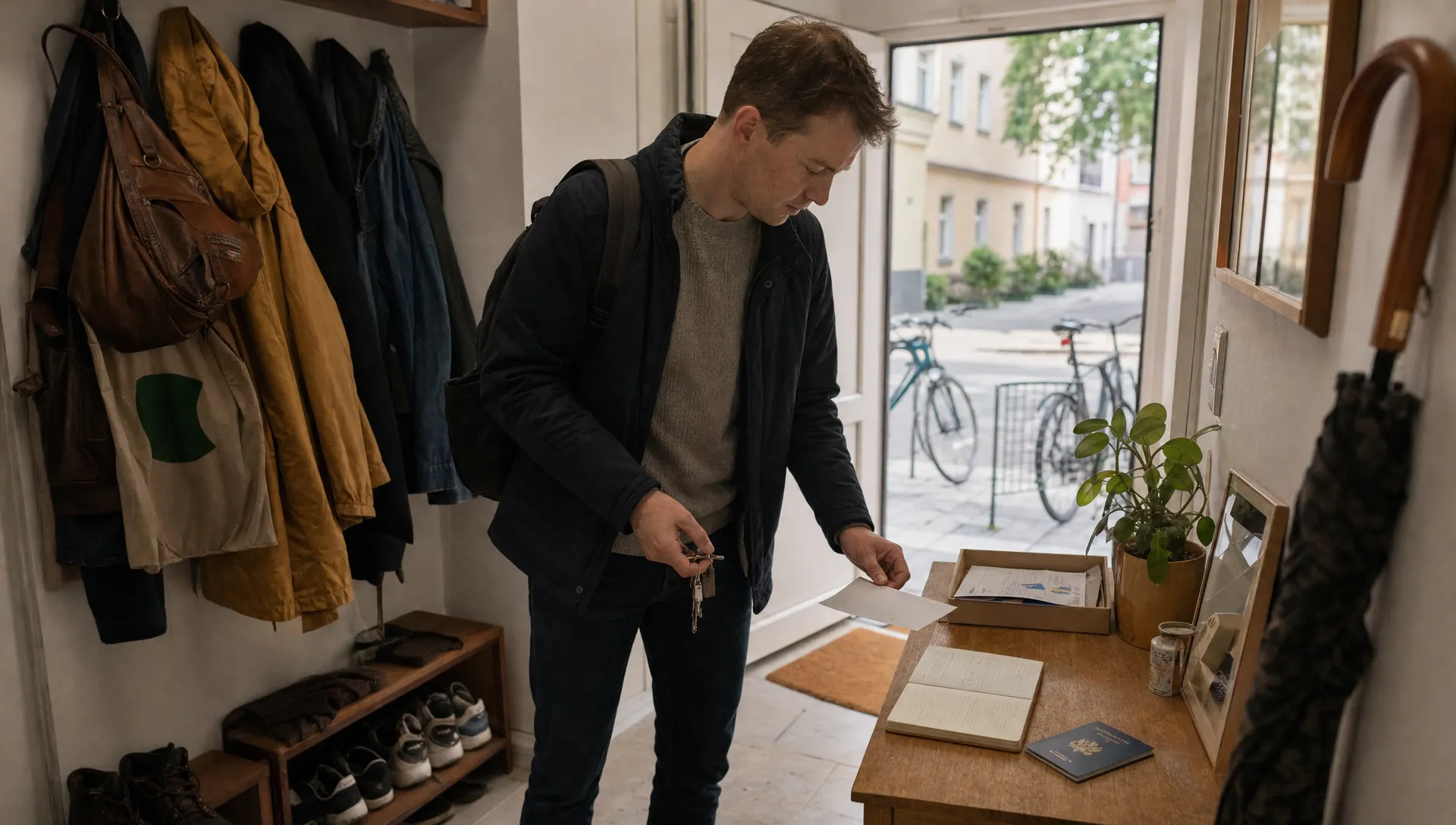
Searching for “permanent residence poland eu citizens” often brings up information about three different things: EU free-movement rights, Polish permanent residence permits and EU long-term resident permits. They are not interchangeable. If you are a citizen of another EU country, the standard route is a permanent right of residence after five years of continuous, lawful residence in Poland.
That right normally arises automatically when you meet the legal conditions. The Polish document confirms it rather than creates it. The practical challenge is showing that your five years qualify, accounting for time spent abroad and applying for the correct document. An address registration, a PESEL number or simply having lived in Poland for five calendar years does not answer all those questions. Your nationality and the legal basis of your residence matter throughout the qualifying period.
What “permanent residence poland eu citizens” means in practice
For an EU citizen, the relevant Polish document is the document confirming the right of permanent residence, called dokument potwierdzający prawo stałego pobytu.
It is different from the permits commonly discussed in relocation guides for non-EU nationals:
| Route or document | Who it generally concerns | What to understand | |-------------------|--------------------------|--------------------| | Registration of an EU citizen’s residence | EU citizens staying beyond three months | Records residence under EU rules, but is not permanent residence | | Document confirming the right of permanent residence | EU citizens who have acquired the permanent right | Confirms an existing right, normally acquired after five qualifying years | | Permanent residence permit, zezwolenie na pobyt stały | Non-EU nationals meeting specified Polish statutory conditions | A separate immigration route, not the standard EU-citizen process | | EU long-term resident permit | Eligible non-EU nationals | A separate status with its own requirements |
The governing EU framework is Directive 2004/38/EC. Article 16 sets out the standard five-year rule and permitted absences. Article 17 provides certain earlier routes.
The five-year rule: which residence actually counts?
Permanent residence in Poland for EU citizens depends on continuous, lawful residence under EU free-movement rules, not merely physical presence. For residence beyond the initial three months, you generally need a qualifying basis until you acquire the permanent right.
Employment, self-employment, study and self-sufficiency
An EU citizen can usually reside beyond three months as a worker or self-employed person. Students and economically inactive residents generally need sufficient resources and comprehensive health insurance coverage. Family members may qualify through an eligible EU citizen.
A change of circumstances does not necessarily restart the clock. For example, moving from employment to self-employment can preserve continuity if your residence remains lawful. Some people also retain worker status during temporary incapacity or certain periods of involuntary unemployment, subject to the applicable conditions.
However, a long period without work, adequate resources or appropriate health coverage may need closer examination. Being allowed to remain as a jobseeker does not mean you should automatically assume every month counts toward permanent residence.
Build a timeline of your residence basis, not just your addresses. For each period, record whether you were employed, self-employed, studying, self-sufficient or residing as a family member.
Evidence should establish both presence and eligibility
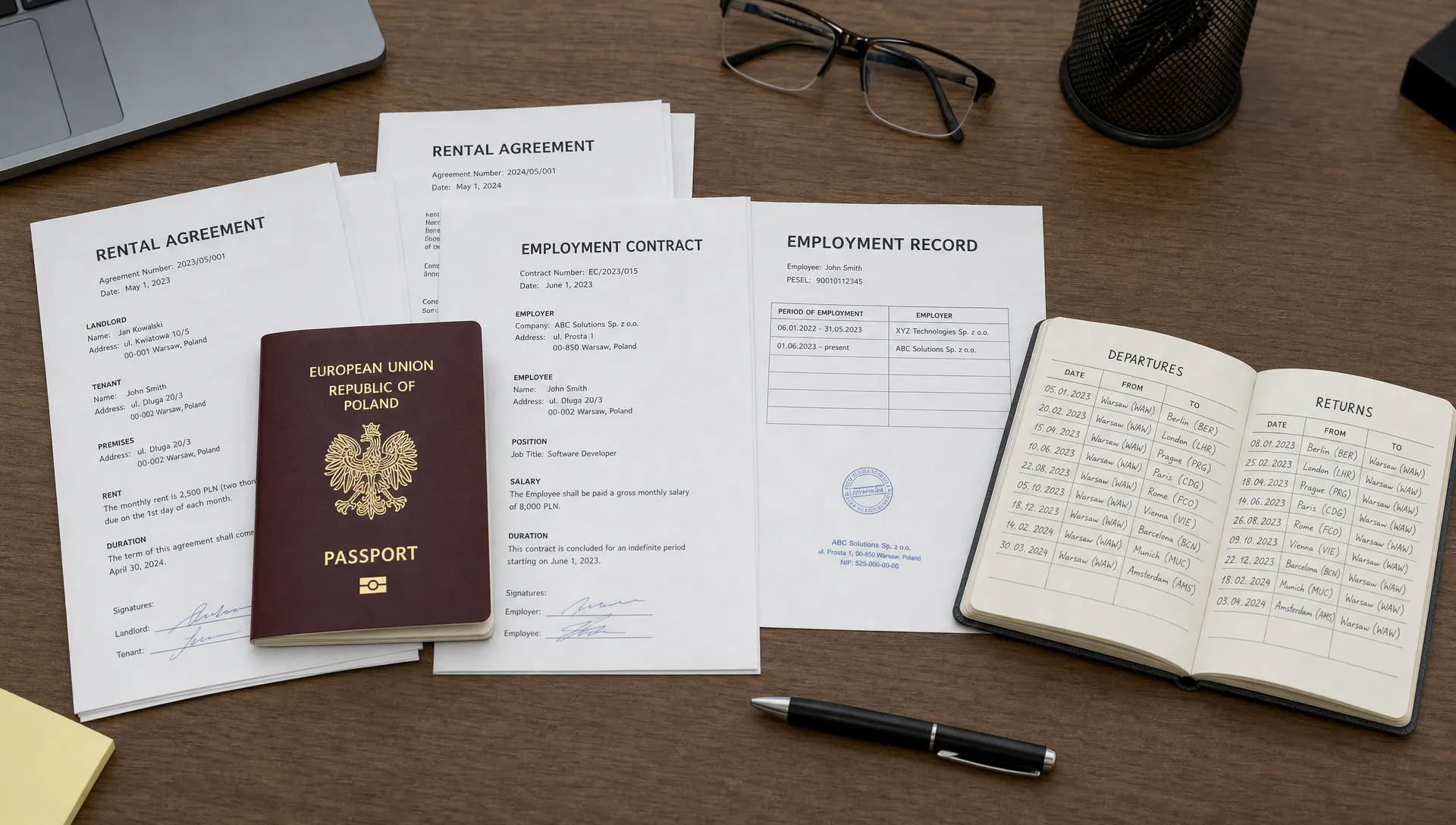
A rental agreement helps show where you lived. It does not, by itself, establish that you met the conditions for EU residence throughout that period.
Employment records, business records, study enrollment, health coverage and evidence of resources can help establish your legal basis. Address records and other dated documents can support your physical residence history.
For example, someone who worked in Poland for three years and then studied for two years should be ready to document both stages. During the student period, enrollment alone may not answer questions about resources and health coverage.
When planning permanent residence in Poland for EU citizens, this distinction prevents a common mistake: collecting five years of leases while overlooking the evidence that makes those years legally qualifying. Keep copies of older records before employers, banks or insurers make them harder to retrieve.
How absences from Poland affect the five years
Continuous residence does not require you to remain in Poland without ever traveling. The EU rules allow specified absences without breaking continuity.
| Type of absence | Standard continuity rule | |-----------------|--------------------------| | Ordinary travel or other temporary absences | Total absences not exceeding six months in a year do not break continuity | | Compulsory military service | Longer absences can be permitted | | Important reasons, such as pregnancy and childbirth, serious illness, study, vocational training or an overseas posting | One absence of up to 12 consecutive months can be permitted |
These rules are summarized in the European Commission’s Your Europe guidance on permanent residence.
The six-month allowance is a total, not a separate allowance for each trip. Several visits to the UK, a long holiday and time working elsewhere can add up.
An eight-month absence for a documented overseas posting may fall within the important-reason exception. An eight-month absence simply because you preferred to live elsewhere may not. The reason and supporting evidence matter.
For permanent residence in Poland for EU citizens, keep a travel log with departure dates, return dates and reasons for longer absences. If your history approaches a limit, have the dates assessed before relying on a particular eligibility date.
How to obtain the Polish confirmation document
Once you have acquired the right, you apply for the document confirming it. This is an administrative confirmation process, not an application for the non-EU permanent residence permit.
Apply through the correct voivodeship office
The application is handled by the voivode responsible for your place of residence, through the relevant urząd wojewódzki, or voivodeship office. This is not the same as the municipal office where you handle address registration or a PESEL number.
Find the office’s current instructions specifically for EU citizens seeking confirmation of permanent residence. Check its application form, appointment arrangements, photograph requirements and rules for presenting original documents. Expect to attend in person unless the applicable instructions provide an exception.
Avoid using a checklist labeled only “permanent residence” without checking who it applies to. It may concern a completely different route.
Prepare documents that explain your five years
For permanent residence in Poland for EU citizens, the strongest file makes your qualifying history easy to follow. Depending on your circumstances, prepare:
- Identity evidence: A valid passport or national identity card establishing your EU citizenship.
- The application and photographs: Use the current form and the photograph specifications provided by the competent office.
- Residence records: Your earlier EU registration document, address records, rental agreements or other evidence of living in Poland.
- Evidence of your legal basis: Employment documents, business records, student records or evidence of sufficient resources and health coverage, as applicable.
- Absence evidence: A dated travel history and supporting documents for any longer absence covered by an exception.
- Family documents: Where your residence depended on a family relationship, evidence of that relationship and the relevant residence circumstances.
This is a preparation framework, not a universal list of mandatory attachments. The office’s current requirements and your individual history determine what you need. Check whether foreign-language documents require certified Polish translations.
Separate eligibility from processing time
The permanent right arises when the legal conditions are met, not when an appointment becomes available or the document is printed. EU law provides for the confirmation document to be issued as soon as possible after the duration of residence has been verified.
Still, do not plan around a guaranteed turnaround. Missing evidence or questions about an absence can require clarification. Keep copies of your submission and respond to requests from the office within the stated deadlines.
What changes once you have permanent residence?
After acquiring the permanent right, you no longer need to keep meeting the earlier residence conditions concerning employment, sufficient resources or comprehensive health insurance to retain that right. Losing a job therefore does not, by itself, undo permanent residence.
That does not mean every other obligation disappears. Healthcare entitlement, social insurance and tax obligations remain separate matters. Immigration residence is not the same as tax residence, and the document does not exempt you from Polish tax rules.
Permanent residence in Poland for EU citizens also does not confer Polish citizenship or a Polish passport. If citizenship is your longer-term goal, the separate routes, rules and timelines for Polish citizenship explain why permanent residence is only part of that assessment.
There is also an important absence rule after acquisition: the permanent right can be lost through an absence from Poland exceeding two consecutive years. Do not confuse this with the shorter absence limits used to build the initial five-year qualifying period.
Keep your confirmation document current and follow the applicable replacement or renewal requirements. The document and the underlying right are related, but they are not the same thing.
Family members and earlier eligibility
Non-EU family members use a different document
A non-EU spouse or other qualifying family member may also acquire permanent residence under EU family rules. Under the standard route, this generally involves five years of continuous, lawful residence with the EU citizen in the host country.
Their Polish document is a permanent residence card of a family member of an EU citizen, not the confirmation document issued to the EU citizen personally.
In the usual five-year route, your spouse does not automatically become a permanent resident on the date you qualify. Their own residence history matters. Divorce, the EU citizen’s departure or death can also raise questions about retained rights, so those situations warrant an individual assessment.
Some workers can qualify before five years
Certain workers or self-employed people can acquire the permanent right earlier. These exceptions include specified retirement situations, permanent incapacity to work and certain cross-border working arrangements after residence and work in Poland.
Each exception has conditions concerning factors such as age, work history, residence duration or the reason employment ended. Some related family-member provisions also apply.
The standard explanation of permanent residence in Poland for EU citizens is therefore a starting point, not a complete answer for every household. If you retire, become permanently unable to work or begin working in another EU country while maintaining your home in Poland, check whether an earlier route applies.
What if you are moving from the UK?
Living in the UK does not determine which Polish residence route applies. Citizenship and any protected Brexit status are the key distinctions.
An Irish citizen moving from Britain is an EU citizen. A British-Irish dual national can rely on their Irish citizenship under EU rules. A British-only citizen moving to Poland now generally cannot use the EU-citizen route simply because the UK previously belonged to the EU.
Some British citizens and family members are protected by the Withdrawal Agreement, with residence and permanent residence rights under that framework. Their documents and applicable provisions should be checked separately.
If that distinction affects your household, the guide to what changed for British citizens moving to Poland after Brexit helps separate protected residents from new arrivals.
Frequently asked questions
Is permanent residence automatic after five years? The right normally arises automatically after five years of continuous, lawful residence meeting the relevant EU conditions. Simply spending five calendar years in Poland is not enough if parts of your stay did not qualify or continuity was broken.
Does failing to register my EU residence mean those years cannot count? Not automatically. Registration is not what creates EU residence rights. However, failure to comply with registration requirements can have consequences and make your history harder to prove. You still need evidence that your residence met the substantive conditions.
Do EU citizens need a Polish language exam for permanent residence? The standard EU permanent residence route does not require a Polish language exam. Do not confuse it with the non-EU long-term resident route or citizenship procedures, which have different requirements.
Do I need a work permit once I obtain permanent residence? EU citizens generally already have access to employment in Poland without a work permit. Permanent residence does not create that exemption for the first time.
Can I lose the right if I leave Poland? Yes. Permanent residence in Poland for EU citizens can be lost after an absence exceeding two consecutive years. Before moving abroad for an extended period, assess both your residence position and the separate tax and insurance consequences.
Plan around your actual residence history
Before applying, map your qualifying residence periods, total your absences and identify missing evidence. A clear timeline is more useful than a large folder of documents with unexplained gaps.
If you are still deciding whether Poland fits your plans, Move2Poland’s discovery call and relocation guidance can help you clarify your next steps. For disputed qualifying periods, unusual absences or complex family circumstances, obtain case-specific advice before relying on an eligibility date.