
How Poland Birthright Citizenship Works for Newborns
A Polish parent can pass citizenship to a baby born in the UK, but a Polish birthplace alone usually isn’t enough. Learn which rules apply and what to arrange before your newborn’s first trip.
By Move2Poland·
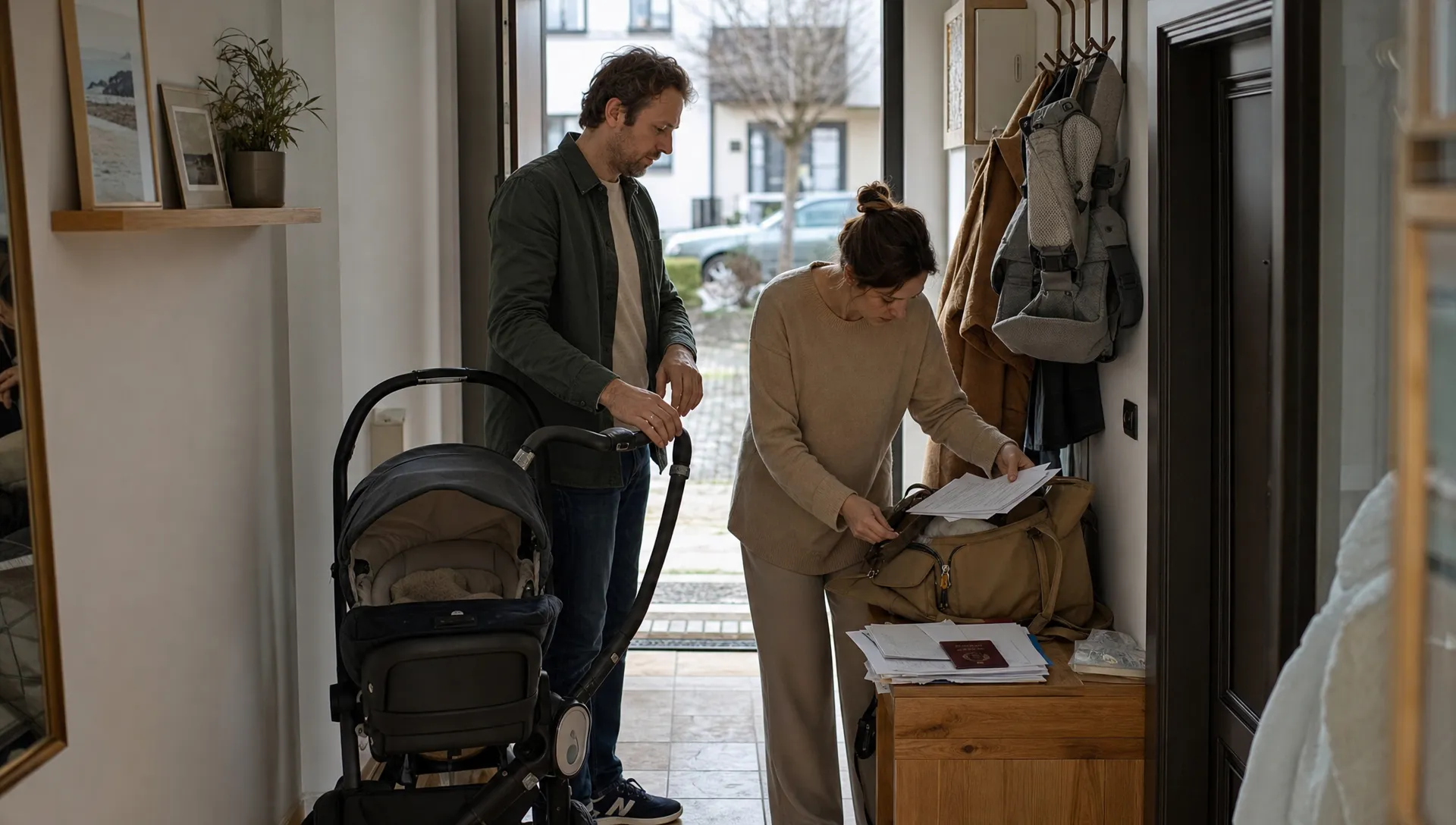
Poland birthright citizenship is not automatic just because a baby is born in Poland. The usual rule is citizenship through a parent: a newborn acquires Polish citizenship at birth if at least one parent is Polish, whether the delivery takes place in Warsaw, London or elsewhere.
For families moving from the UK, that distinction matters. Giving birth in Poland, holding a Polish residence permit and having Polish ancestry are different circumstances, with different consequences for your child.
This guide explains who qualifies at birth, the narrow exceptions for babies without an identifiable parental nationality and how to document a newborn’s Polish citizenship.
The main rule: citizenship through a Polish parent
Poland primarily follows jus sanguinis, meaning citizenship through parentage rather than birthplace. Article 14 of the Polish Citizenship Act provides that a child acquires Polish citizenship at birth when at least one parent is a Polish citizen.
Both parents do not need to be Polish. They do not need to live in Poland, and being unmarried does not itself prevent citizenship from passing to their child. Legal parentage must, however, be established.
The relevant question is whether the parent held Polish citizenship when the child was born. A Polish grandparent, surname or family connection does not replace that test.
Poland birthright citizenship: common newborn scenarios
| Family situation | Is the newborn Polish at birth? | |---|---| | Born in Poland to at least one Polish parent | Yes, through the Polish parent | | Born in the UK to at least one Polish parent | Yes, through the Polish parent | | Born in Poland to two British parents, neither of whom is Polish | No, not simply because of the birthplace | | Born in Poland to foreign parents with permanent residence | Permanent residence alone does not confer citizenship on the baby | | Born in Poland where both parents fall within the statutory unknown, stateless or undetermined-citizenship categories | A specific statutory exception can apply | | Born to a parent with Polish ancestry but unresolved citizenship status | Establish whether that parent was already Polish at the time of birth |
The last situation requires a distinction between confirming existing citizenship and acquiring citizenship for the first time.
A parent might obtain official confirmation after the baby’s birth that they were already Polish when the baby was born. That is different from becoming Polish later. If your own status is unresolved, the guide to who qualifies for Polish citizenship by descent explains the family-line questions to investigate.
What if neither parent is Polish?
For most foreign families, Poland birthright citizenship does not arise from delivering a baby in a Polish hospital. Two British parents do not normally have a Polish citizen child merely because they live, work or give birth in Poland.
The Citizenship Act contains a limited territorial exception. A child born in Poland acquires Polish citizenship where the parents are unknown, have no citizenship or their citizenship is undetermined within the meaning of the law.
Article 15 also covers a child found in Poland whose parents are unknown. This is a separate protection, not a general rule for all children born locally.
These provisions should not be treated as an alternative citizenship route for ordinary foreign-resident families. Missing passports or delays in obtaining documents do not automatically mean that the parents’ citizenship is legally undetermined. Likewise, a baby’s inability to inherit a particular foreign nationality does not, by itself, establish eligibility under these provisions.
If statelessness or unknown parentage is a genuine concern, obtain case-specific guidance from the relevant Polish authorities or a lawyer experienced in nationality law.
What happens when the baby is born in the UK?
A UK birth does not prevent a child from acquiring Polish citizenship through a Polish parent. The family can remain in Britain, register the birth there and later arrange the child’s Polish civil records and passport.
For example, a baby born in Manchester to a Polish mother and a British father acquires Polish citizenship through the mother. Whether the baby also acquires British citizenship depends on the applicable British rules.
For Poland birthright citizenship, the location of the delivery does not change the parental citizenship test. British nationality must be assessed separately, particularly when a baby is born outside the UK and the British parent holds citizenship by descent.
The UK government’s British citizenship checker is a useful starting point. Do not assume that a passport held by either parent guarantees the same nationality outcome in every country.
If the only potentially Polish parent is a father whose paternity has not yet been legally established, contact the Polish civil registry office or consulate promptly. Special rules concerning changes in parentage can affect the assessment.
How to document your newborn’s status
Citizenship, birth registration and a passport are separate matters. A qualifying child acquires citizenship through the law; the paperwork records the birth and helps establish the child’s identity and status.
If your baby is born in Poland
Register the birth with the appropriate Urząd Stanu Cywilnego, usually shortened to USC, meaning civil registry office.
For a live birth, the normal reporting deadline is 21 days from the issue of the birth notification document, known as the karta urodzenia. This is not necessarily the same date as delivery. The Polish government’s birth-registration guidance explains the process and required information.
Check that the parents’ details, names and legal parentage are recorded correctly. Ask the office how the child’s PESEL number will be assigned and what documents you will need for a passport application.
A Polish birth certificate records a birth. It is not, by itself, proof that every child named in one is a Polish citizen. A PESEL number is also an administrative identifier, not a grant of citizenship.
If your baby is born outside Poland
For a baby born abroad, documenting Poland birthright citizenship commonly involves transcription of the foreign birth certificate into the Polish civil register. You can generally pursue this through a Polish consulate or an appropriate USC in Poland.
Documents commonly requested include:
- An official foreign birth certificate showing the child’s and parents’ details, usually the full version rather than a shortened extract.
- A Polish translation in a format accepted by the receiving office, where required.
- The parents’ identity documents and evidence of the relevant parent’s Polish citizenship.
- Additional civil-status documents needed to resolve names, marriage details or parentage.
Whether an apostille or other authentication is required depends on the document and applicable rules. Check with the receiving office before paying for authentication or translation.
Transcription is normally an important step toward obtaining a Polish PESEL number and passport for a child born abroad. It does not create citizenship that the child lacked at birth. If the parent’s citizenship history is unclear, a separate citizenship-confirmation procedure may be necessary.
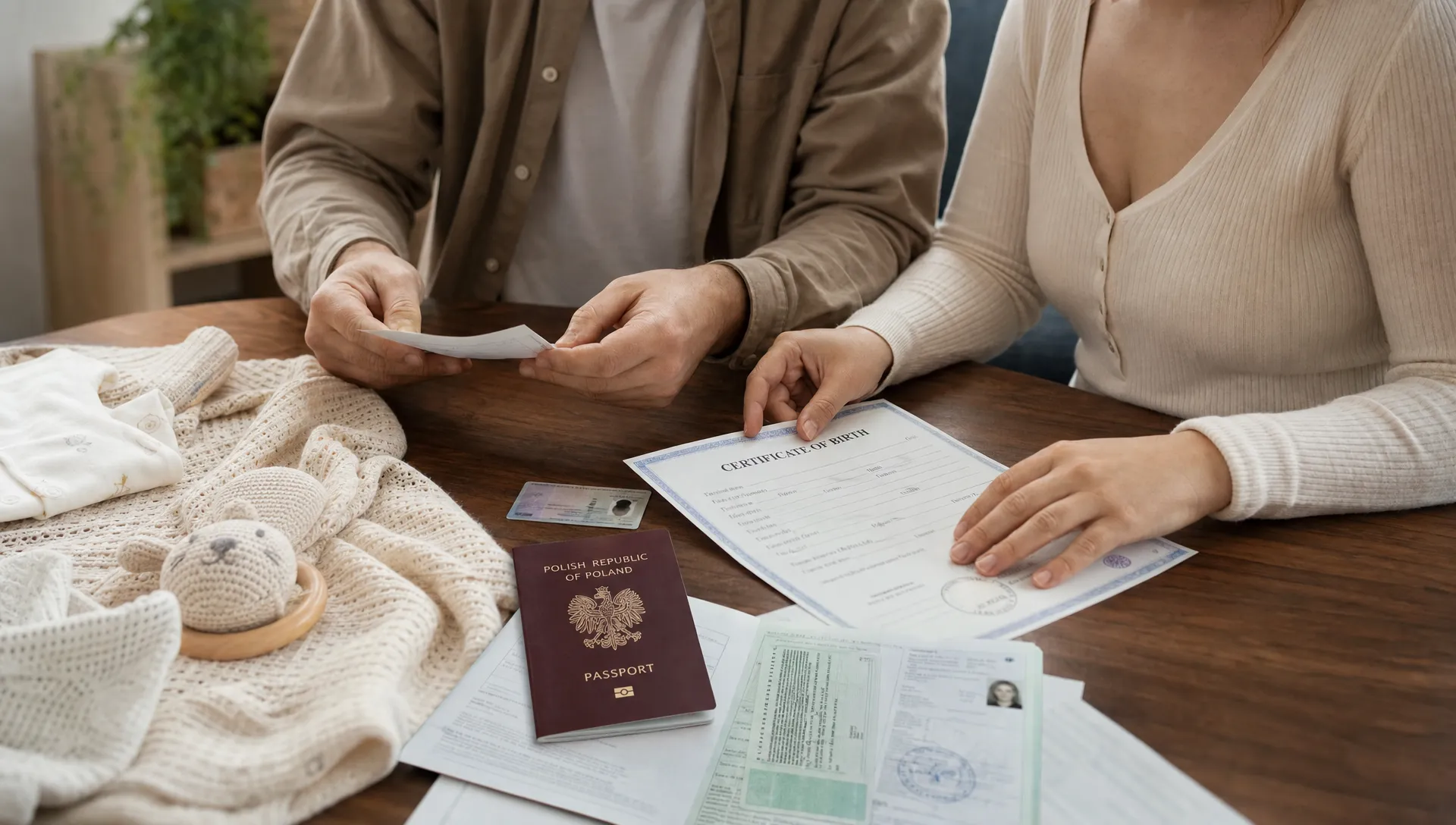
Applying for the baby’s Polish passport
Once the necessary civil records and citizenship evidence are in place, check the current passport requirements with the Polish passport office or consulate handling your application.
Both parents usually need to consent to a child’s passport, even when only one parent is Polish. Different requirements can apply where one parent has sole parental authority, a parent has died or a court has resolved a disagreement. Citizenship through one parent does not automatically remove the other parent’s role in passport consent.
Remember that Poland birthright citizenship and permission to travel are separate questions. The child needs their own appropriate travel document, and custody orders or destination-country rules may create additional requirements.
If your baby holds two nationalities, Poland treats them as Polish in dealings with the Polish state. Plan to use their Polish passport for Polish border formalities on UK travel, and check the UK’s rules and your carrier’s requirements as well. Our explanation of how dual nationality works in Poland covers the wider practical implications.
Avoid booking a trip on the assumption that citizenship alone means the passport can be issued immediately.
Citizenship does not settle the whole family’s residence status
A Polish newborn does not automatically make a foreign mother or father Polish. The child’s citizenship may be relevant to a parent’s residence options, but those options have their own conditions and application requirements.
The reverse is also true. A foreign parent’s work permit, temporary residence permit or permanent residence status does not automatically give the baby Polish citizenship.
For families who do not qualify for Poland birthright citizenship, the immediate task is to establish the newborn’s nationality, obtain appropriate identity or travel documents and confirm how to regularize the child’s stay in Poland.
Do not assume that being born in Poland gives a foreign child an unrestricted right to remain. Ask about the child’s position promptly after birth, particularly if the parents hold different immigration statuses or their own permissions are approaching expiry.
Three mistakes to avoid before the first trip
Treating registration as a citizenship application. If the baby already qualifies through a Polish parent, registering the birth documents that position. It does not mean the baby must first complete an adult naturalization process.
Assuming ancestry proves the parent’s status. A family connection to Poland may justify investigation, but the newborn’s position depends on whether citizenship actually reached the parent and was held at the relevant time.
Leaving document checks until travel is booked. Foreign-record transcription, missing translations, parental consent or uncertainty about citizenship can add steps. Ask the receiving office what it needs before committing to a departure date.
Keep copies of submitted documents and check names and dates across the British and Polish records. Correcting inconsistencies early is easier than discovering them during a passport appointment.
Frequently asked questions
Does being born in Poland automatically make a baby Polish? No. Poland birthright citizenship usually depends on having at least one Polish parent. Narrow exceptions apply to certain children born in Poland whose parents are unknown, stateless or of undetermined citizenship, as well as children found in Poland whose parents are unknown.
Is one Polish parent enough if the baby is born abroad? Yes, provided that parent held Polish citizenship when the child was born and legal parentage is established. The birthplace does not prevent citizenship from passing through the parent.
Does the child have to live in Poland to keep citizenship acquired at birth? No. Living in the UK or another country does not, by itself, remove Polish citizenship.
Can a newborn be both British and Polish? Yes, if the child qualifies under each country’s laws. Check British eligibility separately, especially for births outside the UK.
What if a parent becomes Polish after the birth? That is different from confirming that the parent was already Polish. Separate rules on extending acquired citizenship to minor children may apply, including relevant parental-consent requirements.
Put citizenship into your wider moving plan
Resolve the newborn’s citizenship and document requirements before arranging travel or relying on them for a residence application. This article is general guidance, not an official determination of an individual child’s status.
If you are also deciding where to live or how to organize a family move, Move2Poland’s relocation guidance can help you connect those paperwork questions with practical decisions about cities, costs and timing.