
How Poland Citizenship by Marriage Works for Foreign Spouses
Marriage to a Polish citizen can shorten the path to citizenship, but it does not replace residence, language proof or paperwork. This guide explains what foreign spouses actually need to plan.
By Move2Poland·
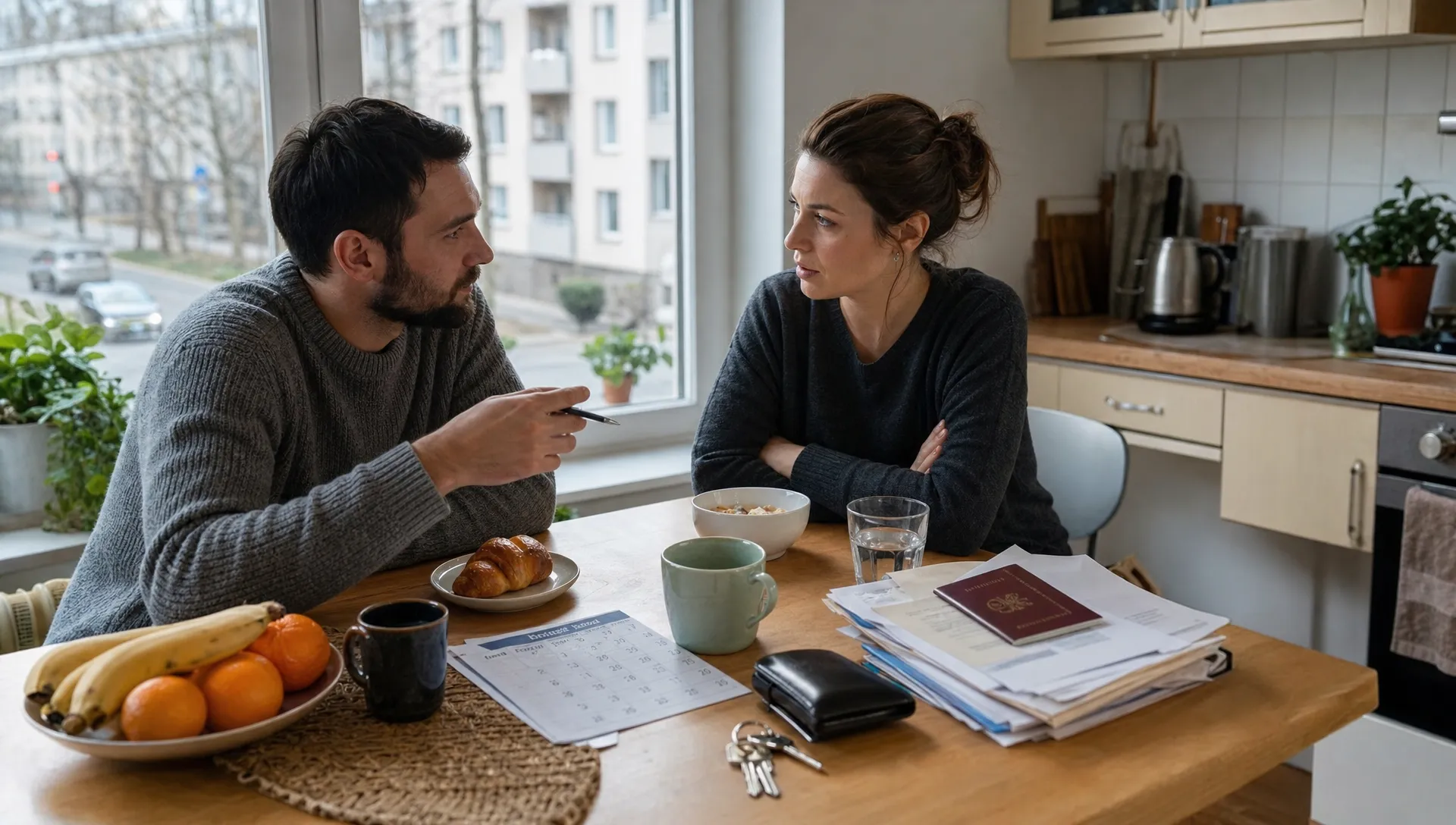
If you are searching for Poland citizenship by marriage, the first thing to know is simple: marrying a Polish citizen does not make you Polish automatically. Marriage can help you qualify sooner under the “recognition as a Polish citizen” route, but you still need lawful residence in Poland, a qualifying permanent status, language proof and a clean, well-documented application.
That distinction matters because many foreign spouses plan around the wedding date alone. In reality, the clock usually starts with residence permits, not the marriage certificate. If you are a UK citizen or another non-EU national married to a Polish citizen, your path is often possible, but it is not instant and it is rarely paperwork-free.
Poland citizenship by marriage: what the law actually allows
Polish law does not treat marriage as a direct citizenship category. Instead, marriage to a Polish citizen is one factor that can shorten the residence period needed before applying to be recognized as a Polish citizen by the local voivode.
In practical terms, Poland citizenship by marriage usually means this: you are married to a Polish citizen for at least three years, you have lived in Poland continuously for at least two years on a qualifying permanent residence basis and you meet the Polish language requirement. The official Polish government guidance on recognition as a citizen is available through gov.pl, and local voivodeship offices publish their own document checklists.
This is different from a presidential grant of citizenship, which is discretionary and not tied to the same statutory conditions. Most spouses who want a predictable legal route focus on recognition, because it has defined requirements and a formal administrative decision.
For a wider comparison of routes, including descent, restoration, presidential grants and recognition, see Move2Poland’s guide to how to get Polish citizenship.
Marriage helps, but it does not replace residence
For most spouses, Poland citizenship by marriage is best understood as a residence-based route with a marriage condition attached. You normally need to live in Poland, secure the right residence permits and then wait until you meet the citizenship recognition criteria.
| Common assumption | Reality under the spouse route | |-------------------|--------------------------------| | “I married a Polish citizen, so I can apply now.” | Marriage alone is not enough. Residence status and time in Poland matter. | | “Three years of marriage means citizenship.” | Three years of marriage is only one requirement. You usually also need two years on permanent residence. | | “Speaking Polish at home is enough.” | You normally need official proof, usually at least a B1 certificate or an accepted school document. | | “The process is handled by my spouse.” | The foreign spouse is the applicant and must prove eligibility with documents. |
The typical route for a foreign spouse
A realistic Poland citizenship by marriage timeline often has several stages. The exact order depends on your nationality, current status and whether you already live in Poland, but the common path looks like this.
| Stage | What usually happens | Why it matters | |-------|----------------------|----------------| | Marriage recognized in Poland | If married abroad, the marriage may need to be registered in the Polish civil registry. | Polish authorities generally want Polish civil-status documents. | | Temporary residence | A foreign spouse living in Poland may apply for a temporary residence permit based on marriage to a Polish citizen. | This gives you a lawful basis to stay and often starts the practical residence journey. | | Permanent residence | After meeting the marriage and residence conditions, a spouse may apply for permanent residence. | Citizenship recognition through marriage usually requires a qualifying permanent status first. | | Citizenship recognition | After the required time on permanent residence and with language proof, you apply to the voivode. | This is the formal citizenship application stage. |
For UK citizens, Brexit changed the immigration baseline. Unless you are protected by the Withdrawal Agreement, you are generally treated as a third-country national for Polish immigration purposes. Move2Poland’s guide to post-Brexit visas for UK citizens moving to Poland explains that wider context.
Eligibility requirements for spouses
The legal test for Poland citizenship by marriage is more specific than many people expect. You should check your exact situation with the relevant voivodeship office, but the main recognition route for spouses usually turns on the following requirements.
A marriage recognized under Polish law
You must be legally married to a Polish citizen, and the marriage must be recognized in Poland. If the wedding took place abroad, Polish authorities may ask for a Polish marriage certificate issued after transcription into the Polish civil registry.
This can involve foreign civil-status documents, apostilles or legalization and sworn translations into Polish. The details vary by country of marriage, so do not leave this until the citizenship application stage.
At least three years of marriage
The spouse route generally requires that you have been married to a Polish citizen for at least three years. The marriage must be real and ongoing. Authorities can examine whether the relationship is genuine, especially during residence proceedings.
A separation, divorce or marriage that exists only on paper can create serious problems. If your relationship circumstances change during the process, get advice before filing or continuing an application.
Two years on a qualifying permanent residence basis
For recognition through marriage, the key residence condition is usually at least two years of continuous residence in Poland based on one of the qualifying permanent statuses, such as a permanent residence permit, an EU long-term resident permit or the right of permanent residence.
This is where many timelines get longer than expected. Time spent on a temporary residence permit can help you reach permanent residence, but it usually does not replace the later two-year period needed for citizenship recognition.
Continuous residence in Poland
Continuous residence does not always mean you never leave Poland. Polish rules generally allow some absences, but long or frequent time outside Poland can break the continuity needed for citizenship recognition.
As a practical planning rule, keep careful records of every trip outside Poland, including dates, reasons and supporting evidence. If your work requires travel, or you spend extended periods in the UK or another country, check the absence limits before assuming the time will count.
Polish language proof
Adult applicants for recognition normally need official confirmation of Polish language knowledge, commonly at B1 level or higher. The standard route is the state certificate in Polish as a foreign language, with information available from the official Polish language certification website.
Some school certificates or diplomas may also satisfy the requirement if education was conducted in Polish. Informal fluency, a spouse’s statement or a private tutor’s letter is usually not enough.
Documents you will usually need
For Poland citizenship by marriage, documents are not just a formality. Missing or inconsistent paperwork is one of the easiest ways to slow the process down.
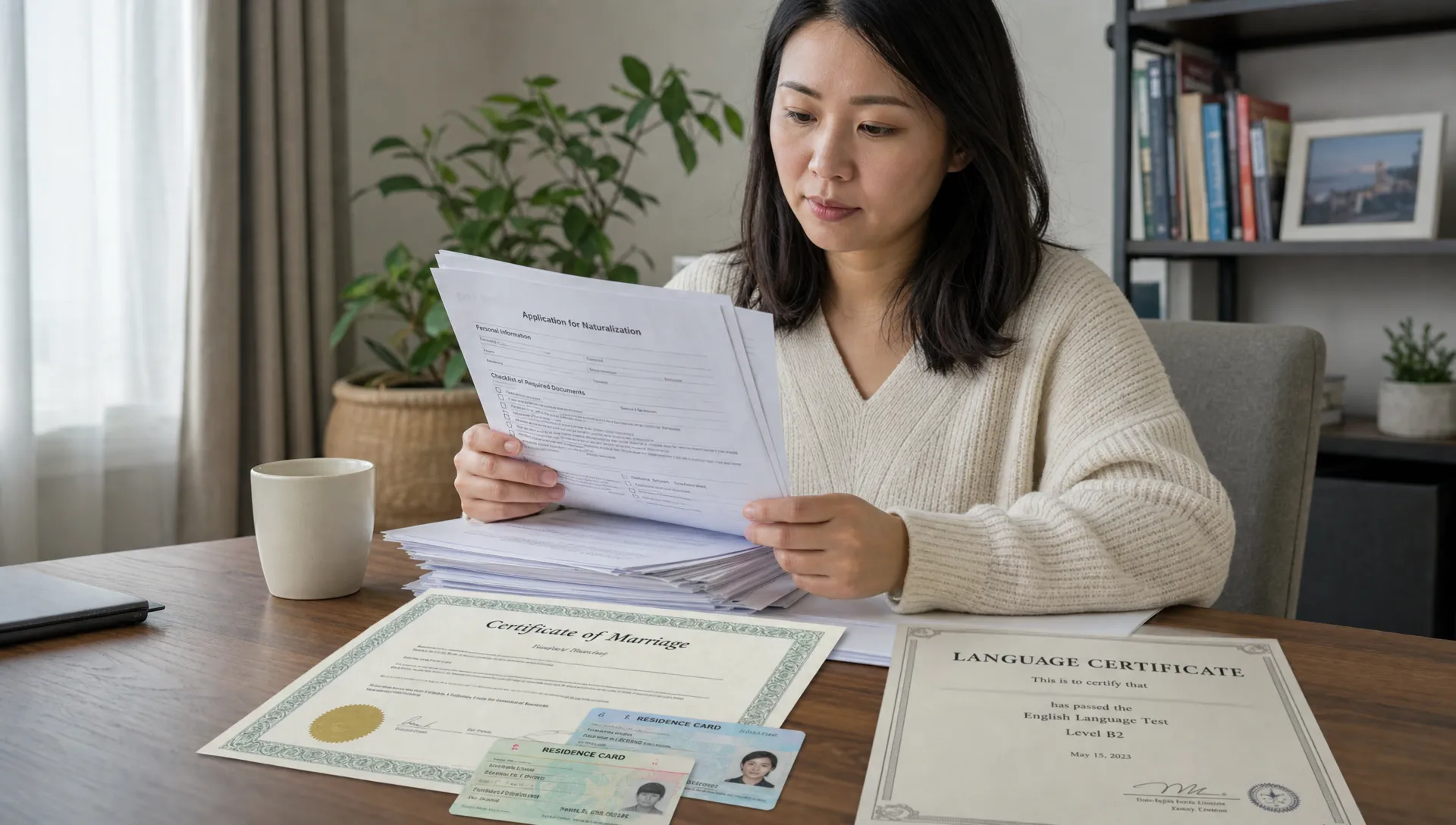
The exact checklist depends on your voivodeship office, but spouses should usually expect to prepare:
- A completed application for recognition as a Polish citizen
- Valid passport and residence card copies
- Polish marriage certificate
- Documents confirming the spouse’s Polish citizenship
- Birth certificate, often in Polish civil-registry form or with sworn translation
- Proof of qualifying residence status and continuous stay
- Polish language certificate or accepted education document
- Recent photographs that meet official requirements
- Proof of stamp duty payment, where required
Foreign documents often need sworn translation into Polish. Some documents may also need apostille or legalization before Polish authorities will accept them. Names, dates and places of birth must match across records, so resolve discrepancies early.
How the application process works
The citizenship recognition application is filed with the voivode competent for your place of residence in Poland. In practice, that means the provincial office where you live, such as Lower Silesia, Mazovia, Lesser Poland or another voivodeship.
After filing, the office reviews your documents and may request additional evidence. Security and background checks can also be part of the process. If the voivode grants recognition, you become a Polish citizen through an administrative decision. If the decision is negative, there is usually a formal appeal path, but deadlines matter.
Do not assume every office handles document review in exactly the same way. Local checklists can differ in format, and appointment availability may affect your timeline. Before applying, check the current page of your voivodeship office and prepare originals as well as copies.
How long does it take in real life?
A clean, best-case Poland citizenship by marriage plan often takes years rather than months. A foreign spouse may first need temporary residence, then permanent residence, then two years of residence on that permanent basis before filing for citizenship recognition.
The minimum practical timeline often looks closer to five years of residence planning, and sometimes longer once processing times are included. Delays can come from residence permit backlogs, missing civil-status documents, language exam availability or absences that disrupt continuity.
This is why it helps to plan backward. If citizenship is your long-term goal, your first residence permit, marriage registration, language learning and travel patterns should all support that future application.
Common mistakes foreign spouses make
Many Poland citizenship by marriage applications become harder than they need to be because applicants focus only on the wedding and not on the legal sequence.
The most common problems include assuming temporary residence counts the same as permanent residence, waiting too long to start Polish language study, spending too much time outside Poland and failing to register a foreign marriage in the Polish civil registry. Another frequent issue is document mismatch, especially where a person’s name changed after marriage or foreign certificates use different formats.
There is also a practical mindset issue. Polish bureaucracy rewards preparation, patience and exact paperwork. If you are used to UK-style online processes, Polish offices can feel slower and more formal. That does not mean the route is impossible, but it does mean you should keep copies, receipts and written confirmations.
What if you do not live in Poland?
If you are married to a Polish citizen but live abroad, the standard recognition route will usually be difficult because it depends on residence in Poland. Being married for ten years while living in London, Chicago or Sydney does not by itself satisfy the Polish residence conditions.
In that situation, the presidential citizenship route may be an option, because the President of Poland has broad discretion to grant citizenship. However, it is not a guaranteed route, there is no fixed set of conditions that creates a right to approval and timelines can be unpredictable.
For couples who may move to Poland later, the better question is often not “Can I apply now?” but “How do we structure the move so future residence and citizenship options stay open?”
Does Poland allow dual citizenship after marriage-based recognition?
After Poland citizenship by marriage, many spouses want to keep their original nationality. Poland allows dual nationality under Polish law, but Polish authorities treat Polish citizens as Polish when they deal with the Polish state.
That can affect passports, consular help, military obligations in rare cases and how you enter or leave Poland. It can also interact with the nationality law of your other country. UK citizens, for example, can generally hold British and Polish nationality, but you should still understand the practical consequences before applying.
Move2Poland covers this in more depth in its guide to dual nationality in Poland.
Frequently Asked Questions
Does marrying a Polish citizen give me Polish citizenship automatically? No. Marriage to a Polish citizen does not automatically give you Polish citizenship. It can help you qualify for recognition after meeting the marriage, residence, permanent status and language requirements.
How many years do I need to be married before applying? The spouse recognition route generally requires at least three years of marriage to a Polish citizen, but that is not enough on its own. You usually also need at least two years of continuous residence in Poland on a qualifying permanent residence basis.
Can I apply if we married outside Poland? Yes, but the marriage usually needs to be recognized in Poland. In practice, you may need to transcribe the foreign marriage certificate into the Polish civil registry and provide sworn translations or apostilles where required.
Do I need to speak Polish? Yes, adult applicants for recognition generally need official proof of Polish language knowledge, usually at least B1 level. Casual fluency or speaking Polish with your spouse is normally not enough without accepted documentation.
Can I get Polish citizenship by marriage if I live in the UK? Usually not through the standard recognition route, because that route depends on residence in Poland. You may consider the discretionary presidential route, but it is not predictable and does not give you a guaranteed right to citizenship.
Will my children become Polish if I am recognized as a Polish citizen? Children’s citizenship depends on their age, parental citizenship and consent rules. If you have children, check the rules before filing so you understand whether they need separate applications or can be included in a parent’s citizenship process.
Plan the route before you commit
The spouse route to Polish citizenship is achievable for many people, but it rewards long-term planning. The marriage date, residence permits, permanent residence timing, travel history and language certificate all need to line up.
If you are deciding whether to move to Poland with a Polish spouse, Move2Poland can help you think through the practical side before you commit, including residency, bureaucracy, city choice and what daily life may actually look like. Start with the free resources at Move2Poland, or book a discovery call if you want tailored clarity on your next steps.