
Poland vs UK: Which Offers a Better Quality of Life in 2026?
Poland can offer safer, calmer and cheaper daily life for some Britons in 2026, but the UK still wins on salary depth and familiarity. This guide compares the trade-offs that actually shape quality of life before you move.
By Move2Poland··Updated 17 September 2026

The Poland vs UK quality of life question usually starts with rent, salaries and weather. In reality, it is about the amount of friction you feel in ordinary weeks: how easy it is to get around, pay bills, see a doctor, build friendships, find decent housing and feel safe walking home at night.
In 2026, Poland can offer a better quality of life than the UK for some British movers, especially people with portable income, young families who want safer urban living or anyone tired of UK housing costs. The UK still wins for many people on career depth, English-language convenience, established support networks and fewer immigration complications for British citizens.
The honest answer is not “Poland is better” or “the UK is better”. It is “better for which life?”
Short answer: Poland wins on daily livability, the UK wins on familiarity and earning potential
For many UK citizens considering relocation, Poland’s strongest quality-of-life advantages are practical. Big Polish cities tend to offer good public transport, walkable neighborhoods, lower everyday costs and a feeling of urban safety that many newcomers notice quickly. A couple or family that can keep a UK-level, international or remote income may find that their money stretches further and their weekly routine feels less pressured.
The UK’s advantages are just as real. You already understand the systems, the language, the workplace culture and the unwritten rules. Salaries are usually higher in nominal terms, particularly in senior roles, finance, law, technology, healthcare and other specialist careers. If your family, friends and professional network are in Britain, that social capital is a major quality-of-life asset.
A useful first filter is this: Poland is often better if your main problem in the UK is cost, stress, safety or lifestyle pace. The UK is often better if your main priority is career acceleration, cultural ease or staying close to family.
The legal baseline matters before lifestyle comparisons
Before comparing cafes, rents and tram systems, UK citizens need to remember one basic post-Brexit point: moving to Poland is not the same as moving from Manchester to Bristol. For longer stays, you need to understand Schengen limits, residence routes, work rights, tax residence and access to healthcare.
British citizens can visit Poland short term under Schengen rules, but living there long term usually requires a proper residence basis. That basis may come from employment, business activity, family circumstances, study or another route. The right route affects your taxes, healthcare access and ability to work.
If you are still at the “could we actually do this?” stage, start with the practical overview of moving to Poland from the UK in 2026. Quality of life only improves if your legal and financial setup is stable.
Poland vs UK quality-of-life scorecard for 2026
| Factor | Poland in 2026 | UK in 2026 | Better fit for many movers | |---|---|---|---| | Everyday costs | Lower in many categories, especially public transport and services | Higher pressure in rent, childcare and commuting in many areas | Poland | | Housing | More modern flats in big cities, but rising rents and smaller spaces | More houses and gardens, but high costs and older stock | Depends on lifestyle | | Salaries | Lower local salaries, stronger value if income is international | Higher nominal salaries and deeper career markets | UK | | Healthcare | Public NFZ plus private clinics, but language and wait times matter | NHS access is familiar, but pressure and waiting times remain concerns | Depends on needs | | Safety | Many newcomers find cities calm and safe day to day | Varies sharply by area | Poland | | Transport | Strong trams, buses and rail in major cities | Excellent in London, mixed elsewhere | Poland in big cities | | Language | Polish is hard and bureaucracy can be tiring | English and familiar systems | UK | | Family life | Compact cities, parks and child-friendly public spaces | Family support may be closer, schools feel familiar | Depends on support network | | Weather | Colder winters, warmer summers, local air quality issues | Milder but often grey and damp | Personal preference | | Social life | Rewarding but slower to build from scratch | Easier if your network is already there | UK |
Cost of living: Poland’s biggest advantage, with caveats
Cost is where Poland most often looks better on paper. Rent, public transport, eating out, mobile plans and many services are commonly cheaper than in the UK, especially when compared with London, the South East or other high-cost British cities.
That does not mean Poland is “cheap” in a simple sense. Warsaw, Krakow, Wroclaw and Gdansk have all become more expensive over recent years. Imported goods, electronics, branded clothing, cars and some international school options can feel closer to UK prices than people expect. If you earn a local Polish salary, the lower cost base may be balanced by lower pay.
Poland’s cost-of-living advantage is strongest for remote workers, business owners, contractors, financially independent movers and people whose income is not limited to the local labor market. It is weaker for someone taking an entry-level Polish job while trying to rent in a prime city-center district.
For detailed monthly budget examples, the Move2Poland guide to the cost of living in Poland in 2026 for expats gives a more practical breakdown than broad country averages.
Housing: cheaper is not the same as easier
Housing affects quality of life more than almost anything else. In the UK, many people are exhausted by high rents, long commutes, older properties, damp, energy bills and the feeling that a comfortable family home is always just out of reach. The UK does offer more houses, gardens and familiar suburban layouts, but the cost can be brutal in the areas with the best jobs.
In Poland, many British movers are surprised by the quality of newer apartments. Large Polish cities have plenty of modern flats with good insulation, central heating, balconies and access to shops or public transport. The trade-off is space. If you are used to a British house with a spare room, loft, shed and garden, an apartment lifestyle may feel restrictive at first.
Rental contracts also work differently. You may need to navigate Polish-language agreements, agency fees, deposit expectations and rules around pets. A beautiful flat in a great neighborhood can improve your quality of life quickly, but a rushed rental decision can do the opposite.
The best approach is to choose the city and district before choosing the flat. A slightly smaller apartment near trams, parks and schools can offer a better week-to-week life than a larger place that leaves you isolated or car-dependent.
Work and income: the UK usually has the stronger career ceiling
If your quality of life depends on career growth, the UK remains hard to beat. London and other UK hubs offer deep markets for finance, law, media, academia, technology, consulting, healthcare and senior management. English is the working language, credentials are easier to explain and professional networks are easier to maintain if you already built your career there.
Poland has strong opportunities too, especially in IT, shared services, engineering, gaming, finance operations and international business centers. Warsaw, Krakow, Wroclaw, Gdansk and Poznan all have international employers. English-speaking roles exist, but they are not unlimited and Polish language ability can become a ceiling in local organizations.
This is where many people misread the move. They compare UK costs with Polish costs, but forget to compare UK income with Polish income. If you take a large pay cut to move, your quality of life may not improve. If you keep a strong remote income or build a business serving international clients, Poland’s lower costs can feel transformative.
Healthcare: neither country is perfect
Healthcare is one of the most personal parts of the Poland vs UK decision. The UK’s NHS is familiar, tax-funded and free at the point of use for residents. That familiarity matters. You know how to register with a GP, request prescriptions and complain when something goes wrong.
Poland’s public system, NFZ, is available to insured residents, usually through employment, business contributions or another qualifying route. The system can work well, but waiting times, referrals and language barriers can frustrate newcomers. Many expats also use private clinics for faster appointments, English-speaking doctors and routine care.
For basic needs, private healthcare in Poland can be convenient. For complex, chronic or specialist conditions, do not assume Poland will automatically be easier. Check medication availability, specialist access, insurance coverage and continuity of care before you move.
Quality of life improves when healthcare feels predictable. If you or a family member has ongoing needs, plan this part before choosing a city or signing a lease.
Safety and transport: Poland often feels easier day to day
Many British newcomers describe Polish cities as calmer than expected. People use public transport late, children are visible in public spaces and city centers often feel orderly. This varies by neighborhood, of course, but everyday street-level safety is one of Poland’s strongest lifestyle draws.
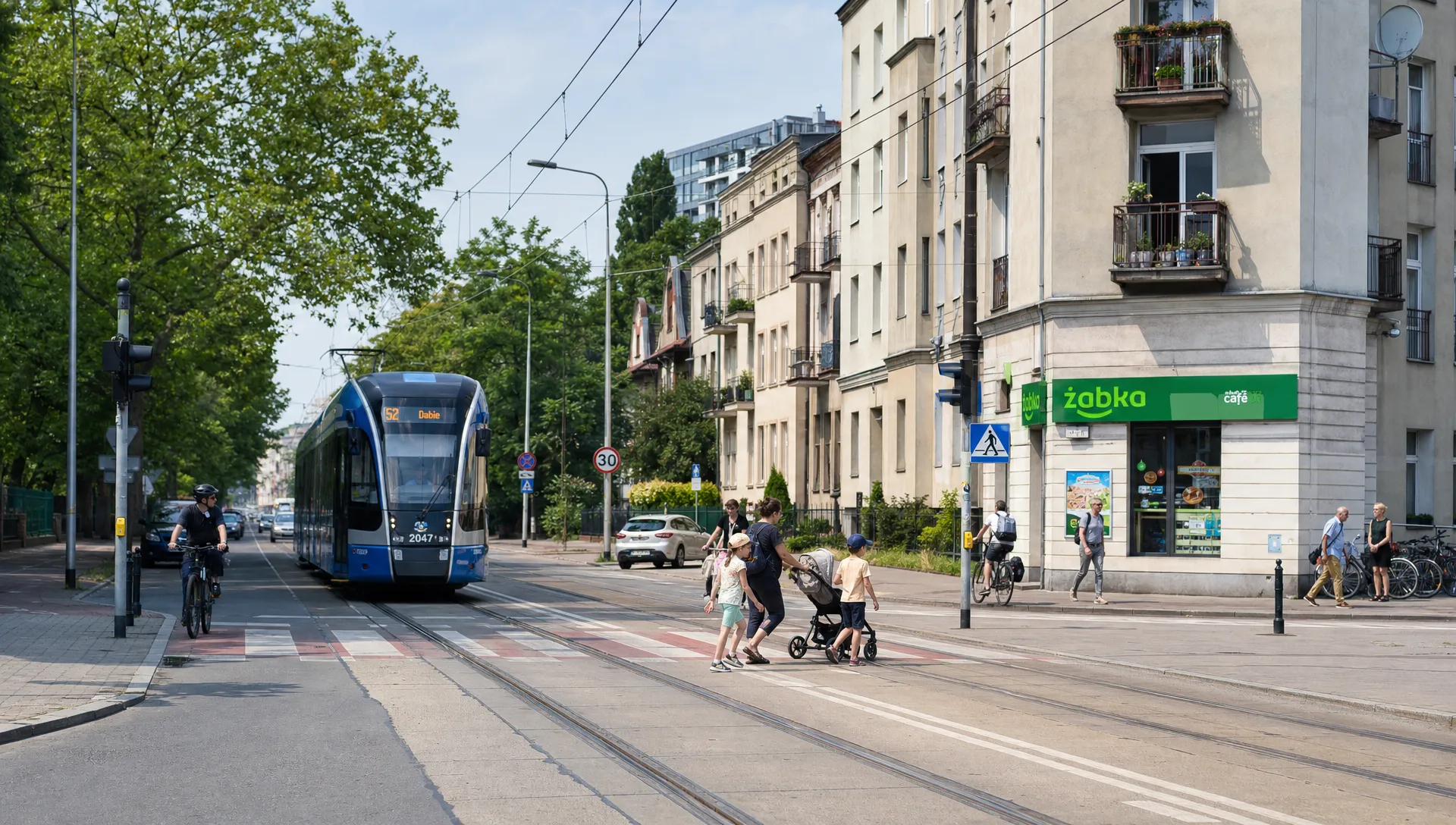
Transport adds to that feeling. In Warsaw, Wroclaw, Krakow, Gdansk and Poznan, it is realistic to build a life around trams, buses, trains, cycling and walking. That can reduce the cost and stress of owning two cars. It also changes the rhythm of family life, because teenagers, elderly relatives and non-driving partners can often move around independently.
The UK is more mixed. London has world-class public transport by European standards, but many British towns and suburbs are car-dependent. Rail can be useful, yet prices and reliability are frequent complaints. If your ideal life involves a detached house in the countryside, the UK may suit you better. If you want a compact city life without constant driving, Poland has a strong case.
City choice may matter more than country choice
“Poland” is not one lifestyle. Warsaw feels different from Wroclaw, Krakow feels different from Gdansk and smaller cities offer a different pace again. The same is true in the UK, where quality of life in Edinburgh, Bristol, Leeds, Manchester, London and a rural market town can be completely different.
If you are considering living in Krakow, for example, you need to weigh more than beautiful architecture and access to the mountains. Krakow has a strong international scene, universities, culture, jobs and charm. It also has tourism pressure, tighter central housing and air quality concerns at certain times of year. Wroclaw may feel more relaxed to some British expats, while Warsaw offers the strongest job market and Gdansk gives you the Baltic coast.
If your decision is really Krakow versus another Polish city, this comparison of Wroclaw vs Cracow for British expats is a better lens than a general Poland vs UK debate.
Bureaucracy and language: Poland will cost you patience
Poland’s biggest quality-of-life downside for many British movers is not money. It is friction. Tasks that feel simple in the UK can become tiring when you do not know the language, the office, the document or the normal order of steps.
You may need to deal with PESEL registration, residence applications, tax office questions, health insurance, rental documents, school paperwork, banking and phone contracts. Many younger Poles speak excellent English, especially in large cities, but official systems still operate in Polish. Translation apps help. They do not remove the mental load.
This does get easier. After the first six to twelve months, many newcomers know which offices matter, which documents to keep scanned and where to ask for help. Still, if you hate admin in English, expect Polish admin to test you.
The UK wins clearly on this point for British citizens. Familiar bureaucracy is still bureaucracy, but it uses the language and assumptions you grew up with.
Family life: Poland can feel calmer, but support networks matter
For families, Poland’s appeal is often practical. Urban neighborhoods can be walkable, parks and playgrounds are common, public transport works well and daily life can feel less financially stretched if your income is solid. Many parents like the visibility of children in public spaces and the relative ease of running errands without long drives.
Schooling needs careful thought. Public schools operate in Polish, which can be a huge opportunity for younger children but a serious challenge for older ones. International schools exist in major cities, though costs and availability vary. If your child has special educational needs, do not rely on assumptions. Research specific schools, support services and language options before committing.
The UK may offer a better quality of life if grandparents, cousins, childcare help and close friends are nearby. A cheaper apartment in Poland does not automatically replace Sunday dinners, emergency babysitting or familiar school support.
For single people and couples without children, the same principle applies. Poland can be exciting and affordable, but loneliness is expensive in its own way. The best relocation plans include social strategy, not only budget spreadsheets.
Weather, air and the emotional side of place
The UK and Poland can both be hard in winter, but in different ways. The UK is milder and wetter. Poland is colder, with more ice and snow in many regions, though homes are usually heated for real winter conditions. Some people prefer Poland’s clearer seasonal contrast. Others find the cold, darkness and shorter-feeling winter days difficult.
Air quality is also local. Southern Poland, including Krakow and parts of Silesia, has had well-known air pollution issues, especially in colder months. Conditions have improved in many areas through heating changes and local policies, but it remains something to check neighborhood by neighborhood. Coastal and northern cities may feel different from southern basin cities.
Emotionally, the UK has the advantage of memory. You know the jokes, the supermarkets, the radio, the small talk and the way people queue. Poland offers discovery, but discovery takes energy. If you are already burned out, moving country may not be an instant cure. It may still be worth it, but it should be planned as a transition rather than an escape hatch.
Moving logistics also affect quality of life
A relocation can damage your first year if it is overcomplicated. People often bring too much, underestimate paperwork and assume they will recreate their UK home immediately. A lighter move is often better: rent first, test the city and buy locally once you understand your space.
Most UK to Poland moves do not require buying a container. A part-load removals service, dedicated van or sell-and-rebuy plan is usually more practical. Still, if you are comparing storage-heavy options or dealing with a more complex international move, the way providers explain container condition, pricing and delivery logistics is a useful reminder to confirm dimensions, access, insurance, delivery windows and what happens if plans change.
The broader lesson is simple. Do not let possessions make the move heavier than the life you are trying to build.
Who is likely to have a better quality of life in Poland?
| Profile | Poland may be better if | The UK may be better if | |---|---|---| | Remote worker | You can keep strong income and want lower daily costs | Your employer requires UK presence or tax setup is unclear | | Young family | You value walkability, safety and calmer city routines | You rely heavily on grandparents, UK schools or local support | | Early career professional | You work in an international sector with English roles | You need the widest possible job market and salary growth | | Self-employed person | Your clients are international and you can manage tax properly | Your business depends on UK location or UK networking | | Retiree or financially independent mover | You have stable income, healthcare plans and patience for admin | You need familiar healthcare, family proximity and simple systems | | City lifestyle seeker | You want trams, cafes, apartments and easy weekend travel | You prefer a house, garden and English-speaking environment |
So, which offers the better quality of life in 2026?
Poland offers a better quality of life if your version of a good life is affordable urban living, reliable public transport, a strong feeling of safety, access to European travel and a slower financial burn rate. It is especially attractive if you have remote income, a flexible career or enough savings to absorb the first-year learning curve.
The UK offers a better quality of life if your version of a good life is professional opportunity, cultural ease, English-language systems, family proximity and career optionality. It may also be the better choice if you have complex healthcare needs, children who would struggle with language transition or a strong social network you do not want to leave.
For many British movers, the real answer is not country against country. It is lifestyle design. A stressed life in an expensive UK city might improve dramatically in Wroclaw, Gdansk or Krakow. A strong UK career and close family network might be hard to replace with cheaper rent in Poland.
The best move is the one where your income, legal status, city choice and personal temperament all fit the same plan.
Frequently Asked Questions
Is Poland cheaper than the UK in 2026? Poland is generally cheaper for many daily expenses, especially rent outside the most expensive districts, public transport and local services. The gap is smaller for imported goods, electronics, cars and some international schooling.
Are salaries better in Poland or the UK? The UK usually offers higher nominal salaries and broader career opportunities, especially in senior or specialist roles. Poland can still provide a better lifestyle if your income is remote, international or strong relative to local costs.
Is healthcare better in Poland or the UK? Neither system is perfect. The UK’s NHS is familiar and free at the point of use for residents, but it faces pressure. Poland offers public NFZ healthcare for insured residents plus private options, though language and access can be challenging.
Is living in Krakow better than living in the UK? It depends on what you are comparing it with. Krakow can be excellent for culture, walkability, international community and access to nature, but housing demand, tourism and air quality should be considered before moving.
Can British citizens move to Poland in 2026? Yes, but long-term residence requires the right legal basis. UK citizens should check residence, work, healthcare and tax rules before moving, because post-Brexit relocation is more complex than it used to be.
Get a clearer answer before you commit
If your real question is not “Poland or the UK?” but “Would Poland improve my life?”, take the decision out of the abstract. Compare your income, family needs, city preferences, healthcare situation and tolerance for bureaucracy before you sell the house or hand in notice.
Move2Poland helps British individuals and families make that decision with practical relocation guidance, city selection advice, visa and residency guidance, cost-of-living insight and on-the-ground orientation in Wroclaw. Start with Move2Poland if you want a clearer plan before you commit.