
What Dual Citizenship USA and Poland Means for Families
Two passports can give your family more options, but not every relative shares the same rights. Understand children’s citizenship, travel rules, taxes and the paperwork to settle before a move to Poland.
By Move2Poland·
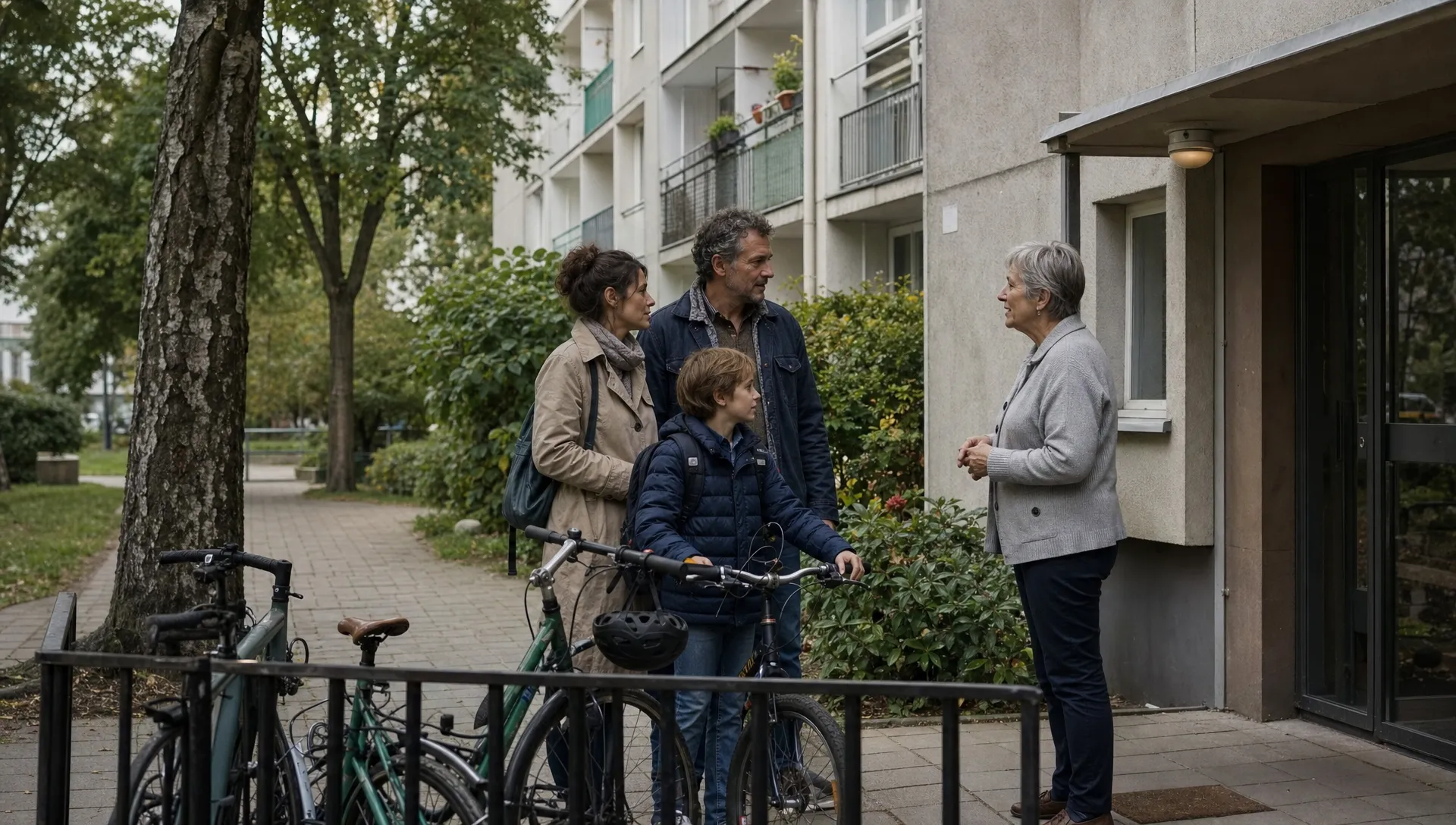
For parents researching dual citizenship USA and Poland, the practical question is what it changes for the whole family. Two citizenships can give a child long-term options for living, studying and working. They also bring passport rules, paperwork and financial responsibilities that deserve attention before a move.
Both countries allow dual nationality. However, one person’s citizenship does not automatically give their spouse or children the same status. A household can include Polish-American citizens, US-only citizens and children whose citizenship still needs to be established.
The useful starting point is to separate three questions: who is already a citizen, what documents prove it and what each person needs to live in Poland legally.
Citizenship belongs to individuals, not the household
A Polish-American citizen can live and work in Poland without a visa or residence permit. They also retain their US citizenship and the right to return to the United States. That creates flexibility, but it does not settle immigration arrangements for everyone traveling with them.
Poland’s Citizenship Act establishes that a Polish citizen who also holds another nationality has the same rights and obligations toward Poland as any other Polish citizen. They cannot invoke their foreign citizenship to avoid those obligations.
The most useful way to approach dual citizenship USA and Poland is therefore to assess each family member separately.
| Family member’s position | What it means for planning | |---|---| | Confirmed Polish-American citizen | No Polish immigration permission is needed, but Polish identity documents and local administration still matter. | | US-only spouse | A lawful basis for residence must be established separately. Marriage does not itself confer citizenship. | | Child whose citizenship is established | Obtain the relevant civil records and passports before relying on that status for travel. | | Child whose status is uncertain | Check citizenship transmission before assuming either that a visa is needed or that none is required. |
This distinction matters when booking flights, choosing a school or agreeing on a relocation date. One parent may be ready to move while another family member still needs a residence application or citizenship documentation.
How dual citizenship USA and Poland affects children
A child may already be Polish without having a Polish passport
Under current Polish law, a child acquires Polish citizenship at birth if at least one parent is a Polish citizen. Birth outside Poland does not prevent this.
The essential question is whether the parent actually held Polish citizenship when the child was born. Having Polish ancestry is not enough on its own. Historical citizenship rules, loss of citizenship and the timing of relevant events can affect a family’s position.
A citizenship confirmation procedure may establish that someone was already Polish rather than grant them a new nationality. If your family’s claim runs through a grandparent or earlier ancestor, our guide to Polish citizenship by descent explains why the family chain matters.
A passport is evidence of citizenship, not the event that necessarily creates it. Still, you need usable documents before treating a child’s status as settled for travel or relocation.
US citizenship follows its own transmission rules
For a child born outside the United States, having an American parent does not always establish US citizenship automatically. The applicable rules can depend on the parents’ citizenship, marital circumstances and the US citizen parent’s physical presence in the United States before the birth.
When assessing dual citizenship USA and Poland for a child born abroad, examine the two countries’ rules separately. A child can qualify under Polish law without qualifying under the relevant US transmission rules.
The State Department’s guidance on birth abroad explains the documentation process. A Consular Report of Birth Abroad records acquisition of US citizenship at birth; it does not grant citizenship to a child who does not qualify.
Adoption, assisted reproduction or unusual parentage documentation can require additional analysis. Resolve those questions with the relevant authorities before making travel assumptions.
A non-Polish spouse needs a separate plan
Marriage to a Polish citizen does not automatically make a spouse Polish. It can be relevant to residence and later citizenship routes, but those involve their own conditions and applications.
Consider an illustrative household: a Polish-American parent, an American-only spouse and a child who acquired both citizenships at birth. The parent and child may not need Polish residence permits, while the spouse still needs an appropriate immigration route.
That difference can affect the family’s schedule. School enrollment and housing plans should allow for the spouse’s lawful stay, application requirements and any restrictions attached to their immigration status.
Our explanation of Polish citizenship through marriage distinguishes marriage from the residence and citizenship steps that may follow. Do not assume that the citizen family members’ rights cover the entire household.
Plan travel around two passport systems
For international travel, dual citizenship USA and Poland usually means managing two sets of identity documents rather than choosing whichever passport seems more convenient.
US citizens must generally enter and leave the United States using a US passport. Polish-American citizens should use a valid Polish passport when crossing Poland’s external border. Polish border authorities may prevent a Polish citizen from departing if they cannot present the required Polish travel document, even when they hold a valid US passport.
The State Department’s dual-nationality guidance also explains that US consular assistance may be limited in a person’s other country of citizenship. In Poland, Polish authorities treat a Polish-American citizen as Polish.
For children, check passport expiration dates, appointment availability and parental consent requirements well before booking. Where names differ between documents, ask the issuing authorities how to resolve the discrepancy.
Citizenship also does not override custody arrangements. An international move with a child may require the other parent’s consent or a court order, even when the child is Polish. Get legal advice before relocating if parental responsibility or permission is disputed.
More education options, but not automatic services
Dual citizenship USA and Poland can preserve future choices: a child may grow up in one country and later decide to study or work in the other. Polish citizenship also brings EU citizenship and associated rights to move, work and study across the EU, subject to the applicable rules.
That does not mean every university place, scholarship or course is free. Tuition and funding can depend on the country, institution, program and residence history. Check the specific course rather than relying on a general promise of “free European education.”
For younger children, citizenship does not determine whether a particular school is suitable. Teaching language, admissions, available places and support for a child arriving from abroad all matter. A Polish passport does not establish Polish-language fluency.
Healthcare needs its own plan too. A Polish passport alone does not prove entitlement to publicly funded treatment. Coverage may come through insured employment, registration as an eligible family member or another statutory basis. Confirm how each person will be covered from arrival.
Family benefits also have program-specific eligibility rules. Avoid putting an allowance into your household budget until you have checked the relevant residence and other conditions.
Treat taxes and banking as family administration
Moving does not end US tax responsibilities
For a household with dual citizenship USA and Poland, the financial consequences can continue long after the passports are issued.
US citizens are generally subject to US tax on worldwide income, with filing requirements depending on their circumstances. Living abroad does not by itself remove those obligations. Foreign tax credits, the foreign earned income exclusion and treaty provisions may reduce double taxation, but none should be treated as an automatic exemption from filing.
The IRS’s guidance for US citizens abroad is a useful starting point. A US-Poland cross-border tax adviser can assess how the rules apply to employment, self-employment or investments.
Polish tax residence is a separate question. Domestic rules consider whether Poland is your center of personal or economic interests, or whether you spend more than 183 days there in the tax year. Where both countries treat someone as resident, treaty rules may also matter. Counting days alone is not always enough.
Include children and joint accounts in the review
US reporting can extend beyond income tax returns. An FBAR may be required when a US person’s foreign financial accounts exceed $10,000 in aggregate at any point during the calendar year, subject to the reporting rules.
Children can have reporting obligations too. Review savings accounts, investment accounts and accounts over which a US family member has signature authority. Polish banks may also request US tax information when opening an account.
Before choosing local investment products, obtain advice on their US treatment. A product that looks straightforward to a Polish investor can create additional reporting or unfavorable taxation for an American citizen.
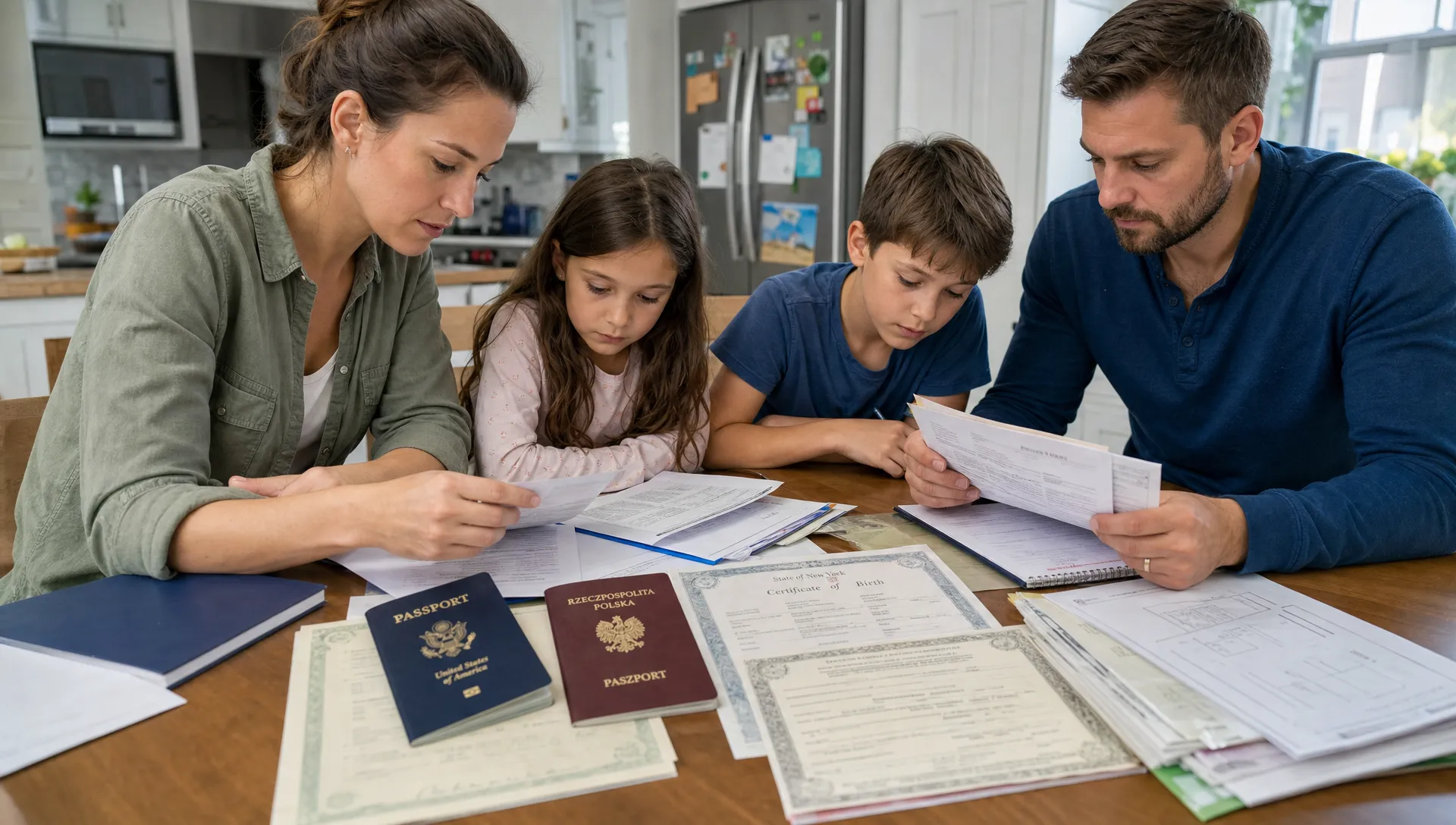
Build a document plan before setting the move date
The administrative challenge is usually not one difficult form. It is a sequence of dependent tasks: establish citizenship, obtain civil records, resolve names and then apply for usable identity documents.
For families organizing dual citizenship USA and Poland, keep a separate checklist for each person rather than one shared folder labeled “citizenship.”
A practical document review should cover:
- Citizenship evidence: Existing passports, confirmation decisions and records needed to establish a parent’s status at the relevant date.
- Civil records: Birth, marriage, adoption or name-change documents, with any required apostilles and accepted translations.
- Polish registration requirements: Whether a foreign birth or marriage record needs transcription into Poland’s civil register for the intended procedure.
- Travel documents: Passport validity, application appointments and consent requirements for minors.
- Relocation records: School reports, vaccination records and custody documents where relevant.
Requirements differ by procedure and family circumstances. Ask the consulate or responsible Polish office for its current checklist before paying for translations or ordering multiple copies.
For children born abroad, foreign birth registration and obtaining a PESEL identification number may form part of the route to Polish documents. Neither should be confused with acquiring citizenship itself.
Keep digital copies for organization, but confirm when an authority needs originals or certified documents. Do not assume every family member’s paperwork can be completed on the same timeline.
Think beyond the first year in Poland
Dual citizenship USA and Poland creates long-term options, but children need practical support to use them. Language ability, familiarity with both countries and a clear understanding of their documents matter as much as the legal status.
A child who moves comfortably at six may have different priorities at sixteen. University plans, friendships and career ambitions can change. Preserving valid passports and organized records makes those later choices easier.
As children approach adulthood, explain the responsibilities that come with their citizenships, including US tax and account-reporting rules where applicable. An account opened by a parent can become an unexpected administrative task for a young adult who has never lived in America.
Parents should also revisit cross-border estate planning when buying property or establishing substantial assets in either country. Citizenship alone does not settle inheritance, guardianship or tax questions. Advice should reflect where the family lives, where its assets are and which people are involved.
Frequently asked questions
Will our children automatically have both citizenships? Not necessarily. Polish citizenship can pass from a Polish parent at birth, but US transmission rules must be assessed separately. The parents’ status and circumstances at the time of birth matter.
Do children have to choose one citizenship when they turn 18? Neither country generally requires a Polish-American dual citizen to choose one nationality simply because they reach adulthood. They should still understand the obligations attached to both.
Does dual citizenship USA and Poland let an American spouse live in Poland automatically? No. A spouse who is not Polish needs their own lawful basis for residence. Marriage may support a route, but it is not automatic citizenship or unrestricted permission to stay.
Does having two citizenships mean paying every tax twice? No. Tax credits, exclusions and treaty provisions can reduce double taxation. However, filing and information-reporting obligations can remain even when no additional tax is payable.
Turn citizenship status into a workable family plan
Before committing to a move, establish each person’s status, identify missing documents and confirm residence arrangements for noncitizen relatives. Then check healthcare, schooling and the household’s cross-border finances.
If you need help deciding how those pieces fit into a move, Move2Poland’s discovery call and personalized relocation planning can help you clarify priorities and next steps. Use qualified legal and tax advice for citizenship disputes or complex financial questions, and build the relocation timetable around what your family has actually confirmed.