
Living in Warsaw: Pros, Cons & Cost of Living for British Expats
Warsaw can offer British expats better city value than the UK, but it is not the cheapest Polish option. This guide breaks down realistic costs, lifestyle tradeoffs and practical setup steps before you commit.
By Move2Poland·

Living in Warsaw can be a smart move for British expats who want big-city energy, strong job options and lower day-to-day costs than London or much of the South East. If you found this while searching for american living in poland stories, the same practical questions apply: what does rent really cost, how painful is the paperwork and will the lifestyle still feel good after the first few months?
Warsaw is Poland's capital, business hub and most internationally connected city. It is also busy, increasingly expensive and less charming at first glance than Kraków, Wrocław or Gdańsk. For many British expats, the real question is not whether Warsaw is good. It is whether Warsaw is good for your income, family situation, tolerance for bureaucracy and preferred pace of life.
Quick verdict: who is Warsaw best for?
Warsaw is best for British expats who want the widest job market in Poland, frequent flights, good public transport, international schools, private healthcare options and plenty to do year-round. If you are moving with a corporate role, working remotely for a UK or international employer or building a business, Warsaw gives you more infrastructure than any other Polish city.
It is less ideal if your main goal is the lowest possible cost of living. Smaller cities can feel easier, cheaper and more relaxed. Warsaw can still be good value compared with London, but rent has risen sharply and the nicest central districts are no longer cheap by Polish standards.
The American living in Poland perspective is useful because Americans, like post-Brexit Brits, often arrive without EU free movement rights. That means the practical side matters: legal stay, health cover, tax position, lease terms and realistic budgeting. Warsaw rewards preparation more than improvisation.
If you are not yet sure whether Warsaw, Wrocław, Kraków, Tricity or Poznań fits you best, it is worth taking time to compare Warsaw with other Polish cities before signing a lease.
Pros of living in Warsaw for British expats
The best career market in Poland
Warsaw has Poland's deepest job market, especially in finance, technology, consulting, law, marketing, business services, startups and international organizations. English is commonly used in multinational offices, although Polish becomes more important outside senior, specialist or international roles.
For British expats, the salary question needs nuance. A local Warsaw salary may look low compared with London, but your rent, transport, childcare and eating out may also be lower. The strongest position is usually a UK or international income combined with Polish living costs, provided your tax and residency position is handled properly.
Public transport makes car-free living realistic
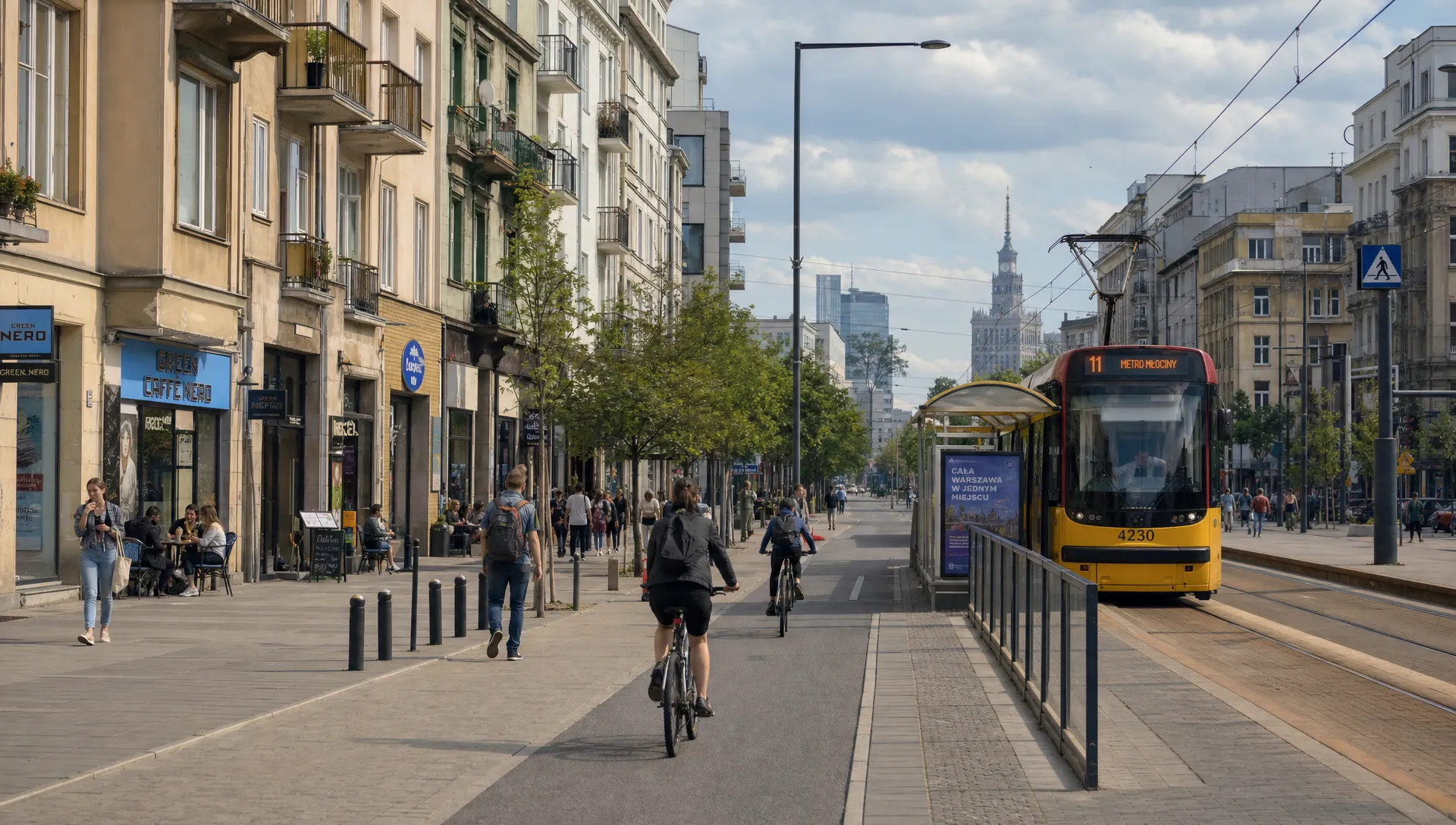
Warsaw is one of the easiest Polish cities to live in without a car. The metro is limited compared with London, but it is clean, frequent and useful if you live near a station. Trams, buses and suburban trains fill in much of the network, and the official Warsaw Public Transport site is the place to check current fares and route updates.
Read enough American living in Poland accounts and you will see the same point repeated: daily life becomes much easier once you stop comparing every system with home and start using local tools. In Warsaw, that means public transport apps, parcel lockers, mobile banking, BLIK payments and local neighborhood services.
International comforts without losing the Polish setting
Warsaw has international food shops, gyms, coworking spaces, private clinics, English-speaking dentists, concerts, cinemas, museums and restaurants covering most budgets. You can function in English in central areas, business districts and many expat-facing services.
That said, Warsaw is not an English-speaking bubble. Learning basic Polish makes admin, neighbor relations, medical appointments and tradespeople much easier. You do not need fluency to start, but you do need humility and a willingness to learn the everyday phrases that reduce friction.
Strong links to the UK
Warsaw Chopin Airport offers better international connections than most Polish airports, and Warsaw Modlin can be useful for low-cost routes depending on schedules. Direct UK routes change over time, so check current flights before assuming a specific route will work for school holidays or family visits.
This matters more than people expect. A move feels less risky when you can get back to the UK without a complicated connection, especially if you have ageing parents, shared custody arrangements, UK property or a business that still requires face-to-face meetings.
Cons of living in Warsaw British expats should not ignore
Rent is high by Polish standards
Warsaw is usually Poland's most expensive rental market. A modern flat near the metro, a good school or a popular business district can attract strong competition. You may also see leases where the advertised rent does not include administrative charges, utilities, internet or parking.
For an American living in Poland, Warsaw rents may still look reasonable compared with New York, Boston or San Francisco. For a Brit comparing Warsaw with Manchester, Leeds or Glasgow, the gap may be smaller than expected once you choose an attractive district and a modern flat.
The biggest mistake is budgeting from old blog posts or social media comments. Use current listings, ask what is included, confirm the deposit, clarify lease length and check whether the landlord is comfortable registering your address if you need it for paperwork.
Local salaries can feel modest
Warsaw has strong opportunities, but Polish wages are still not UK wages in many fields. If you are moving from a UK salary into a local Polish role, compare net income after tax with real monthly costs. Gross salary comparisons are not enough.
This is especially important for families. Private school, nursery, a larger flat and regular flights to the UK can quickly erase the savings that a single remote worker might enjoy. Warsaw can be excellent value, but only when your income structure matches the city you are choosing.
Bureaucracy takes patience
British citizens no longer have EU free movement rights, so moving to Poland is not as simple as it was before Brexit. Short tourist stays and long-term residence are different legal situations. Work, business ownership, family ties, study and other circumstances may require different documentation.
Use official sources such as Poland's Office for Foreigners and get professional advice if your case involves remote work, a spouse, children, a UK company, rental income or cross-border tax. If you want a practical overview of the first steps, this guide to settling in as an expat in Warsaw is a useful companion.
Winter can feel heavier than expected
Warsaw winters are not extreme by northern European standards, but they can be grey, cold and dark. The challenge is less about dramatic snow and more about weeks of low light, wet pavements, icy mornings and shorter days. Good outerwear, proper shoes and a routine that gets you outside make a real difference.
Air quality can also vary in winter, particularly during colder periods. Modern flats with good windows help, and many residents use air quality apps before planning long outdoor activity.
Cost of living in Warsaw in 2026
The figures below are broad planning ranges for 2026, not guarantees. Your costs will vary by district, lease timing, family size, lifestyle and whether you use public or private services. The GBP equivalents use a simple planning rate of 5 PLN to £1, not a live exchange rate.
The American living in Poland budget conversation often focuses on whether Poland is cheap. A better question for British expats is whether Warsaw gives you enough quality of life for your specific income. Warsaw is cheaper than London for many everyday costs, but it is not a bargain if you need a large flat, international schooling and frequent UK flights.
| Monthly expense | Single adult | Couple | Family of four | Notes | |---|---:|---:|---:|---| | Rent | 3,200-5,500 PLN | 4,500-8,500 PLN | 7,500-13,000 PLN | District, size and building standard matter most | | Utilities, building fees and internet | 700-1,300 PLN | 900-1,700 PLN | 1,300-2,500 PLN | Check what is included in the advertised rent | | Groceries and household basics | 1,200-2,000 PLN | 2,400-3,800 PLN | 4,500-7,000 PLN | Imported products and specialty diets cost more | | Eating out, cafes and social life | 700-2,000 PLN | 1,500-3,500 PLN | 2,500-6,000 PLN | Highly lifestyle dependent | | Public transport | 110-250 PLN | 220-500 PLN | 300-800 PLN | Depends on ticket type, zones and discounts | | Healthcare and insurance | Variable | Variable | Variable | Public access depends on status, private options vary | | Childcare and schooling | Not applicable | Variable | Variable, often significant | International school can dominate the budget |
As a rough comfort range, a single renter may want 7,000-10,500 PLN net per month, a couple may want 11,000-17,000 PLN net and a family may need 18,000-32,000 PLN net or more, especially with private education. You can live below these ranges, but the margin for convenience, travel and emergencies becomes thinner.
For a wider national comparison, see this breakdown of the broader cost of living in Poland, then treat Warsaw as the top end of most Polish city budgets.
Best neighborhoods in Warsaw for British expats
Choosing the right district matters as much as choosing Warsaw itself. Your commute, school run, social life and exposure to Polish all change depending on where you land.
A common American living in Poland lesson applies here too: do not rent purely from a map. A district that looks central may feel noisy, disconnected or inconvenient for your daily routine. Visit at rush hour, check grocery options, test the commute and walk around after dark before committing.
| Area | Best for | Why expats consider it | Main tradeoff | |---|---|---|---| | Śródmieście | Central city living | Walkability, restaurants, offices, culture | Expensive, busy and sometimes noisy | | Mokotów | Professionals and families | Good transport, parks, offices, established feel | Popular areas can be pricey | | Wola | Corporate workers and modern flats | Close to offices, new buildings, metro access | Construction and traffic in some pockets | | Żoliborz | Quieter urban life | Green, attractive, calmer than the center | Limited supply, higher prices | | Praga-Północ and Praga-Południe | Character and relative value | More local feel, improving services | Quality varies street by street | | Wilanów | Families seeking space | Newer housing, schools, family infrastructure | Less central, car use can be tempting | | Ursynów | Practical family living | Metro access, parks, residential feel | Further from central nightlife and offices |
If you are arriving alone, rent flexibility may matter more than the perfect neighborhood. If you are moving with children, school location can decide everything. Warsaw traffic is manageable compared with London, but a badly chosen commute still drains your week.
Admin, healthcare and taxes: the practical setup
Your first months in Warsaw should be organized around legal stay, housing and basic services. The details depend on your nationality, work status and family situation, so treat generic advice as a starting point rather than a personalized answer.
Most British expats need to think about the following early:
- Legal basis for staying in Poland beyond short visits
- Rental contract, deposit and address registration questions
- PESEL number, where applicable
- Bank account and mobile phone setup
- Health coverage through employment, insurance or another route
- Tax residency, especially with UK income, pensions, property or a UK company
- School or nursery places if moving with children
Poland's tax year, social insurance system and healthcare access rules may differ from what you are used to in the UK. If you are paid by a UK company while physically living in Poland, get advice before assuming nothing changes. Cross-border arrangements can affect tax, social security, payroll and immigration status.
How Warsaw compares with other Polish cities
Warsaw is the strongest choice for career growth, international connectivity and big-city services. Wrocław often feels friendlier and more manageable. Kraków has beauty, universities and tourism, but the visitor volume can be tiring. Tricity offers the Baltic coast and a different pace. Poznań can be practical, business-oriented and less overwhelming.
The tradeoff is simple: Warsaw gives you more opportunities and amenities, but it demands more money and energy. If you want a capital city with ambition, it makes sense. If you want a softer landing, a smaller city may be better.
This is where British expats should be honest about the life they actually want. If your ideal Poland move involves weekend hikes, a calmer social circle, lower rent and less pressure, Warsaw may not be the obvious winner. If your ideal move involves career momentum, networking, events and regular flights, Warsaw is hard to beat.
What an American living in Poland can teach British expats
An American living in Poland often approaches Warsaw with fewer assumptions about Europe than a Brit does. That can be helpful. British expats sometimes expect Poland to feel like a cheaper extension of the UK with different weather. It is not. Poland has its own administrative habits, communication style, property norms, food culture and expectations around family, work and formality.
The most useful lesson is to prepare without over-planning. You need enough structure to avoid visa, tax and housing mistakes, but you also need patience while local systems reveal themselves. Warsaw becomes easier after you know your supermarket, your tram line, your nearest clinic, your favorite lunch spot and the Polish phrases you use every week.
The second lesson is not to judge the whole country by your first winter or your first office visit. Many expats struggle in the first 60-90 days, then settle once routines replace uncertainty.
FAQ
Is Warsaw expensive for British expats? Warsaw is expensive by Polish standards but often cheaper than London, especially for transport, local services and some everyday spending. Rent is the main pressure point, and family costs rise quickly if you need a large flat or private school.
Can British citizens live in Warsaw after Brexit? British citizens can visit Poland for short stays under Schengen rules, but living, working or studying long term usually requires the right legal basis. Check official guidance and get advice for your specific situation.
Do I need to speak Polish to live in Warsaw? You can start in Warsaw with English, especially in international workplaces and central districts. Basic Polish still makes life easier for admin, healthcare, housing, deliveries and neighbor relationships.
Is Warsaw good for families? Warsaw can work very well for families because it has parks, private healthcare, international schools, public transport and many activities. The main challenges are housing costs, school choice and commute planning.
How does advice for an American living in Poland differ from advice for British expats? Some legal and tax details differ by nationality, but the practical Warsaw lessons are similar: confirm your right to stay, understand healthcare, budget in PLN, learn basic Polish and choose housing around your real daily routine.
Need help deciding if Warsaw is right for you?
Warsaw can be an excellent move, but it is not the right Polish city for everyone. Before you commit, get clear on your legal route, budget, preferred lifestyle, family needs and city fit.
Move2Poland helps people make that decision with practical relocation guidance, city selection advice, discovery calls and on-the-ground orientation support. If you want a clearer plan before moving from the UK to Poland, start with Move2Poland and make the decision with fewer surprises.