
Living in Wrocław: Pros, Cons & Cost of Living for British Expats
Wrocław offers one of Poland's strongest combinations of career opportunities, family life, transport and lifestyle — but it is no longer a cheap hidden gem. Here is what British movers should know before putting it on their shortlist.
By Move2Poland··Updated 17 September 2026
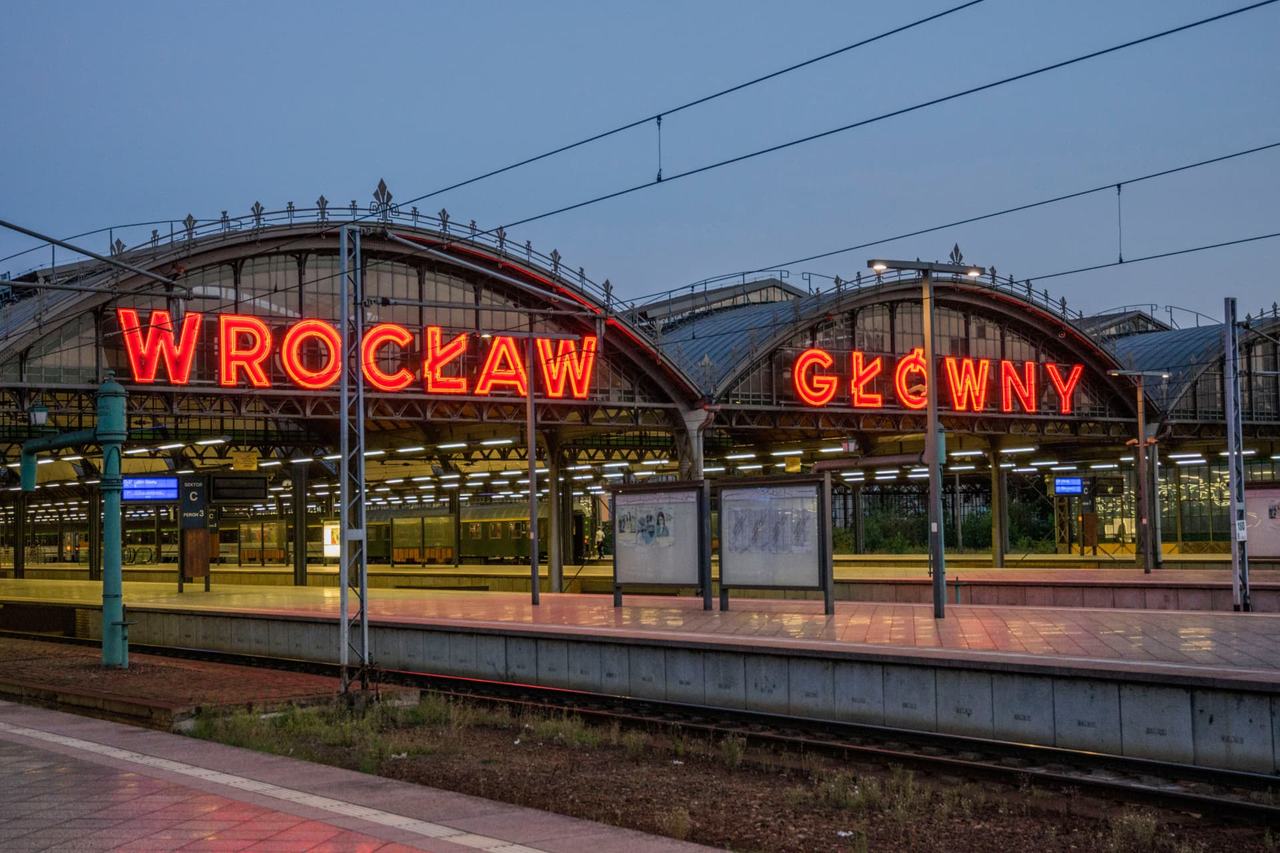
Wrocław is one of the strongest all-round choices in Poland for British people who want a serious European city without the scale and intensity of Warsaw.
It has international employers, a large technology and business-services sector, universities, private healthcare, English-speaking schools, good public transport and an airport with direct connections to Britain. At the same time, you can live close to parks, rivers and ordinary residential neighbourhoods rather than feeling permanently surrounded by tourists.
That balance is Wrocław’s main attraction.
But it is important not to romanticise it.
Wrocław is not a cheap hidden gem anymore. Good flats are expensive relative to Polish salaries, some fast-growing residential areas have frustrating commutes, international-school choice is more limited than in Warsaw, and relying entirely on English becomes harder once you move beyond offices, restaurants and private services.
The useful question is therefore not simply “is Wrocław a good city?” It is: “would living in Wrocław work for the life I am actually planning?”
For many British professionals, remote workers, couples and families, the answer may be yes. But the reasons matter. If you are still comparing cities, our guide to the best places to live in Poland for British expats is the wider view; this article looks at Wrocław specifically.
Living in Wrocław at a glance
| Area | Our assessment | What British movers should know |
|---|---|---|
| Career opportunities | Strong | Particularly good for technology, engineering, finance operations, R&D and international business services |
| Remote work | Very good | Strong infrastructure, cafés, coworking and a manageable weekly rhythm |
| Housing value | Moderate | Better than Warsaw in many cases, but Wrocław is no longer inexpensive |
| Public transport | Good | Extensive tram and bus network, but neighbourhood choice matters |
| Family life | Very good | Parks, activities and practical residential districts; school choice needs early planning |
| English accessibility | Good initially | Easy enough professionally; Polish becomes increasingly important over time |
| UK connections | Good | Direct flights exist, but route depth is less than Warsaw or Kraków |
| International schools | Reasonable but limited | Real options exist, but considerably less choice than Warsaw |
| Social life | Good | International without feeling overwhelmingly tourist-driven |
| Access to nature | Excellent | Lower Silesia, the Sudetes and the Czech border are major advantages |
| Overall fit | Strong all-rounder | Particularly attractive if you want balance rather than maximum scale |
Why Wrocław deserves serious consideration
Wrocław has roughly 670,000 registered residents and is one of Poland’s largest economic centres. More important for somebody relocating from Britain is what sits underneath that number.
The city has developed a deep international employment base: recent city figures put the modern business-services sector at close to 71,000 people across around 259 service centres in Wrocław. Technology, financial operations, R&D, engineering and global corporate functions all have a meaningful presence here.
The wider investment picture is also diverse. Major employers span IT, banking, engineering, manufacturing, logistics, research and development and shared services rather than one dominant industry, as the city’s own business information service sets out.
That matters because Wrocław does not depend purely on tourism, government or one large employer. For a British professional moving with transferable corporate experience, the city has a genuine labour market.
That does not mean you should arrive expecting to reproduce a London or Manchester salary. Official regional statistics have reported average gross enterprise-sector earnings in the order of PLN 10,000 per month during 2026 (see the Wrocław Statistical Office). That is a broad statistical measure rather than a salary guide for international professionals, but it illustrates an important point: the income side of your relocation matters just as much as Wrocław’s prices.
A British remote worker retaining international income will experience the city’s affordability very differently from somebody moving onto a local entry-level salary.
Cost of living in Wrocław in 2026
The phrase “cost of living in Wrocław” can be misleading, because rent, family structure and income source dominate the calculation. Wrocław is generally less expensive than Warsaw, but the days when a British salary automatically made everything feel extremely cheap are over. Our national overview of the cost of living in Poland gives the broader comparison.
Housing costs
Current market data gives a useful sense of the rental market. These are indicative figures from rental-market and consumer-price sources, not guaranteed prices.
| Property | Indicative monthly rent |
|---|---|
| 1-bedroom in or near the centre | Around PLN 3,250 |
| Typical central range | PLN 3,000–3,800 |
| 1-bedroom outside the centre | Around PLN 2,650 |
| Typical outer range | PLN 2,400–3,000 |
| 3-bedroom central | Around PLN 5,450 |
| 3-bedroom outside the centre | Around PLN 4,300 |
Actual prices depend heavily on district, condition, furniture, parking, building age and proximity to a tram. Rental-market reporting from Otodom and consumer-price data on Numbeo are useful for tracking how these numbers move.
There is another Polish housing detail British renters need to understand: the number you see in an advert is not always your final monthly housing cost. You may have the landlord’s rent plus czynsz administracyjny — the building or administrative charge — followed by electricity, internet and potentially other utilities.
So do not compare a £1,300 UK rental payment with a PLN 3,200 Polish advert and assume the difference is your monthly saving. Compare total housing cost with total housing cost. Our guide to renting in Poland as a foreigner covers how those contracts usually work.
Everyday costs
Wrocław still offers noticeably good value in several everyday categories. An inexpensive restaurant meal is typically around PLN 40, a cappuccino around PLN 16 and a mid-range meal for two around PLN 200 based on current consumer-price data.
Broadband, public transport and many local services can feel inexpensive compared with larger British cities. But imported food, international schooling, cars, electronics and premium city-centre lifestyles can narrow the gap with Britain surprisingly quickly.
The cost advantage is therefore strongest when you actually live locally rather than recreating an expatriate version of London life in złoty.
Public transport is one of Wrocław’s strongest practical advantages
Wrocław has an extensive network of trams and buses and, with the right neighbourhood, living without a car is completely realistic. A standard 30-day personal public-transport ticket sits at around PLN 110 at current pricing, with different rates for some resident and reduced-fare schemes; the city publishes current fares on its official transport pages.
For somebody used to British rail and urban transport costs, that can feel remarkably good value. But there is an important caveat: Wrocław is not equally well connected everywhere.
A property that appears only eight kilometres from the centre can create a worse daily life than one twelve kilometres away if the second is beside a direct tram or rail connection. This is especially relevant in newer residential developments around the edges of the city.
A glossy new-build apartment, underground parking and an extra bedroom can look like excellent value online. It may feel less clever when every school run or office commute funnels into congested roads.
When choosing where to live, commute time matters more than map distance.
Which Wrocław neighbourhoods should British movers consider?
There is no universal “best neighbourhood in Wrocław”. Your choice should follow your routine.
Stare Miasto and the inner centre
Best suited to people who want restaurants, nightlife, offices, cafés and a walkable urban lifestyle. The advantages are obvious: central living, architecture, social life and excellent access to much of the city.
The disadvantages become clearer once you live there. Noise, parking, smaller flats, older buildings and tourist activity can make central living less attractive for families or anyone working from home every day.
A British professional moving alone may love it. A family with two children and a car may not.
Nadodrze and Ołbin
These areas give you older architecture and strong access to central Wrocław without living directly on the Rynek. They can feel much more residential than the tourist centre, but building condition varies significantly from street to street.
This is a good example of why choosing Wrocław remotely from property photographs is difficult. Two flats a few hundred metres apart can give you very different surroundings.
Grabiszyn and the surrounding western districts
For many professionals and couples, this is one of the more interesting compromises. You have access to parks, trams and established residential infrastructure without being in the historic centre.
Western Wrocław can also work well for people whose office is around one of the city’s western business areas or who value easier airport access. The key is checking your exact tram or bus connection rather than judging the entire district as one unit.
Biskupin and Sępolno
These areas are worth investigating if greenery, quieter streets and family life matter more than nightlife. The combination of established housing, parks, river access and tram links can be attractive for families and people who want a more settled version of Wrocław.
The trade-off is availability. Attractive established neighbourhoods do not always give you the volume of modern rental stock found in large new developments.
Krzyki and southern Wrocław
“Krzyki” gets used very broadly in property searches, which can create confusion. Some parts offer an excellent combination of established streets, parks, schools and transport. Other southern developments are much farther from everyday city life than the advert suggests.
Families often gravitate south because there are larger apartments and houses, but this is exactly where you need to test morning and evening travel.
Do not choose a neighbourhood because someone on a forum says “Krzyki is best”. Work out which part of Krzyki, where your school or office is, and how you intend to get there.
Wrocław for families with children
Wrocław has a strong case for British families. There are parks, playgrounds, swimming pools, sports clubs, museums, riverside paths and the sort of neighbourhood infrastructure that can make family routines relatively simple. Children can also gain greater independence as they get older if you live somewhere with good public transport.
The harder question is education. Polish state schools operate predominantly in Polish. They may be the right option for a young child staying long-term, particularly if integration is an objective, but that is very different from moving a 14-year-old midway through secondary education.
English-medium international education does exist in Wrocław — Wrocław International School, for example, provides English-language international education — but the overall market is much smaller than Warsaw’s. Our overview of schools in Poland for British and English-speaking children explains the main routes.
That means families should make the school decision and the neighbourhood decision together. Finding the perfect flat and then discovering that the appropriate school involves an awkward cross-city commute is a common relocation mistake.
Is Wrocław good for remote workers?
Yes — potentially very good. Wrocław gives remote workers something that is easy to underestimate: enough city life without requiring you to participate in it constantly.
There are cafés, coworking spaces, gyms, restaurants, international communities and events. But outside the tourist core, large parts of the city simply behave like normal residential neighbourhoods. That can be a better remote-work environment than somewhere permanently dominated by visitors.
A normal Tuesday can consist of work, gym, supermarket, tram, dinner and a walk by the river. That sounds unremarkable. For someone actually living in a city rather than visiting it, unremarkable is often exactly what you need.
The warning for British remote workers is that choosing Wrocław does not settle the legal, tax, payroll or social-security question. Being physically able to work from a laptop in Poland is not the same thing as having the correct arrangement to work from Poland while keeping a UK employer or company structure — see our guide to tax in Poland for UK remote workers.
Flights and getting back to Britain
Wrocław Airport is a genuine asset for British movers. Direct services connect Wrocław with several airports in Britain, although routes and frequencies change seasonally — the airport’s own timetable is the only reliable source at the moment you book.
This is particularly important for mixed British-Polish families. One direct flight home can be the difference between grandparents being an accessible part of family life and every visit becoming a complicated journey.
Wrocław does not have Warsaw’s depth of connectivity and may offer less choice than Kraków for some travellers. But if the airport you actually use is served, that may not matter.
Do not rank airports purely by number of destinations. Rank them by whether they connect you to your part of Britain at useful times.
Social life and the language question
You can function in Wrocław in English much more easily than someone unfamiliar with modern Poland might expect. International employers, younger Poles, universities, restaurants, private healthcare and professional services make the first months reasonably manageable.
But there is a difference between functioning in Wrocław and building a life in Wrocław. Your building administrator may speak Polish. A letter from an office will be in Polish. Your child’s school communication may be in Polish. The plumber may speak Polish. Your neighbour probably expects you to at least try.
This is why we would not describe Wrocław as an “English-speaking city”, despite its international character. The longer you stay, the more valuable Polish becomes.
That is not necessarily a disadvantage. Some newcomers find Wrocław easier to integrate into than a heavily international tourist city, because it encourages you towards Polish life rather than allowing you to remain indefinitely in an expatriate bubble. Our piece on what daily life in Poland is really like goes further into that adjustment.
The biggest advantages of living in Wrocław
1. It has an unusually good balance
Wrocław is big enough for careers, culture, healthcare and social life without requiring all the compromises of a capital city. That is its strongest selling point.
2. The professional economy is real
This is not simply a beautiful university town. Technology, engineering, global business services, finance operations and R&D create a substantial international employment base.
3. You can build a car-light life
A good tram-connected neighbourhood can make everyday life dramatically simpler and cheaper than many British urban areas.
4. Family life works well
Wrocław gives families access to big-city services without automatically forcing them into big-city intensity.
5. Lower Silesia is an underrated lifestyle advantage
The city is well positioned for the Sudetes, Czechia and Germany. Weekend life can mean mountains, castles, forests, spa towns or cross-border trips rather than another journey across the same metropolitan area.
For outdoors-oriented British movers, that can become a much bigger advantage after relocation than it appears on a spreadsheet.
The biggest disadvantages of living in Wrocław
1. Housing is no longer cheap
This is the biggest reality check. Wrocław may still represent better value than London or parts of southern England, but good housing is expensive by Polish standards and particularly expensive relative to many local salaries.
2. Transport quality depends heavily on where you live
The tram network is a strength. Living in a new development that has expanded faster than its transport infrastructure can be the opposite. Your exact commute needs testing.
3. International-school choice has limits
Families requiring a particular curriculum, specialist provision or English-only education have fewer options than in Warsaw. That constraint can determine your entire housing search.
4. English gets you started, not fully integrated
Long-term life is considerably easier if you learn Polish.
5. British flight connections are good rather than exceptional
If frequent UK travel is central to your job or family life, compare the exact routes you need with Warsaw and Kraków.
6. The weather still requires adjustment
Wrocław is not Poland’s coldest city, but British newcomers still need to adapt to colder winters and hotter continental summer periods, as we set out in our guide to winter in Poland. Air quality can also vary seasonally, so if pollution concerns you, check current measurements from Poland’s official air-quality monitoring service rather than relying on general city stereotypes.
Who is Wrocław best suited to?
British remote professional
Strong fit. Particularly if you retain a good international income and want a European urban lifestyle without Warsaw’s scale. The biggest risks are work/tax structure and choosing the wrong neighbourhood.
Professional looking for a Polish job
Potentially strong fit, especially in technology, engineering, business services, finance operations and related corporate sectors. Do not base the move on UK salary expectations.
Family with young children
Strong fit if schooling works. Wrocław can be extremely practical for family life, but education needs to be investigated before housing.
Family with teenagers requiring English education
More conditional. The city can work, but curriculum availability and school places may become the decisive constraint.
British-Polish couple
Very strong potential fit. Wrocław provides an international enough environment for the British partner while still being unmistakably Polish. Its western location can also work well for couples whose lives involve Germany or Czechia.
Person wanting maximum international scale
Probably not first choice. Warsaw has greater career depth, international services and flight connectivity.
Person wanting the cheapest possible Polish city
No. Wrocław should not be chosen purely because you want cheap rent. Other Polish cities may deserve more attention if minimising fixed costs is the overriding objective.
So, is Wrocław a good place to live for British expats?
For many people, yes. Wrocław’s appeal is not that it wins every category.
Warsaw has a deeper employment market. Kraków has stronger international tourism and, depending on your destination, broader flight connectivity. Tricity has the coast. Other Polish cities can offer lower housing costs. If you are weighing the two most common shortlist cities against each other, read Wrocław vs Cracow: which is better to live in for British expats?
Wrocław’s advantage is that very few parts of the proposition are weak. You can have a serious career, raise a family, work remotely, live without a car, access nature, fly back to Britain and enjoy an international social life without feeling as though you have moved into Poland’s most intense or expensive environment.
That makes it one of the first Polish cities British movers should investigate. But “investigate” is the important word.
A weekend on the Rynek will tell you almost nothing about what your life here would actually be like. You need to see a residential neighbourhood at 8am. Take the tram when people are going to work. Look at where your children might go to school. Test the journey to an office. Visit a supermarket. Understand what a normal rental building looks like. Work out whether the pace feels energising or limiting.
Wrocław is one of Poland’s easiest cities to like. The more important question is whether it works for your ordinary Wednesday.
Frequently asked questions
Is Wrocław expensive to live in?
Wrocław is not cheap by Polish big-city standards, although many British movers will still find public transport, local services and some housing costs lower than in major UK cities. A one-bedroom rental currently tends to fall around PLN 2,650 outside the centre and approximately PLN 3,250 in more central locations, although actual costs vary significantly by property and district. Remember that Polish rental adverts may not include all administrative charges and utilities.
Can you live in Wrocław without speaking Polish?
You can function surprisingly well in English initially, particularly if you work internationally and use private services. Long-term life becomes much easier once you learn Polish, especially for administration, schools, healthcare, tradespeople and community life.
Is Wrocław good for families?
Yes, provided your education requirements can be met. Wrocław offers parks, good urban transport, family-oriented neighbourhoods and international education options, but international-school choice is narrower than in Warsaw.
Is Wrocław good for British remote workers?
It can be an excellent base because of its infrastructure, international community and everyday quality of life. However, remote workers still need to resolve residence, tax, payroll and social-security questions independently of city choice.
Is Wrocław better than Kraków?
Neither city is universally better. Wrocław often suits people looking for a more residential, less tourism-driven rhythm, while Kraków offers a larger international visitor ecosystem and different flight connections. Our comparison of Wrocław and Cracow works through the trade-offs.
Considering Wrocław seriously? Test everyday life before committing
Online research can tell you Wrocław’s rents, flight routes and employment statistics. It cannot tell you whether your preferred neighbourhood works with your commute, whether the school run feels realistic, whether you like the pace of the city, or whether the version of Poland you imagined from Britain matches reality.
That is why the Move2Poland Orientation Experience is built around real-world decision making rather than sightseeing. Over three days, you experience how a Polish city actually functions — neighbourhoods, transport, services, everyday routines and the practical environment — with local guidance throughout.
It is designed for people seriously considering relocation who want to test their assumptions before making a larger financial and personal commitment.
Experience everyday life in Poland before making the move. The Move2Poland Orientation Experience helps you test neighbourhoods, transport, services and the practical realities of relocation on the ground.
This article helps you decide whether Wrocław deserves a place on your shortlist. The Orientation Experience helps you find out whether you can actually see yourself living here.